| - | - | - | - | - |
| 1st Edition AD&D | - | Dragon #123 | - | Dragon magazine |
If AD&D® and D&D®
game characters
wore digital watches, timekeeping would
be a lot easier for their Dungeon Master
--
but they don't. In campaign worlds where
sundials, solar reckoning, and hourglasses
prevail, it's up to the DM to let characters
know when it's time to stop and eat, when
they're getting too sleepy to go on, when
darkness falls, or when a new day dawns.
Charting time in a campaign world can
keep a DM scrambling after stray bits of
paper. Often, these scraps are covered
with so many scribbles and notes that they
have become as indecipherable to the DM
as a ninth-level spell is to a novice magicuser.
There is a better way.
The grid tables presented here will allow
you to keep track of time, either year-byyear,
month-by-month, day-by-day, hourby-
hour, or turn-by-turn. To use the tables,
first accept the statistics to the right
(many
of which will be familiar to users of the
AD&D® game system).
The year has been shortened to 360
days, with 12 equal, 30-day months to
allow a date to be generated randomly by
a die roll. To determine a date, roll 1d12
and 1d30. The result will give the month
and day. (This method can be used to
determine a character?s date of birth.)
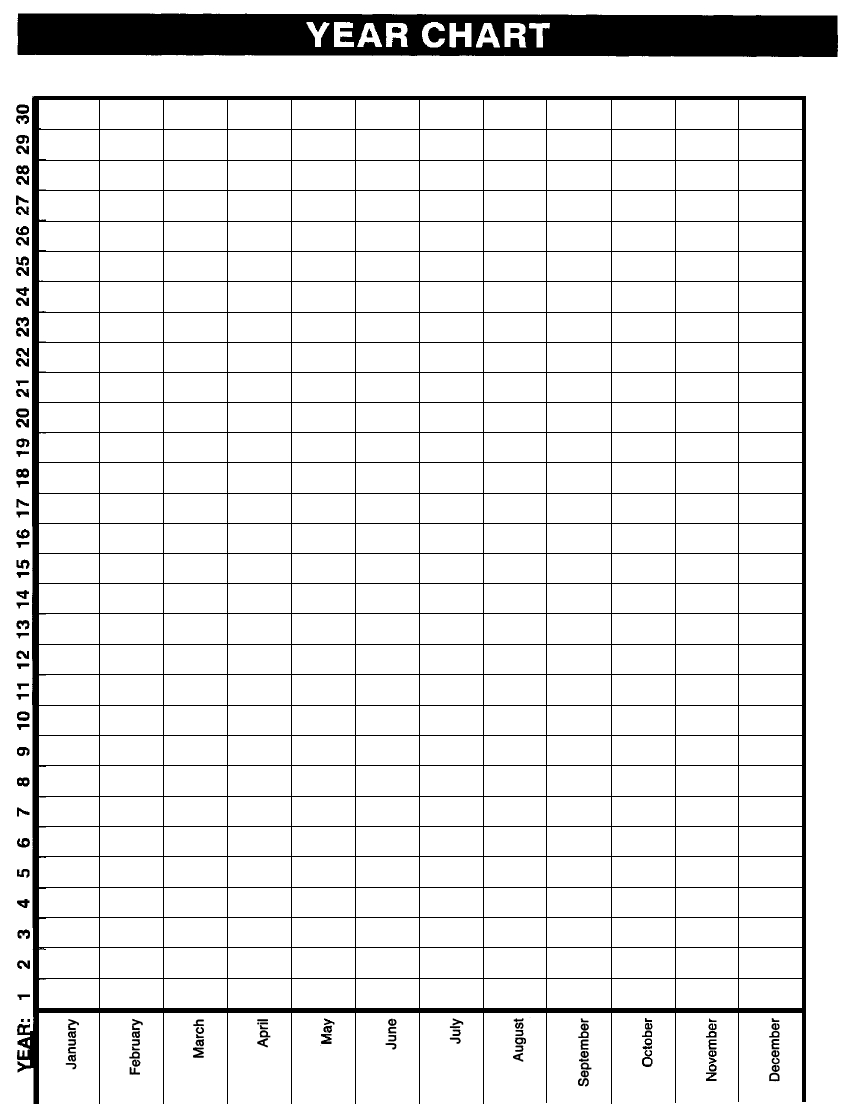
The year chart is primarily useful in
long campaigns or for extended wilderness
travel. To use it, tick off four marks
in each day square, as checks for random
monster encounters are made: morning,
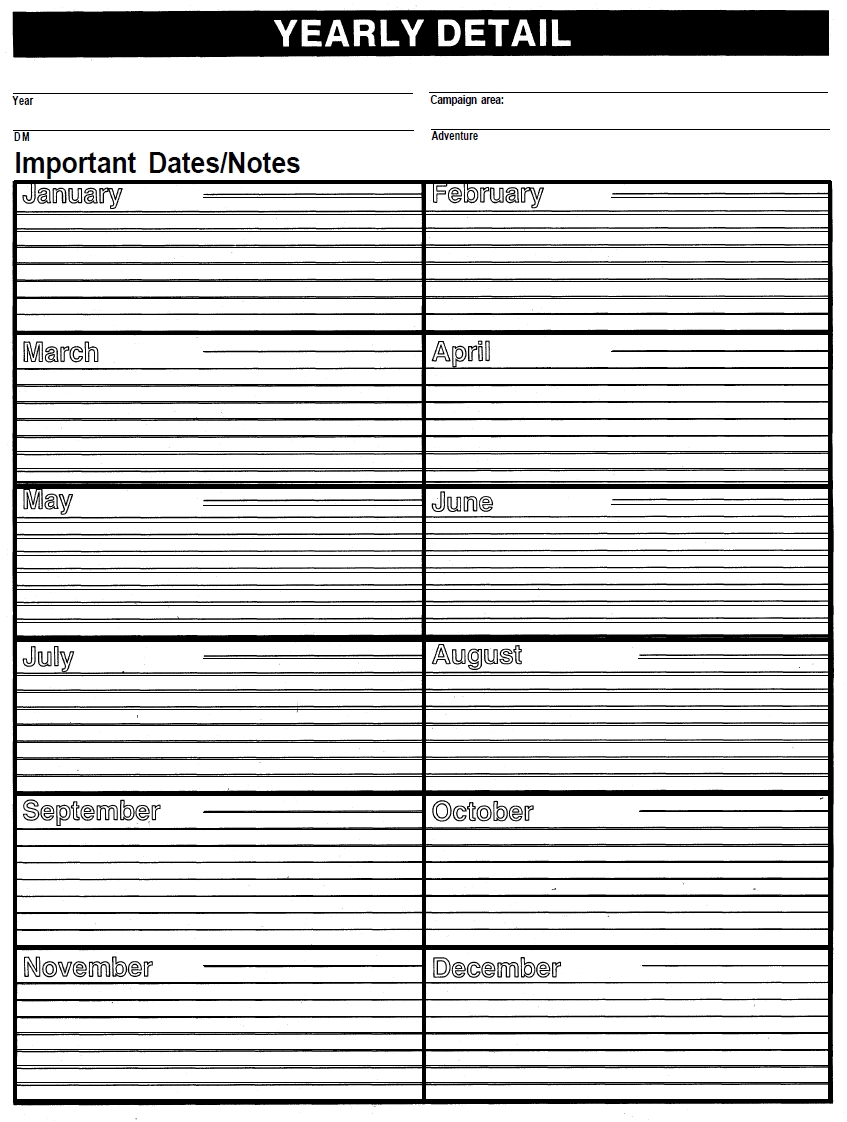
afternoon, evening, and night. On the back
of the year chart, spaces are available
to
record the year, campaign area, adventure
module currently being used, and the
Dungeon Master?s name. Twelve large
boxes on the back of the year chart provide
space to record important dates upon
which an event will occur or to record
general monthly information.
Suggested information to be recorded
under this section includes the following:
general weather conditions for the month
(when winter, fall, summer, or spring
begins); when natural or man-made disasters
occur (i.e., earthquakes, floods, famines,
wars, plagues,
etc.); the dates of
annual celebrations and festivals; or when
a ruler came to power.
| 1 year | = | 360 days |
| - | = | 12 months |
| - | = | 60 weeks |
| 1 month | = | 30 days |
| - | = | 5 weeks |
| 1 week | = | 6 days |
| 1 hour | = | 60 minutes |
| - | = | 6 turns |
| - | = | 60 rounds |
| - | = | 600 segments |
| 1 turn | = | 10 minutes |
| - | = | 10 rounds |
| - | = | 100 segments |
| 1 round | = | 1 minute (60 seconds) |
| - | = | 10 segments |
| 1 segment | = | 6 seconds |
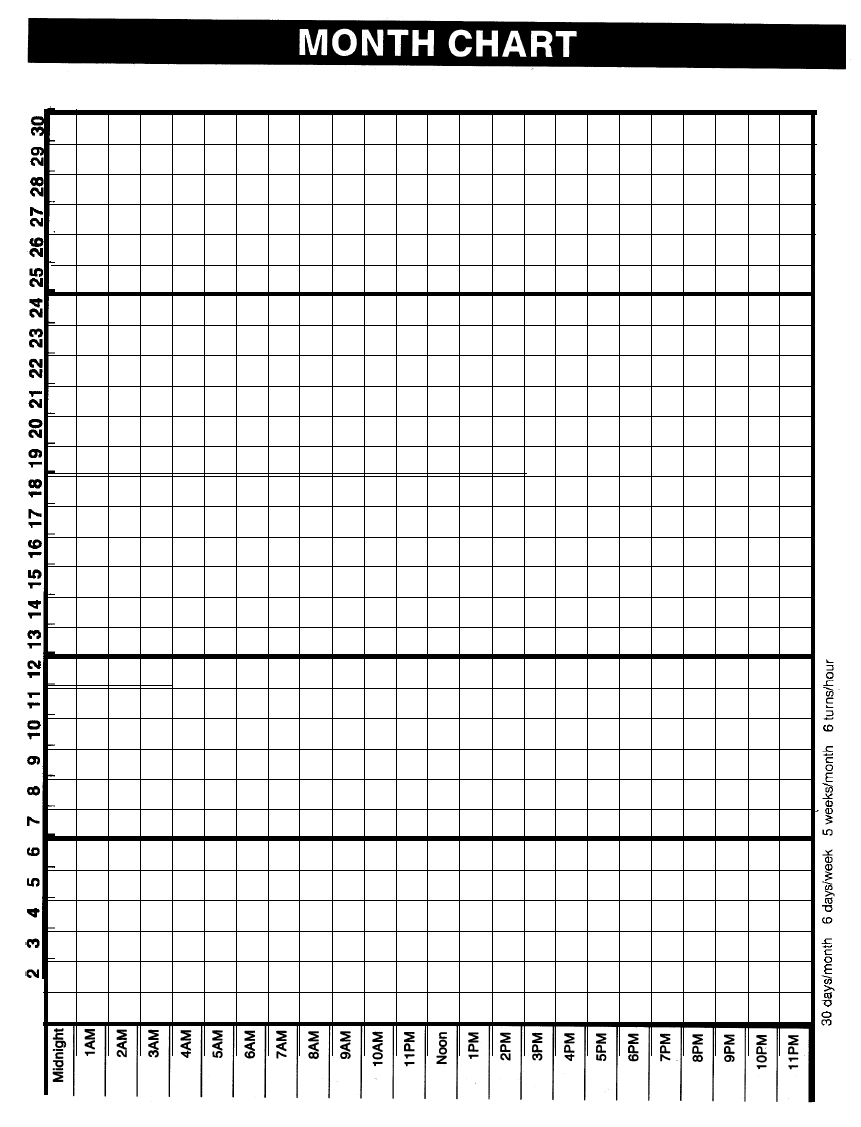
The month chart is useful both in short
wilderness adventures and with individual
dungeon modules. To keep track of time,
tick off 6 marks in each hour square.
Each mark will represent the passing of
a
turn (10 minutes). These marks should be
color coded to provide information at a
glance:
Red:
When a torch or fire was lit.
Orange:
When a lantern was lit.
Yellow:
When a candle was lit.
Blue:
When a character goes under
water, when water begins to rise, or when
rain begins to fall.
Black:
When a character dies.
Grey:
When a character is knocked
unconscious.
Green:
The onset of disease.
Brown:
When a journey begins.
Purple:
When a spell is cast.
A pink line
should be drawn horizontally
across the month table at the time of sunrise
and sunset for a particular month. A
dotted blue line drow horizontally across
the month table can be used to mark high
and low tides.
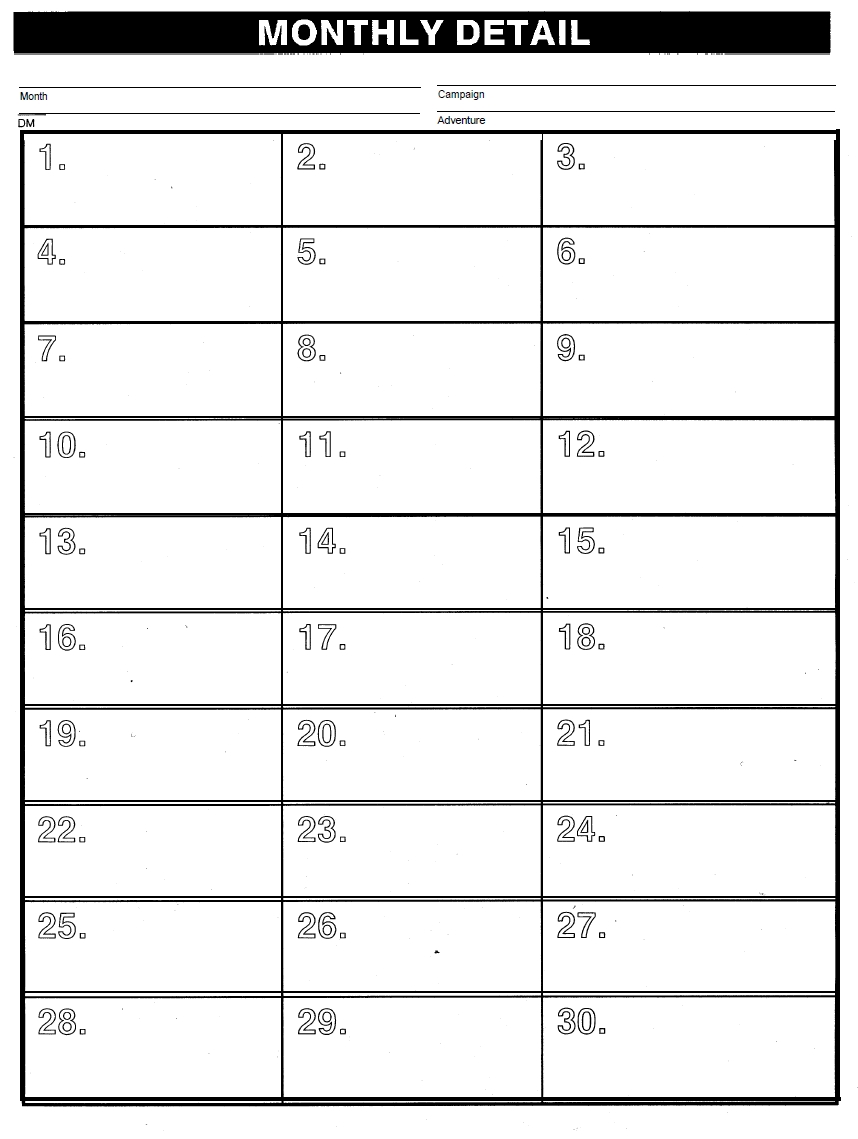
The back of the month table provides
spaces for recording the month (common
names, like ?January? can be used), campaign
area, adventure or module being
played, and the name of the DM. The 30
numbered spaces provide room for
recording information pertinent to a
particular day.
Suggested information to be recorded
under this section includes: major religious
celebrations or festivals; when a
character is released from servitude or
prison ? or is executed; tithe collection
or
census days; when a disease (e.g., lycanthropy,
insanity) manifests itself; when
visitors arrive at a town; when a caravan
reaches its destination; on what days it
rains (plot this out in advance for the
month); when a spell that requires several
days to be cast takes effect; when the
moon is full and provides enough light
to
see by, etc.
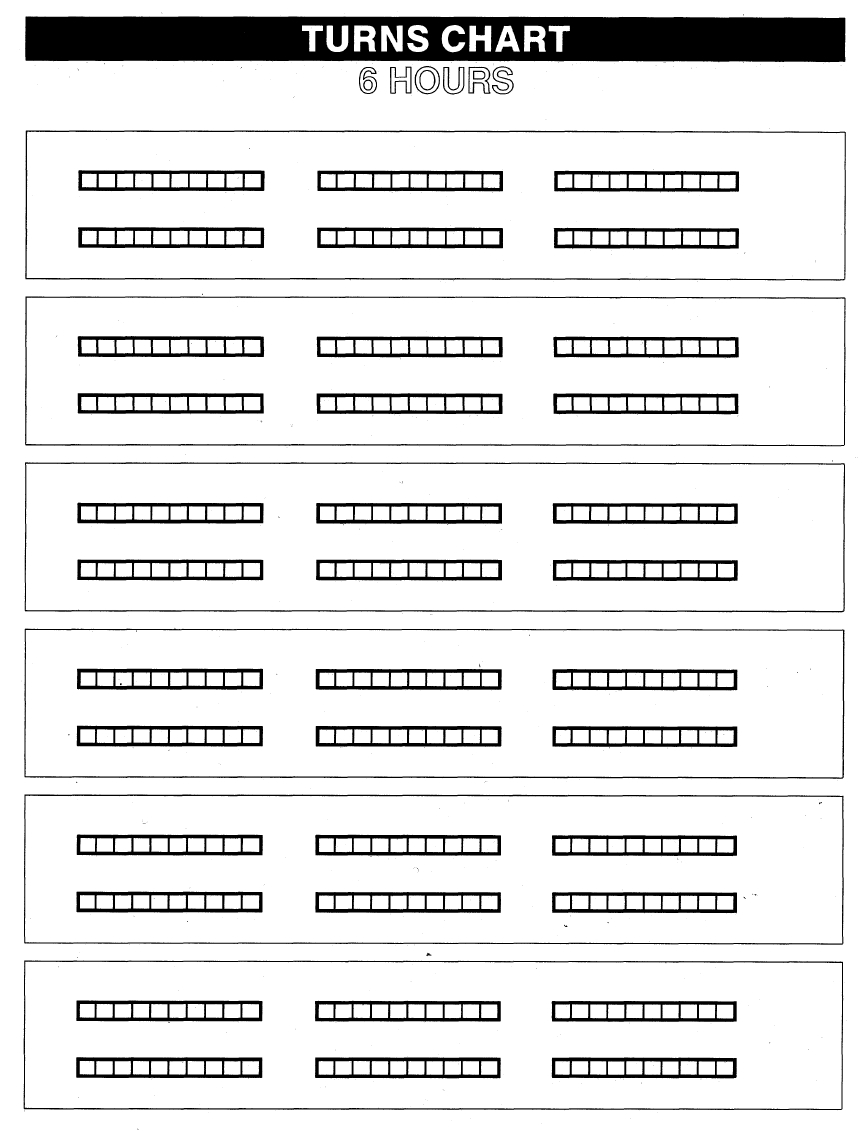
To use the turns grid tables, first note
that a turn (10 minutes) is represented by
one large, divided box. A round (1 minute)
is represented by 1 of the smaller
squares that this box is divided into. Each
AD&D game segment (6 seconds) is represented
by a single tick mark. The turn
grid tables can therefore be used either to
keep track of rounds (a single tick in each
small square will do) or to keep track of
segments (recorded as 10 ticks to the small
box).
By using these tables, timekeeping
is made easy and the month, year, or hour
that something will occur can be determined
quickly. You?ll even be able to satisfy
those characters who insist on
strapping an hourglass or sundial to their
wrists so they know the exact hour.
JULY 1987