Wisdom
-

Wisdom
-
|
|
|
|
|
|
Wisdom is a composite term
for the character’s enlightenment,
judgement, wile, will power,
and (to a certain extent) intuitiveness. It has
a certain effect on saves
against some magical attack modes. It is
of utmost importance to
clerics,
their major characteristic, and those with
wisdom of 16 or greater
add 10% to earned xperience. Furthermore, clerics
with exceptional wisdom
(13 or greater) also gain bonus spells over and
above the number they are
normally able to use. The two tables which
follow detail the info pertaining
to the effects of wisdom.
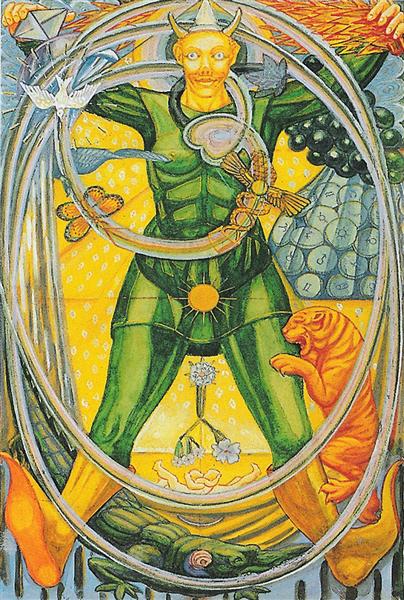
DMG:
For game purposes wisdom ability subsumes the categories of willpower,
judgment,
wile,
enlightenment,
and intuitiveness.
An example of the use of
wisdom can be given by noting that while the intelligent character will
know that smoking is harmful to him, he may well lack the wisdom to stop
(this writer may well fall into this category).
| Ability Score | General Information | Magical Attack Adjustment / Spell Immunities | <>
Example |
| 3 | - | -3 | - |
| 4 <Witless | - | -2 | - |
| 5 = Foolish | Here or lower, the character can only be a thief. | -1 | - |
| 6 = ^ | - | -1 | - |
| 7 = Simple | - | -1 | - |
| 8 = Unwise | - | none | - |
| 9 = Naive | Min. WIS for a cleric character.
Min. WIS for spirit folk. |
none | - |
| 10 = Average | Min. WIS for sohei. | none | - |
| 11 = ^ | - | none | - |
| 12 = ^ | Min. WIS for a druid character.
Min. WIS for kensai, shukenja, and hengeyokai. |
none | - |
| 13 = Discerning | Min. WIS for a paladin or multi-classed half-elven cleric character.
Min. WIS for samurai. <Min. WIS for an anti-paladin> |
none | - |
| 14 = ^ | Max. WIS for a half-orc character.
Min. WIS for a ranger character. |
none | - |
| 15 = Penetrating | Min. WIS for monk. | +1 | - |
| 16 = Astute | Max. WIS for barbarian. | +2 | - |
| 17 = Wise | Max. WIS for a halfling character.
Min. WIS for the use of 6th level spells. Min. WIS for korobokuru. |
+3 | - |
| 18 = Inspired (Buddha) | Min. WIS for the use of 7th level spells. | +4 | Buddha |
| 19 = Profound | - | Cause fear, charm person, command, friends, hypnotism | - |
| 20 = Visionary | - | Forget, hold person, ray of enfeeblement, scare | - |
| 21 = ^^ | - | Beguiling, domination, fear | - |
| 22 = ^^ | - | Charm monster, confusion, emotion, fumble, suggestion, telempathic projection | - |
| 23 = ^^ | - | Chaos, feeblemind, hold monster, magic jar, mass domination, quest | - |
| 24 = ^^ | - | Geas, mass suggestion, rulership | - |
| 25 = ^^> | - | Antipathy/sympathy, finger of death, mass charm, Otto's irresistable dance | - |
<the words in the first column are from Chivalry & Sorcery>
* This
adjustment applies to the saving throw of the character in question,
the penalfy for low wisdom,
or the bonus for high wisdom, being used to
alter the result of the
die roll accordingly. The adjustment applies only to
mental attack forms involving
will force, i.e. beguiling, charming, fear,
hypnosis, illusion, magic
jarring, mass charming, phantasmal forces,
possession, rulership,
suggestion, telepathic attack, etc.
WISDOM TABLE II.: ADJUSTMENTS FOR CLERICS AND DRUIDS
| Ability Score | Spell Bonus | Spell Bonus | Spell Bonus | Chance of Spell Failure |
| 9 | none | none | - | 20% |
| 10 | none | none | - | 15% |
| 11 | none | none | - | 10% |
| 12 | none | none | - | 05% |
| 13 | One 1st level | (1st:1) | 1 | 0% |
| 14 | One 1st level | (1st:2) | 2 | 0% |
| 15 | One 2nd level | (1st:2), (2nd:1) | 21 | 0% |
| 16 | One 2nd level | (1st:2), (2nd:2) | 22 | 0% |
| 17 | One 3rd level* | (1st:2), (2nd:2), (3rd:1) | 221 | 0% |
| 18 | One 4th level** | (1st:2), (2nd:2), (3rd:1), (4th:1) | 221 1 | 0% |
| 19 | One 4th & one 1st | (1st:3), (2nd:2), (3rd:1), (4th:2) | 321 2 | 0% |
| 20 | One 4th & one 2nd | (1st:3), (2nd:3), (3rd:1), (4th:3) | 331 3 | 0% |
| 21 | One 5th & one 3rd | (1st:3), (2nd:2), (3rd:2), (4th:2), (5th:1) | 322 21 | 0% |
| 22 | One 5th & one 4th | (1st:3), (2nd:2), (3rd:2), (4th:3), (5th:2) | 322 32 | 0% |
| 23 | Two 5th levels | (1st:3), (2nd:2), (3rd:2), (4th:2), (5th:4) | 322 24 | 0% |
| 24 | Two 6th levels | (1st:3), (2nd:2), (3rd:2), (4th:2), (5th:4), (6th: 2) | 322 245 | 0% |
| 25 | One 6th & one 7th | (1st:3), (2nd:2), (3rd:2), (4th:2), (5th:4), (6th: 3), (7th: 1) | 322 243 1 | 0% |
* Minimum wisdom for use
of 6th level spells
** Minimum wisdom for use
of 7th level spells
Notes Regarding Wisdom
Table II:
Spell Bonus indicates
the number of additional spells the cleric is entitled to according to
wisdom ability score. Note that these spells are only available when the
cleric is entitled to spells of the applicable level. Bonus spells are
cumulative, so a cleric with 14 wisdom is entitled to two 1st level bonus
spells, one with 15 wisdom has two 1st and one 2nd level bonus spells,
etc.
SA: Rangers && paladins && bards do not get bonus spells for high wisdom.
Chance of Spell Failure states the percantage chance of failure clerics with low wisdom risk when casting spells. To determine if a spell fails, percentile dice are rolled, and if the number generated is equal to or less than the number shown for failure, the spell is expended and has absolutely no effect whatsoever. For addtional information regarding clerics, see the section pertaining to clerics as characters given hereafter.
SA: Chance of Spell Failure applies to all classes (ie. this applies to rangers and paladins and bards as well).
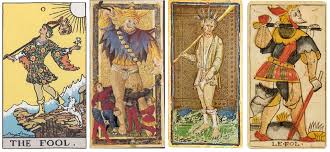
Athena
(goddess of wisdom)
Zivilyn
(god of wisdom)
St.
Cuthbert (god of wisdom)
Dragon #107a, Defining:
Wisdom
is perhaps the characteristic least
susceptible to improvement. Wisdom, it
would seem, is innate, a fundamental part
of an individual. It is different from intelligence:
you can have intelligent fools, as well
as people who are wise, yet ignorant. Wisdom
would seem to be related to strength of
willpower, to a degree. People can increase
their strength, but only if they have the
wisdom to exercise regularly. It is horribly
easy to skip one day of exercises, on any
excuse. It is easy for a student to skip a day
of class, for an employee to skip a day of
work, and for nearly anyone to delay things
that are necessary. Wisdom is the ability to
say, ?Well, it?s got to be done, so I might as
well do it today.? Wisdom is the subject of
advice of many popular aphorisms: ?Never
put off till tomorrow what you could do
today.? ?The more haste, the less speed.?
?Never be penny-wise and pound-foolish.?
?He who hesitates is lost.?
One?s intelligence can help him understand
these items of advice, but only one?s
wisdom can allow him to follow them at the
correct time. For example, it is said both
that ?He who hesitates is lost,? and ?Look
before you leap.? How does one choose?
When going swimming in a new creek, it is
far better to look at the depth and temperature
of the water before leaping in. When a
runaway garbage truck has lost its brakes
and is bearing down on you, hesitating
might be disastrous.
Wisdom, ultimately, can only be learned
from experience. There are no short cuts to
wisdom, other than to live an interesting
life. I strongly recommend that everyone go
out and make their mistakes, utter their
blunders, goof up, foul up, and choke up,
using intelligence as much as possible, in
order to learn wisdom. Errors teach us
more about life than successes do: an unfortunate,
but true, rule of life.
Adults are invariably more wise than
children, and wisdom is highly correlated
with age. Walt Kelly once said, in his Pogo
comic strip, that being adult is largely a
matter of looking back and not counting
your mistakes. The mistakes, then, will
have taught you their lessons.
Dragon #107b, Improving: "Wisdom,
ultimately, can only be learned from experience."
That was a very wise thing for Jeff to
say.
It fits with the commonly accepted definition
of wisdom, and
also dovetails neatly with what the AD&D
game rules have to say about changes in
this ability score.
Under the Age
Categories table (DMG, p.13) we see that a young
adult loses 1 points of WIS from his initially
generated ability score.
But he gains that point back when he reaches
maturity,
and gains an extra point of WIS upon entering
each age category beyond Mature.
Clearly, the intent of the game is that
characters gain wisdom as they advance in age.
Aside from the nature of the ability itself,
another major reason why it's difficult
to
incorporate "wisdom training" into the
game
is the difficulty of separating the wisdom
of a character from the WIS of
that character's player.
If a thief with a WIS of 5 comes to a
decision point and
the player has the character leap before
he looks,
both the character and the player may
suffer for this lack of WIS.
If the same thief encounters a similar
situation a week later,
he would quite likely make the same mistake
twice if it was up to him to decide.
But it isn't up to the character.
Having been burned once because he made
a decision that turned out to be unwise,
the player is going to take his earlier
mistake into account -- and just like that,
our thief has suddenly become more wise.
The other way to deal with this set of
circumstances is for the player
to use a lot of will power and choose
to role-play the thief
in accordance with the character's ability
--
to have the thief make a mistake "on purpose"
because that's the way the thief would be likely to act.
But even if a player is willing and able
to run his character this way,
there has to be a line drawn somewhere.
Even if his WIS score indicates he'd be
better off in an institution for the hopelessly
foolish,
it isn't very thrilling to play a character
who doesn't use
any common sense and who hardly ever makes
a correct decision.
And a character who does act this way
isn't long for the world anyway;
the tales of his stupidity will live on
long after he's gone.
There's no conceivable way that a character
can improve his WIS score through training or study,
but (as with DEX and INT) a character
may be able to become effectively more wise in certain
situations as he experiences those situations
more than once. In fact, as pointed out above,
this sort of increase in WIS is usu. unavoidable,
because the player is
learning from experience even if the character
isn't, and it's the player who's making the decisions in the first place.
A: Druids are clerics
and do gain bonus
spells for high wisdom.
No other classes
get bonus spells, including
those that can
cast clerical or druidical
spells (like rangers,
bards, and paladins).
(137.68)

DMPrata,
Well amigo...
I have to say that the case
you use to support your argument isn't germane to the broad class of Druids.
As Wisdom is their principal
measure, they are to receve bonus spells.
Specialized spells for sects
is another matter entirely, those being taken in place of the general list.
The general mention of bonus
spells for the Druids of Elonna was included
to reinforce the broad grant,
to indicate that they too
got those as did other Druids.
Sorry not to be able to concur with your position, but...
Cheers,
Gary
Short answer: No. I believe
that the class has sufficient power without addig to it.
Cheers,
Gary
Which is more than some
can manage...

Gary
I can copy and paste from
the OED (CD-ROM), though given the definitions you gave, you might not
like it if I quote the material on those words.
(I'm afraid it supports
Rowling's usages much better than yours.)[/quote]
Are you still posting here?
Gary
Of course I no longer imbibe
to excess, gray hair bringing me that wisdom...
*template**template*