| Dragon | AD&&D | - | Monster Manual | Dragon #32 |
| Intelligence, Wisdom and Speech | - | Skag Cleric Spell List | - | Skag Magic-User List |
| Scorpiorc | Koasp | Antold | Woblin | Skag |
The Insectoids are the product of the crossing of certain types of
insects with certain types of goblinoids. Geltar Telomax, the insane
Wizard (former druid), was the author of these bizarre matings. He
discovered that “Giants” of various species could be produced via the
spell Animal Growth if the
spell was changed to some degree and
combined with a special form of the spell Permanency.
Some species
simply rejected the magic over a period of time, but others were
capable of procreating in the enlarged form and producing a species
totally unlike the small unenlarged variety from which they were derived.
Telomax’s experimentations were with Kobolds,
Goblins and Orcs
crossed with Giant Ants, Scorpions
and Wasps. All other crossings were
doomed to failure as the products either died soon after birth or they
were infertile (and often insane). The
5 types of Insectoids that have
survived and can procreate cannot intermix in any way, as the genetic
<grammar>
balance is somehow destroyed and the result does not live for more
than a few years.
The Insectoids produced have quite a range of characteristics. All
can speak, all can use weapons to some degree, some very few can CAST
spells, some can fly, all have good natural armor and all have exceptional
senses—especially visual and aural.
Each of the 5 types are
outlined below:
Intelligence,
Wisdom and Speech
All Insectoids have at least “animal” intelligence. They can understand
very simple commands in Common and slightly more complex
commands that are a combination of sounds and of motions that have
become unique to their species. Those with an intelligence of 7 or
higher are capable of language that can be understood by humans
or
other races that speak Common. Those with an intelligence or wisdom
of 12 or higher are capable of limited “tribal magic” in the case of
Antolds and Woblins, while Skags are capable of more complex spells
up to the 4th level.
Scorpiorc
FREQUENCY: Rare
NO. APPEARING: 2-12
ARMOR CLASS: 4
MOVE: 14"
HIT DICE: 2-4
% IN LAIR: 70%
TREASURE TYPE: 1/2 Q
NO. OF ATTACKS: 3
DAMAGE/ATTACK: 1-6/1-6/weapon
SPECIAL ATTACKS: none
SPECIAL DEFENSES: see below
MAGIC RESISTANCE: standard
INTELLIGENCE RANGE: 1-10
ALIGNMENT: El/En
SIZE RANGE: M
PSIONIC ABILITY: none
Scorpiorcs are a cross between giant
scorpions and orcs. They have
4 legs, 2 pincers and 2 appendages that can be used for locomotion
or
for grasping. The Scorpiorc is 5-6 feet in height. Its forward pincers
can
deal 1-6 points of damage each. In its middle appendages it can grasp
a
weapon (though not a pole arm, 2-handed sword, missile weapon or
any weapon for which great dexterity is required) and it can gain from
the weapon’s magick, if any. A Scorpiorc will never bear a flaming
sword
nor carry any type of flame. The head of the Insectoid has 2 eyes on
stalks that protrude from a orcish-shaped face. These eyes can rotate
independently and make surprising the individual difficult (only a
1 in 8
chance). The grasping appendage can be used in climbing or even in
running. Scorpiorcs can advance as fighting types from a beginning
“level” of 2 to a top rank of 4, though to do so they must be of the
largest size and have an intelligence or wisdom of at least 8.
Scorpiorcs speak common, “Scorkish” and broken Orcish.
They
can move silently as a medium-level thief (70%) and can strike from
behind for double damage if they surprise. Scorpiorcs’ armor comes
from their skeleton structure alone; they never use any armor, though
upper-level scorpiorcs might bear a shield.
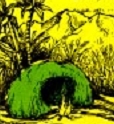
Scorpiorcs prefer to dwell in caves or small stone structures. They
can build basic structures if hard pressed though none would have
doors or windows—just a single opening for entering and leaving.
Scorpiorcs do not get along with other Insectoids and might attack
others (10%) unless controlled, but they will never attack a Skag.
Koasp
FREQUENCY: Rare
NO. APPEARING: 1-20
ARMOR CLASS: 6
MOVE: 8"/16"
HIT DICE: 1-3
% IN LAIR: 80%
TREASURE TYPE: 5xM, N
NO. OF ATTACKS: 1
DAMAGE/ATTACK: weapon
SPECIAL ATTACKS: none
SPECIAL DEFENSES: see below
MAGIC RESISTANCE: standard
INTELLIGENCE RANGE: 2-12
ALIGNMENT: EN/El
SIZE RANGE: S
PSIONIC ABILITY: none
A Koasp is a cross between a Kobold
and a Giant Wasp with
domination in appearance of the kobold strain. They are 2 to 4 feet
in
height and thin. They have 2 legs and 2 arms but they also possess
a set of folding wings. At a distance or in the dark they are 90% likely
to
be mistaken for a Kobold though they wear no armor or garments.
They use small, short weapons and can gain from a weapon’s magick if
it
has any. Those with 3 hit dice can use a light
crossbow, though they can
only fire 1 missile per 2 rounds. Their heads are kobold-shaped but
their eyes are segmented and huge, thus making surprise difficult (1
chance in 6).
Their wings are not very strong and thus they can remain airborne
for only 3-18 minutes. Those with 3 HD can remain aloft for 4-32
minutes. Determination of HD is by random probability: 1-60 = 1
H.D., 61-90 = 2 H.D. and 91-00 = 3 H.D., and only adults are capable
of fighting.
Koasps prefer to live in hive-like structures with from 2 to 4 levels
and a central tube for movement up and down within the hive. They
sometimes dwell in caves, but only in the passages and rooms near the
entrance. Koasps prefer to dwell in groups and have a limited society
based on cooperation to maintain the hive. A female Koasp is very rare.
She will be protected and guarded by all of the males, even those who
are not her mates, with a fervor that will allow them to attack as
if they
had 1 more HD.
Antold
FREQUENCY: Rare
NO. APPEARING: 3-18
ARMOR CLASS: 6
MOVE: 12"
HIT DICE: 1-3
% IN LAIR: 85%
TREASURE TYPE: 1/2 R
NO. OF ATTACKS: 2
DAMAGE/ATTACK: 1-4/weapon
SPECIAL ATTACKS: see below
SPECIAL DEFENSES: limited ESP
MAGIC RESISTANCE: standard
INTELLIGENCE RANGE: 1-12
ALIGNMENT: NE
SIZE RANGE: S
PSIONIC ABILITY: none
An Antold is a cross between a Giant
Ant and a Kobold with the Ant
being the major contributor to shape and appearance. The Antold has
6 appendages, 4 for locomotion and 2 have the double advantage of
being used for locomotion or to grasp A small weapon
like a dagger or a
short sword. The Antold is capable of delivering
a bite with its sharp
mouth pieces. The largest (3 H. D. ) have a 60% chance of paralyzing
an
opponent with their bite unless A SAVE versus poison is made;
those with 2 H.D. have a 30% chance with a ST at +1 and those of but
1 H.D. only have a 10% chance with a ST at +2. This percentage
chance is per melee round and per individual, as all Antolds have saliva
that can paralyze. Paralyzation occurs rapidly at the rate of the loss
of
1 dexterity point per segment
until the victim goes to 0 dexterity.
The paralyzation lasts for 1-6 hours unless cures are applied to the
victim. Any victim already paralyzed can always be reparalyzed by the
bite of any Antold. Such victims are usually eaten, unless a ranking
Antold wants them kept alive for some reason.
Antold also possess a limited form of ESP
which can be used to
detect thoughts of any creature with animal
or greater intelligence at a
range of 10 feet. Thus, surprising an Antold is virtually impossible
(1 in
20) as the creature becomes instantly ready to defend and its sense
of
mental detection direction is infallible. If psionics are used near
an
Antold, this ESP range is increased to 40 feet.
Antolds with an intelligence or wisdom of 12, regardless of HD
(which is only a function of physical size) are usually (90% chance)
tribal witch doctors. They are
capable of the following spells: Affect
Normal Fires, Message,
Shocking Grasp, Spider
Climb, Mirror-Image,
Scare.
Any particular Antold can cast only 1 spell, and only once per
day. The chance of it being any of the 6 listed is equal.
Antolds prefer to live in homes they dig out of soft earth, much as
an
ant colony would be created. The percentage of females is high, and
the mating of Antolds is done in the manner that Kobolds would
use-the female laying 2-8 eggs.
Antolds have a loose social structure, unlike the Giant Ants from
which they came. They are mainly independent, though defense of the
lair will always be coordinated.
Woblin
FREQUENCY: Rare
NO. APPEARING: 4-16
ARMOR CLASS: 5
MOVE: 8"/12"
HIT DICE: 1-4
% IN LAIR: 70%
TREASURE TYPE: K, L&M
NO. OF ATTACKS: 2
DAMAGE/ATTACK: sting/weapon
SPECIAL ATTACKS: see below
SPECIAL DEFENSES: see below
MAGIC RESISTANCE: standard
INTELLIGENCE RANGE: 13-16
ALIGNMENT: EL
SIZE RANGE: M
PSIONIC ABILITY: none
The Woblin is a cross between a Wasp
and a Goblin and bears
many of the physical features of both. The basic body is goblin-shaped,
but very thin and clearly segmented. The goblinish head has segmented
eyes and the mouth parts of a wasp. The Woblin has antennae that are
2 feet in length and are fantastically sensitive to smell
and air movement.
The Woblin’s antennae are more important to him for detection
than his eyes. In a bright light, the Woblin fights at -1 because strong
light harms its eyes. The Woblin has 4 legs and 2 other appendages
similiar to hands. In these hands it can carry a weapon
of small size like a
dagger, <horseman's> mace, short sword, etc.,
and Woblins are even capable of using
short bows or light crossbows.
The Woblin has small wings. In 40% of the adults
the wings are
absolutely useless. In another 50% the adult wings work little better
than a Levitation Levitate
spell, though horizontal motion is also allowed. These
adults can stay airborne for only 3-18 segments. The other 10% of
adults have fully formed wings capable of flight for 4-24 minutes.
These
adults can even hover and fire A missile weapon (at - 1). Woblins are
4
to 6 feet in length and their number of HD is a function of size.
Woblins also have a poisonous sting that can paralyze a victim
unless a ST versus poison is made. The sting can only be delivered
if the
Woblin is in flight or against a motionless TARGET which a Woblin can
back up to and deliver the sting.
Those Woblins of at least 12 intelligence or wisdom are tribal clerics
(shamen) capable of using the
following spells: Create Water,
Bless,
Cure Light Wounds, Cause
Light Wounds, Chant, Resist
fire.
Each Woblin can use 2 spells per day that are selected once and
always for that particular Woblin.
Woblins prefer to live in caves and dungeons, the deeper the better.
Their society is complex, integrated and coordinated.
Skag
FREQUENCY: Rare
NO. APPEARING: 1-6
ARMOR CLASS: 3
MOVE: 12"
HIT DICE: 2-7
% IN LAIR: 20%
TREASURE TYPE: K, L, M & V
NO. OF ATTACKS: 1
DAMAGE/ATTACK: weapon
SPECIAL ATTACKS: spells (10%)
SPECIAL DEFENSES: see below
MAGIC RESISTANCE: 5%
INTELLIGENCE RANGE: <>
ALIGNMENT: EN
SIZE RANGE: M-L
PSIONIC ABILITY: none
A Skag is a cross between a few species, Scorpions,
Kobolds, Ants
and Goblins being the most likely
4 involved. The Skag has two legs
and walks upright; it has 2 arms and has a physical strength of from
17 to 18 (01); thus, it is
+1 to hit and from +1 to +3 to damage due to
strength. The Skag is well covered with armor-like chitin but it is
quite
capable of using a shield, bracers or even a cloak
of protection! Skags
can use all weapons unrelated to flame.
A Skag’s HD are partially a function of size and partially of
experience. A Skag can initially dice a size of 2 to 4 HD. It can then
learn to be up to 3 more levels proficient as a Fighter, Magic-User
or
Cleric. Gaining such an experience level is detailed below (remember
to add this level to natural HD):
SKAG VETERAN—2 to 4 eight-sided
dice due to size for hits
to be killed (0- 2,000 e.p.).
SKAG WARRIOR—Add 1d10 for additional
hits to be
killed (2,001 to 5,000 e.p.).
SKAG SWORDSMAN—Add another 1d10
for additional
hits to be killed (5001 to 12,000 e.p.).
SKAG HERO—Add another 1d10 die
for additional hits to be
killed (12,000+ e.p.).
Thus, a Skag veteran has 2-4 H.D.
| Veteran | 2-4 H.D. |
| Warrior | (2-4)-1 H.D. <typo?> |
| Swordsman | (2-4)+2 H.D. |
| Hero | (2-4) +3 H.D. |
Experience gained for killing a Skag fighter is per its HD, as with
a monster.
SKAG ACOLYTE—2-4 8-sided dice for
hits to be killed;
two first level spells; 0- 4,000 e.p.
SKAG ADEPT-Add one 6-sided die
for hits to be
killed;
2 1st and 2 2nd level spells; 4,001 - 10,000 e.p.
SKAG PRIEST-Add one more 6-sided
die for hits to be
killed; 2 lst, 2 2nd and 1 3rd level spell; 10,001-50,000 e.p.
SKAG CURATE-Add one more 6-sided
die for hits to be
killed;
2 lst, 2 2nd, 1 3rd and 1 4th level spell;
(Note:
50,001+ e.p.
Spell effects are per the Skag’s level, not his hit dice.
SKAG PRESTIDIGITATOR—2-48-sided
dice for hits to be killed;
2 first level spells; 0- 5,000 e.p.
SKAG EVOKER-Add one 6-sided
die for hits to be
killed;
2 first and 2 second level spells; 5,001 - 20,000 e.p.
SKAG CONJURER-Add another 6-sided
die for hits to be
killed;
3 first, 2 2nd and 1 3rd level spell; 20,000 -60,000 e.p.
SKAG THEURGIST-Add another 6-sided
die for hits to be
killed;
3 first, 3 2nd, 1 3rd and 1 4th level spell; 60,001+ e.p.
(Note: Spell effects are per the Skag’s level, not his hit dice.)
Skag Clerical spell list (receives spells
like a normal cleric)
Skag Wizard
spell list (learns spells as a regular Wizard but
only those listed can be used by them—all of these are at +15% for
a
SKAG Wizard to learn!)
| 1st | 2nd | 3rd | 4th |
| Affect Normal Fires | Continual Light | Clairvoyance | Confusion |
| Charm Person | Detect Invisible | Dispel Magick | Dimension Door |
| Comprehend Languages | ESP | Fly | FEAR |
| Dancing Lights | Knock | Hold Person | Wall of Ice |
| Detect Magick | Levitate | Monster Summon I | - |
| Hold Portal | Ray of Enfeeblement | Suggestion | - |
| Jump | Scare | - | - |
| Light | Web | - | - |
| Magick Missile | - | - | - |
| Shield | - | - | - |
| Sleep | - | - | - |
| Spider Climb | - | - | - |
Skag Wizards fight as monsters
per their size HD alone,
while Priests can add their clerical
level(s) to their fighting ability dice.
The Skags are most feared and respected among the Insectoids,
and insectoid populations are often run by 1 or more Skags. Skags
are capable of building fairly complex structures but they prefer caves
and dungeons.
The Skag has a head that is very similar to that of a grasshopper; the
large eyes work independently, and the long antennae are sensitive
to
smell and air movement,
thus making surprise very difficult (1 in 10
chance). The adult Skag is from 6 to 8 feet tall and is very imposing,
0
H. D. figures will run in fear from an adult Skag unless a s.t. versus
magic
is made. 1 and 2 H.D./level humans and humanoids are allowed a fear
saving throw at 10 feet, but at +3.