As promised last time, this column will detail the current
happenings in the north central Flanaess. Before that, however,
are a few words regarding a different aspect of ADVANCED
DUNGEONS & DRAGONS™ game play.
You will recall that the Lost Caverns of Tsojcanth module
was
mentioned in the previous issue. In this module are quite a few
new spells detailing the conjuration and servitude of powerful
creatures from other planes. TSR’s Product Development Department
was worried about a seeming conflict between the
new spell ensnarement (and its
various protective devices) and
the information found in the Monster Manual regarding protective
devices versus devils.
Actually, both are correct, being facets of the whole. Here are
the six protective devices and their uses in the official AD&D™
game system:
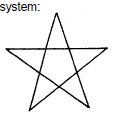
This device is a magical
sealing figure to contain any
creature magically trapped
and contained so as to seal
the container against escape.

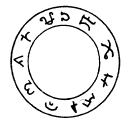
This inscription is effective
against lesser devils and lesser
hostile sendings.
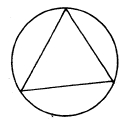
This inscription wards against
all devils and creatures
from the upper Outer
and Astral Planes.
This inscription is effective
versus creatures from the Concordant
Opposition, Elemental,
and Ethereal Planes.
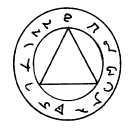
This device wards against
demons of power not greater
than Type V, as well as those
warded by a plain Thaumaturgic
Triangle.
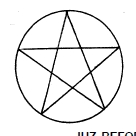
This inscription protects
against all creatures from the
lower Outer Planes, except
devils, but including all forms
of demons.
IUZ BEFORE AND AFTER
The events in the north central Flanaess revolve around two
groups of states. In the west the action surrounds the Wolf
Nomads, the Rovers of the Barrens,
luz, and the Horned Society.
Eastward, interesting developments allowed the Duchy of
Tenh to make a strong foray into the Bandit Kingdoms. The
events in the west will be dealt with first.
Wolf Nomads:
Following the rise in power of the humanoid
hordes of the cambion, luz, the Wegwuir avoided the eare east
of the Black Water, spending their aggressive energies upon
the Tiger Nomads to the west and even moving south along the
Sepia-Uplands to raid Perrenland. In the spring of 578, luz
actually-sent an army into the north to take the poor town of
Eru-Tovar, the only real city of the Wolf people, the pride of
their Tarkhan. As fate would have it, the Chakyiks were themselves
interested in a venture against Ekbir, so they were quite
happy to conclude a treaty. This freed a horde of 20,000 Wolf
Nomads to face the invaders. Tarkhan Bargru himself commanded
the force, which consisted of some 2,000 armored
lancers (medium cavalry), 10,000 light horsemen, 7,000 light
horse-archers, and 1,000 armored crossbowmen on horseback.
This force arrived outside Eru-Tovar late in the summer, just
in time to raise the siege. The army of luz retreated eastward,
and then fell back along the Black Water, hoping to withdraw
safely to the nearer arm of the Howling Hills where humanoid
reinforcements could be picked up in considerable numbers.
The Tarkhan’s force caught the retiring army of luz along the
great north bend of the Black Water. After a close pursuit
lasting several days, during which the majority of the light
humanoid infantry and goblin cavalry was shot to pieces by the
Wegwiur horse-archers, a pitched battle was fought. As usual,
the powerful figures in the opposing forces basically neutralized
each other, while the troops engaged in combat of the
more basic sort. Fortunately for the Wolf Nomads, luz himself
was engaged elsewhere and could not intervene. The horsemen
once again proved superior to the ill-disciplined masses of
invading infantry, and only a few thousand survivors of luz’s
ruined army made it to the relative safety of the Howling Hills.
Losses by the Wegwiur totalled some 2,000 killed and about
twice that number wounded. Of the invading army, some 2,000
humans and 6,000 humanoids were slain, with no prisoners
taken. It is assumed that desertion accounts for the balance of
the total army initially encamped before Eru-Tovar. (This action
is known as the Battle of Black Water Bend and was fought
in the Dozenmonth of the Squirrel on the 22nd day, CY 578, or
BH 3237.)
Following this success, Bargru returned to his capital, where
the garrison of some 2,000 men was busily repairing the badly
damaged defenses — mainly brickwork and earth and timber
which had been nearly destroyed at the time of relief. Satisfied
that all was in order, the Tarkhan then sent strong parties of
riders to patrol the area south of the Cold Marshes between the
Black Water and the Dulsi River. One of these groups continued
on as emissaries to the Rovers of the Barrens, its leader being
Lekkol Noyon, the Tarkhan’s seventh son (the first child of
Bargru’s third and favorite wife, the Yepita woman, Golden
Dove). Lekkol’s troop of 1,000 cavalry made contact with the
Yepita tribe about one month after the defeat of luz’s expedition.
Lekkol subsequently took part in the raid conducted by
the Red Horse and Black Horse clans of the Rovers.
Meanwhile, Bargru went with his personal guard to the lands
of the Guchek, the Wild Dog people, whose territory borders
the eastern portion of Lake Quag and the uppermost reaches of
the Sepias. Jicta, Khan of the Guchek, had failed to appear
when summoned for the stroke against the invaders at Eru-
Tovar. The Tarkhan underestimated the degree of revolt by
Jicta Khan, for Perrenland had subverted the Gucheck by
bribes and the promise of aid if the Wild Dog Nomads would
declare independence from the Tarkhan of the Wegwiur. This
move by Perrenland should have been no surprise, considering
the earlier incursions by the Wolf Nomads. In any event, Bargru
managed to escape the trap after an ambush, but at the spring
of CY 579, the Guchek remained independent and defiant.
Iuz: After
a period of rebuilding and strengthening his domain,
the Lord of Evil set his mind upon the lands to the south.
Various pacts and treaties were concluded with the none-tooloved
Horned Society, thus assuring no immediate trouble from
the east. Groups of humanoids — gnolls and flinds, orgrillons,
bugbears, and even ogres — under human leadership were sent
across the Dulsi River to first occupy the nearer portion of the
Vesve Forest, and then work south to harass the border of
Furyondy. luz caused a fleet of 40 galleys to be built at Dorakaa
in 577. With this force he hoped to wrest control of Whyestil
Lake from King Belvor, thus exposing all of the northern portion
of Furyondy, from the Vesve along the Crystal River to the
Veng and then to the Whyestil, to easy invasion. To facilitate
this move, luz joined forces with the resurgent followers of
Elemental Evil, believing that such a threat on the Kingdom’s
southern border would distract the Furyondians from his much
more ambitious plans in the north. While his forces were being
readied, luz ordered his northern contingents to capture Eru-
Tovar and thus stop any possible move by the Wolf Nomads
upon the upper portion of his realm while his invasion of the
south was in progress. Leaving the execution of his will to
trusted underlings, luz himself went far to the south to stir up
trouble.
The host of Iuz’s northern marches came under the dual
command of Lord Choldraf (14th-level cleric) and Mellard-Plict
(12th-level magic-user). Between them they brought 2,000
heavy cavalry, 1,000 light horse, and about 4,000 infantry, evenly
divided between heavy foot and crossbowmen. Humanoid
contingents included some 3,000 goblins and xvarts, serving as
scouts and raiders, 6,000 orcs and 4,000 hobgoblins as shock
troops, and a vast, mixed company of norkers, knolls, flinds,
ogrillons, bugbears, and ogres totalling some 5,000 to 8,000
depending upon the whims of its component members. This
force gathered in the arm of the Howling Hills between the Dulsi
and Blackwater, and at the beginning of summer (the Dozenmonth
of Flocktime in the north country) in CY 578 marched
westward. There was much quarreling during the course of the
move; Lord Choldraf berated Mellard-Plict for his lack of control
of the masses of humanoids which the wizard levied and
commanded, while the latter scoffed at both Lord Choldraf’s
own powers and at his well trained, but relatively weak, troops.
When siege was laid to Eru-Tovar the following month, each
commander strove to outdo the other, each wishing credit for
taking the Wegwiur stronghold. This lack of co-operation
enabled the defenders, numbering only about 3,400 effective
troops, to withstand almost ten weeks of siege by a force totalling
well over 25,000. The losses by the attackers were compounded
by the rival factions often slaying their wounded cohorts
if they held loyalty to the opposite commander.
When Tarkhan arrived to raise the siege, Lord Choldraf was
forced to screen the withdrawal of the luzites, since the humanoids
under the wizard Mellard-Plict were too undisciplined and
unreliable to handle the assignment. In fact, most of the wizard’s
troops had deserted, or merely decided to wander off on
a raid of their own, by the time the Battle of Black Water Bend
was fought. The high priest is in disgrace now, but it is likely
that Choldraf will find some way to redeem himself with luz. It is
reported that the wizard fled immediately upon the loss of the
battle, going far south and now raising companies of bullywugs
in the Vast Swamp, supposedly at the behest of Wastri, the
Hopping Prophet.
The intelligence network of Furyondy discovered the plan to
wrest control of Whyestil Lake from their navy, and before the
luzite army stood before Eru-Tovar, King Belvor’s fleet staged a
daring raid upon Dorakaa. The majority of the galleys being
built were burned in the stocks, and seven of those which had
been completed and outfitted were captured, while another five
were sunk. Only in the Vesve Forest and along the western
shore of Whyestil did the invasion plans bear any fruit. The
inrush of many thousands of humanoids pushed back the companies
of men, elves, and gnomes who had been slowly but
surely regaining the place from the evil denizens holding it.
South of the Deepstil River, save for the Sepia Uplands and the
western verge, all of the Vesve fell into the hands of luz’s
minions. The forces of Highfolk and Velunese contingents
quickly regained the southwestern corner, but as of the year
579, most of the great forest, as well as the shore of Whyestil
Lake, remained under control of humanoids and evil humans
now fortifying it.
Iuz, Lord of Evil, hastened home to try to salvage the situation,
and it was his direct intervention which enabled his forces
to hold their southern gains against a valiant counteroffensive
staged by the Furyondians. The walled town of Crockport now
stands near the frontier, and the opponents are readying their
respective forces for more fighting soon.
Horned
Society: Pressure by the nobles holding the Shield
Lands prevented the all-out move which the Hierarchs have
long wished to make down the Ritensa River to the northern
shore of the Nyr Dyv. The diabolical leaders of the Horned
Society would gladly have allowed luz his hoped-for gains to
their west, in order that they themselves might take Willip and
overrun the Shield Lands. Instead, the Hierarchs, ignorant of
luz’s plans, spent themselves in dribblets, first against Furyondy
and the Shield Lands and then in defending against
mounting incursions of war parties from the north. Just as their
forces were about to turn southward again, reacting to the
contest between luz and Furyondy, a major raid struck into the
Society’s north, and the Hierarchs’ army had to turn around and
move with all speed northward. Some 5,000 cavalry moved to
block the further penetration of the raiders, while a formidable
army of 5,000 humans, 2,000 goblins, 4,000 orcs and 7,000
hobgoblins followed. This strong show of force was assembled
because several reports from survivors of raided settlements
claimed that the attackers numbered 10,000 horse and included
several thousand Wegwiur. Allied bandits and brigands were
called upon to rendezvous with the Hierarchs’ thousands of
troops at Dingaverge, a small town on the edge of the Fellreev
(A4-54 on the WORLD OF GREYHAWK™
map). The cavalry
arrived at Dingaverge, led by Plar Rostal, a renowned fighter
(11th level) and his leman, Seenia, a renegade (sylvan) elf
(fighter/m-u/thief, 6th/6th/6th). Within a sennight, several thousand
bandit horsemen had gathered, and with a force of over
7,500 cavalry, Rostal began aggressive probes north and
northwest to locate the enemy. Bands of kobolds and unmounted
bandit troops similarly prowled the nearer reaches of
the Fellreev, for Rover wardog footmen, as well as elves had
also been reported.
During the Dozenmonth of Reaping, CY 578, the remainder
of the Hierarchs’ army arrived at Dingaverge, spent a few days
resting and regrouping, and followed after Rostal, trying to
make contact by means of the 2,000 or so horsemen who had
joined them at the rendezvous.
The cavalry under Plar Rostal was far away, however — in hot
pursuit of a enemy, or so they supposed. Rostal’s pursuing
force was drawn out on the steppes and then assaulted by a
nomad horde of about equal numbers, nearly 1,000 of whom
were centaurs lately joined with the Rovers nation against the
enemies to the south. The Hierarchs’ cavalry were severely
handled and forced to break off the action, retiring to the
northwest and allowing the Rovers and their allies to slip
southwards to harass the approaching infantry force. This
move was screened by no more than 1,000 horsemen and a few
score of centaurs, enough of a force to make Rostal believe that
the entire horde he had faced was following him. This ruse
worked for several days, but as soon as it was discovered, the
Plar’s cavalry scattered the meager band of opponents and
rode at all speed back toward where Rostal knew the following
army of foot should be.
The commander of the Host of the Hierarchs was Hierarch
Blontug, a much-feared half-orc of great power (cleric/fighter
/assassin, 4th/9th/9th). He was wise enough not to march his
footsoldier force into the vastness of the rolling plains, but
instead used the western edge of the Fellreev Forest to cover
the right flank of the northward-moving army. A screen of light
cavalry scouts alerted the Hierarch that the enemy was approaching,
and Blontug arrayed his troops along the edge of
the woods so as to prevent cavalry maneuvers against it.
On that first day of contact there was only light skirmishing,
as the Rovers and their allies probed for weaknesses, and the
Hierarch in turn attempted to discover just how powerful an
enemy he faced. On the next day, kobold and bandit scouts
prevented an attack from the forest coming as a complete
surprise. The attacking footmen and elves were easily repulsed
while the well-trained humanoid infantry, supported by missile
troops and light horse, withstood several determined charges
by the other contingent of the invaders. A stand-off of several
days’ duration ensued, with Blontug growing progressively
more certain that his enemy was not numerous enough to be a
real threat, but unable to bring them to battle because his force
lacked sufficient mobility.
Then Rostal’s cavalry rejoined the main body of the Host of
the Hierarchs, and on Goodmonth 26, CY 578, the force rolled
forward. The whole of the cavalry swung in an arc from the left
flank. Its aim was to act as the hammer to the infantry’s anvil.
The movement was met by fierce rushes by the centaurs and
the light horse of the Rovers, while the remainder of the nomads
escaped to the northeast. A major victory was narrowly missed
by the Hierarch, but his aim was accomplished. The allied force
was beaten and driven off, although cavalry losses on the part
of the Society were excessive, and the enemy had established
itself firmly in the northern portion of the Fellreev. Before action
could be commenced to remove this minor irritation, news
came from Rookroost that the Zumker had been crossed in
force by Duke Ehyeh, and the Tenhese were sweeping through
the Bluff Hills to clear them of resistance before turning south
toward the open country beyond. The normally independant
and warring leaders of the Bandit Kingdoms had rapidly declared
common cause against Tenh, and all the units with the
Hierarchs’ army rode off, despite the threats and imprecations
of Blontug.
There was great wrath in Molag when the Unnameable Hierarch
learned of all that had transpired. Blontug and Rostal were
sent across the Ritensa to punish the bandits for deserting the
Hierarchs’ Host, and their force of about 10,000 horse and foot
easily captured the lands of “General” Hok and Baron Oltagg of
Wornhall. This territory abuts the Shield Lands and runs northward
into the Fellreev, so there is some question as to its actual
value to the Horned Society. Nevertheless, the Hierarchs now
reign over it. The associated bandit leaders have renounced all
dealings with the Society on this account, and their agents are
said to be recruiting mercenary troops in Urnst County and
from the border territory between Nyrond and the Pale. The
Hierarchs, in turn, seem likely to continue eastward expansion
in CY 579.
Bandit
Kingdoms: The usual turmoil of competing states
preying upon one another and any available neighbor outside
the territory sums up activity within the area until CY 578.
Bandit groups made forays into Tenh, the Pale, Nyrond,
County Urnst, and even the Shield Lands and portions of Furyondy.
Most groups were mounted, but the usual number of
river raiders and buccaneers from Redhand plied the waters.
Prince Zeech’s ships and galleys actually staged a major action
against the Duchy of Urnst, managing to slip in through the
easternmost portion of the Cairn Hills, loot and pillage, and
then escape with their gains. The western bandit lords — General
Hok, Guardian of Warfields (fighter, 11th level); Oltagg,
Baron of Wormhall (fighter/thief, 4th/9th); Kor, Rhelt of Abbarra
(assassin, 10th level); and the Master of Freehold, Eab Huldor
(magic-user, 9th level) — actively co-operated with the
Hierarchs of the Horned Society. However, when the banners
of Tenh crossed the Zumker River, laying waste the Barony of
Groskopf, and then entered Fellands, the Combination of Free
Lords summoned all members to arms to defend the east. When
even the western states responded, the Hierarchs were enraged,
for they needed the bandit troops to eject the nomad and
Rover invaders from the Fellreev Forest and the steppes of the
Opicm. In a punitive invasion, the Hierarchs’ forces seized and
occupied both Warfields and Wormhall. A very tenacious defense
by the Abbarrish, reinforced by the survivors from the
conquered territories, and scrapings from Tangles and the
Freehold, caused the halt of the Society’s penetration in the
autumn of CY 578.
A truce was negotiated with the Duke of Tenh; Groskopf
ceded the land between the Griff Mountains and the Zumker to
Tenh, and all of the Free Lords of the Combination swore to
refrain from raiding Tenh. Thus freed of immediate warfare on
their east, all of the leaders turned westward to confront the
Horned Society, with the express aim of recovering the lost
states and taking reprisals in addition. Recruiting of mercenaries
and masterless men brought the forces under command of
the Combination to the following totals in the spring of CY 579:
Warfields: Guardian General Hok (fighter, 11th level);
Cavalry 300, infantry 500.
Wormhall: Baron Oltagg (fighter/thief, 4th/9th level);
Cavalry 150, infantry 400, humanoids (gnolls) 100.
Freehold: Eab Huldor, Master of Freehold (magic-user,
9th level); Cavalry 350, infantry 800.
Kor: Rhelt Abbarra (assassin, 10th level); Cavalry
400,
infantry 600.
Tangles: Earl Renyard (bard, 8th level — fighter/thief,
6th/7th level); Cavalry 200, infantry 550.
Rift: Plar Lintoff (thief, 13th level); Cavalry 150,
infantry
350, humanoids (gnolls) 200, (bugbears) 50, (ogres)
10.
Reyhu: Tyrant Celdro (fighter, 10th level); Cavalry
300,
infantry 700.
Redhand: Price Zeech
(cleric/fighter, 5th/8th level);
Cavalry 100, infantry 300.
Artonsamay: Duke Nebon Gellor (fighter, 9th level);
Cavalry 250, infantry 250.
Stoink: Boss Dhaelhy (fighter/thief, 8th/5th level);
Cavalry
200, infantry 650.
Dimre: Szek Winvid (cleric, 10th level); Cavalry
300,
infantry 550.
Johrase: King Selnon (fighter, 11th level); Cavalry
350,
infantry 550.
Midlands: Graf Venholtee (cleric/fighter, 3rd/7th
level);
Cavalry 200, infantry 450.
Greenkeep: Lord Yanboli (half-elf fighter/m-u/thief,
5th/5th/5th level); Cavalry 150, infantry 600.
Rookroost,: Plar Teuod Fent (illusionist, 9th level);
Cavalry
250, infantry 450.
Fellands: Avaerd, Lord Despot (fighter, 10th level);
Cavalry
300, infantry 850, humanoids (orc guards) 100.
Grosskopf: Baron Skiven (fighter, 11th level); Cavalry
150, infantry 300, humanoids (ogrillons) 50.
Totals: Cavalry 4,100; infantry 8,900; humanoids 510.
The above estimates are likely to increase by 10% to 20% due
to last-minute recruiting and enlistments. The force is most
dangerous because of the unusual concentration of high-level
characters and their lieutenants.
Duchy of Tenh:
In CY 575, Duke Ehyeh II began an active
campaign to clear the Troll fens and border area on the west
bank of the Yol. Considerable numbers of fortifications were
built, and this two-year effort was deemed a general success.
The Theocrat of the Pale concentrated his attentions south and
eastwards because of the strong show by the Tennese.
In 577, the Duke began early actions to the north, working
into the mountains and fortifying the southern end of Rockegg
Pass, some 20 leagues above Catbut. The Duke was himself
killed in fighting against the Holders, whose units of “fists”
resisted with great ferocity the closing of the pass. Despite the
death of their leader, the Tennese (now under Marshal laba)
finished what their liege had willed, thus effectively securing
the Duchy on two sides. At a convocation in Nevond Nevend
during Neefest, 578, Ehyeh III was crowned Duke, and the
Tennese celebrated greatly. The old Duke’s son was more warlike
than his doughty father, and his early training as a fighter
on the frontiers made Ehyeh III particularly anxious to secure
all avenues against invasion. In the spring, the young Duke
organized a force of 2,500 horse and 6,000 foot, while leaving
strong garrisons at all key points. He personally led the army
across the Zumker River.
Duke Ehyeh’s plan was to sweep west to the junction of the
Bluff Hills and the Rakers. He then would move north into the
hills, clear them in a rapid westward push, and garrison any
strongholds found there. He would then swing back southeast
to overrun the land between the Bluff Hills and the Zumker. Any
bandit forces caught by the move would be trapped and destroyed.
With this accomplished, the next move would be to
bring a second force across the Zumker, just above the Artonsamay.
The two would then handle expected bandit lord reaction,
take Rookroost, and secure all of the territory as far west
as the Fellreev. Contemplated along with these actions was an
even more ambitious plan to begin the next year, which would
secure all the land west of the Artonsamayas far as the Tangles.
The plan worked with precision, but as soon as the Theocrat
got wind of it — and his spy system is legendary — disturbing
reports began to reach the young Duke. The Prelate’s growing
military strength was at Wintershriven, and the Faithful Bands
were being called up. The Tennese companies originally being
readied for action elsewhere were sent from Redspan on a long
march to reinforce the Yol. Woodsmen were ordered to keep a
close watch in the Phostwood Forest. The Duke entrusted the
army in action against the bandit states to the redoubtable
Marshal laba so the new threat could be under his own command.
When the Combination of Free Lords sued for peace
near mid-summer, the suit was welcomed, for it ceded a considerable
portion of land to the Duchy, guaranteed bandit neutrality,
and allowed the Tennese military forces to meet the
threat now posed by the Pale. Duke Ehyeh brought a combined
army of 4,000 horse and 11,000 foot across the Yol at the edge
of Phostwood in Dozenmonth Ready’reat, 578 CY. This host
struck east and is wintering in the Pale. The threat to Wintershriven
is obvious, and events of the year 579 should prove
interesting indeed. Ehyeh III (ranger, 11th level) will either be
acclaimed as a military genius and savior of his nation, or else
Tenh will fall under the heel of the Theocrat.
Rovers
of the Barrens: The young tribesmen who matured
into warriors during the last two generations avoided their old
battling and hunting grounds along the Fellreev Forest and the
plains of the Dulsi, for they feared the might of luz’s hordes.
Instead, these nomads and woodland hunters withdrew to the
steppes and other sites to the north and east. Their numbers
increased, and they practiced their fighting skills against the
men of the Hold of Stonefist and the savages and humanoids
they met on raids into the Cold Marshes. Despite the difficulties
of communication, the western tribes of the Rovers of the
Barrens actually made alliances with the Wegwiur. In 566 there
were a few light raids into the northeastern edge of the Fellreev.
In a few years, wardog parties were reported in the forest west
of Cold Run. By CY 577, a conclave of all the clans staged a
great beast hunt in the central portion of their territory, with
many visiting Wolf Nomads taking part in the sport. The census
sticks showed that clan warrior strength was as follows:
| Great Stags | 5,200 | 11 tribes; eastern area |
| Bear Paws | 1,150, | 4 tribes; southeastern area |
| Red Horses | 2,700 | 6 tribes; northwestern area |
| Black Horses | 3,350 | 8 tribes; northwestern area |
| Gray Lynx | 1,450 | 5 tribes; northern woodlands area |
| Horn Bows | 1,800 | 4 tribes; west central area |
| Sly Foxes | 850 | 4 tribes; southern woodlands area |
| Wardogs | 3,100 | fighting society; all tribes |
| White Wardogs | 950 | fighting society; north tribes only |
Tribes not attending probably accounted for about 2,000
additional warriors, while allied northern peoples number almost
4,000 additional warriors.
At the great conference, the Rovers agreed to a plan to make
war upon the Horned Society to attempt to regain their lost
territory around the Opicm and in the Fellreev. The help of the
Wolf Nomads was not promised, but the Rover tribes knew it
would certainly come if possible. The Sly Fox Clan, always on
good terms with the sylvan elves of the Fellreev Forest, were to
harass the enemy from the woodlands, while the western clans,
the Red Horse, Black Horse, and Horn Bows, rode south and
made war upon the hated peoples of the Horned Society.
Chada-Three-Lances (fighter, 8th level) was made War Sachem,
and in the spring of 578, he led some 6,000 warriors on a
campaign to accomplish the recovery of the lost lands. With the
force went a party of about 900 centaur warriors. The latter had
been displaced from their territory in and around the western
end of the Fellreev, so they were more than eager to take part.
The warfare was at first easy; many of the enemy were slain
and their villages sacked and burned. But as the Rovers moved
further south, they met greater resistance. Then word of an
approaching enemy body of cavalry caused the Rovers to pull
back and go into council. The bulk of wardog soldiers were sent
into the Fellreev to aid the Sly Foxes and their allies. Companies
were also sent away with the loot and prisoners already captured,
so that the remaining band would not be encumbered.
With the Wolf Nomads who had recently joined, the warriors
then numbered 7,000 plus some 900 centaurs. These troops
savaged the cavalry from the Horned Society and sent it flying
away. The Rovers feigned pursuit and instead sent about 6,000
raiders back south to finish their destruction, but before any
real penetration of enemy territory could be made, a large army
of footmen was located. These humans and humanoids were
attacked, but they easily withstood the clan assaults despite
some heavy losses. The whole attack was then called off when
scouts detected enemy cavalry moving to encircle their encampment.
In a nip-and-tuck retreat, the whole force managed
to escape with losses considerably less than those of their
enemy. The Sly Foxes and their elven allies had been quite
successful in gaining the initiative in the Fellreev. Expected
countermoves failed to materialize, and now many tribes of the
Gray Lynx and Wolverine clans have moved into the woodlands.
(The Wolverines are a Central Woodlands clan which
was driven north and was not represented at the great conference.
There are seven tribes in the clan, but each has only about
100 warriors.) Scattered and disaffected tribes are likewise
returning due to the minor successes gained, and it is likely that
the councils of 579 will see a larger number of warriors ready
and willing to take up the lance and go against the enemy. If
continued cooperation between the Rovers clans and the Wolf
Nomads persists, even luz could be in trouble.
Stay tuned for more next issue!
,