Constitution:
-
Constitution:
-
|
|
|
|
|
|
Constitution is a term which encompasses the character’s
DMG:
This character ability rating is a general heading under which folk the
character's physique,
health,
resistance,
and fitness.
An individual who catches
cold if exposed to a slight draft has a constitution of 5 or less in all
probability.
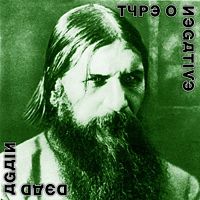
Rasputin had an 18 constitution!
| Ability Score | General Information | Hit Point Adjustment | Hold Breath
(1/3 in rounds) |
Adjustments to Severity and Occurence Die Rolls (Disease) | System Shock Survival | Resurrection Survival | Poison Save | Regeneration |
| 2 | - | - | - | +2 | <30%> | <35%> | <-1?> | <natural healing=1/2?> |
| 3 | - | -2 | 1 | +1 | 35% | 40% | - | |
| <4 = scrawny | - | -1 | <> | +1 | 40% | 45% | - | - |
| 5 = puny | Here or lower the character can only be an illusionist | -1 | - | +1 | 45% | 50% | - | - |
| 6 = feeble | Minimum constitution for an elf or half-elf character | -1 | - | - | 50% | 55% | - | - |
| 7 = weak | Minimum constitution for a fighter character | 0 | - | - | 55% | 60% | - | - |
| 8 = average | Minimum constitution for a gnome character | 0 | - | - | 60% | 65% | - | - |
| 9 = ^ | Minimum constitution for a paladin character | 0 | - | - | 65% | 70% | - | - |
| 10 = ^ | Minimum constitution for a halfling character | 0 | - | -1 | 70% | 75% | - | - |
| 11 = ^ | Min. constitution for a monk character
<Min. CON for an anti-paladin> |
0 | - | -1 | 75% | 80% | - | - |
| 12 = ^ | Minimum constitution for a dwarf character | 0 | - | -1 | 80% | 85% | - | - |
| 13 = fit | Minimum constitution for a half-orc character | 0 | - | -2 | 85% | 90% | - | - |
| 14 = healthy | Minimum constitution for a ranger character | 0 | - | -2 | 88% | 92% | - | - |
| 15 = sturdy | - | +1 | - | -2 | 91% | 94% | - | - |
| 16 = hardy | - | +2 | - | -3 | 95% | 96% | - | - |
| 17 = robust | - | +2(+3)* | - | -3 | 97% | 98% | - | - |
| 18 = vigorous (Rasputin) | - | +2(+4)* | - | -4 | 99% | 100% | - | - |
| 19 = vital | - | +5** (no 1s rolled) | - | - | ^ | ^ | +1 | - |
| 20 = weatherproof | - | +5** (no 1s rolled) | - | - | ^ | ^ | +1 | 1 point / 6 turns |
| 21 = ^ | - | +6** (no 1s or 2s) | - | - | ^ | ^ | +2 | 1 point / 5 turns |
| 22 = ^ | - | +6** (no 1s or 2s) | - | - | ^ | ^ | +2 | 1 point / 4 turns |
| 23 = ^ | - | +6** (no 1s, 2s, or 3s) | - | - | ^ | ^ | +3 | 1 point / 3 turns |
| 24 = ^ | - | +7** (no 1s, 2s, or 3s) | - | - | ^ | ^ | +3 | 1 point / 2 turns |
| 25 = ^ | - | +7** (no 1s, 2s, or 3s) | - | - | ^ | ^ | +4 | 1 point / 1 turn |
<the words in the first column are from Chivalry & Sorcery>
ADJUSTMENTS
TO OCCURRENCE AND SEVERITY DIE ROLLS*
| +2 | constitution under 3 |
| +1 | constitution 3-5 |
| +1 | chronic disease or disorder |
| +1 | severe parasitic infestation |
| +1 | under 25% of normal hit point total |
| -1 | constitution 10-12 |
| -2 | constitution 13-15 |
| -3 | constitution 16-17 |
| -4 | constitution 18 |
*Bonus applies only to fighters, all other classes may be given a maximum hit point bonus adjustment of +2.
** The additions to each hit die are for
fighter, paladins and rangers only;
all beings without one of these classes
can receive nomore than 2 bonus
point per die.
The notation "no 1s rolled" indicates
that any 1s rolled when hit
points are being figured should be counted
as 2s. At 21 and 22 constitution,
1s and 2s are counted as 3s, and so on.
Notes regarding Constitution Table
Hit Point Adjustment
indicates the subtraction from or addition to each hit
die for a character. (Hit dice are explained
fully under the appropriate
heading.) Note that subtraction can never
reduce any hit die below 1, i.e.
if a die is rolled and a 1 comes up, or
if a 2 is rolled and the penalty due to
constitution is -2, the die is read as
1 (hit point) regardless of subtractions.
Note also that the only class of characters
which is entitled to bonuses
above +2 per hit die is fighters (including
the fighter sub-classes paladins
and rangers ). Thus, even though a cleric,
magic-user, or thief has a
constitution of 17 or 18, the additional
hit points for each hit die due to
superior constitution is +2.
Q: Do constitution
bonuses for monks, rangers, and first-level
half-ogre characters (who
all start with two hit dice) apply to
both hit dice as well as
all hit dice earned after first level?
A: Yes.
(76.64)
Q: Which classes get
a constitution
bonus higher than +2 per
hit die?
A: To be absolutely
clear: fighters (including
rangers and barbarians)
and cavaliers
(including paladins).
(144.6)
Q: Do characters still
get constitution
bonuses to their hit points
after
reaching “name” level?
A: No. Once the character
stops gaining
new hit dice, he also stops
gaining constitution
bonuses.
(144.7)
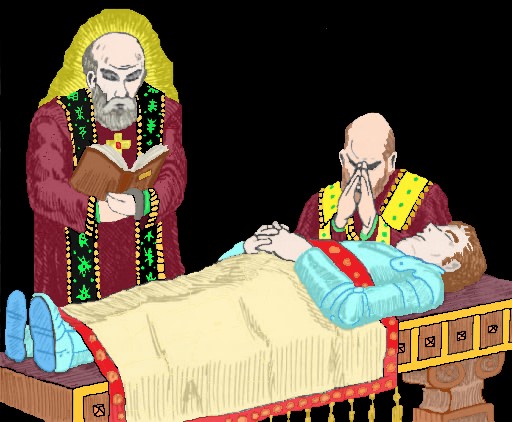
Q: When a character
is raised or resurrected
and loses a point of constitution,
does he also lose bonus
hit
points? For example, would
a 13thlevel
paladin with an 18 constitution
lose 13 hp after being raised?
A: Yes, a character
who loses a point of
constitution loses all the
bonus hit points
that went with it. Note
that the paladin in
your example would have
stopped gaining
bonus hit points for constitution
at level 9,
so he would lose 9 hp. Some
campaigns,
rather than subtracting
previously
acquired hit points for
the constitution
loss, allow the PC to retain
his old hit
points but restrict new
hit-point bonuses
for constitution to the
amount appropriate
for the new constitution.
For example, an
8th-level magic-user with
a 16 constitution
dies, is brought back to
life, and loses a
point of constitution. His
hit points are
unchanged, but when he earns
his next
level, he gets only a +
1 bonus for his 15
constitution.
(144.7)
Q. Do constitution bonuses
apply after a
character reaches 'name
level' in a
particular class? (Advanced)
A. Once a character has
ceased to gain
HD when progressing in level
the
CON bonus (or penalty) ceases
to be applied. The bonus
specifically
applies to HD, not to HP.
(Imagine #2)
Color by Tim Galioto
System Shock Survival
states the percentage chance the character has of
surviving the following forms of magical
attacks (or simple application of
the magic): aging, petrification (including
flesh
to stone spell), polymorph any object,
polymorph
others.
Example: The wicked necromancer
polymorphs
(others) his hireling into a giant roc,
with the rather foolish
agreement of the changee;
the hireling must make a saving throw based
on his consitution score
using the table above. Assuming he survives, a
further saving throw would
hove to be made if he was again polymorphed
or dispelled back to original
form. The saving throw must be equal to or
less than the percentage
shown.
Question: Can a character that failed to make his system shock roll while being resurrected still be brought back via a wish?
Answer: Yes.
ADQ: Magickal aging
requires a system
shock survival check. Does
this include
the effects of haste, wishing,
gates, and
the like?
ADA: We recommend
yes, that any unnatural
aging should cause a potentially
deadly
shock. However, the debate
still rages, as
yet unresolved. DMs who
feel this to be too
severe may modify the result
of failure to be
coma, lasting 1 day per
year of aging, with
a 10% chance per day (not
cumulative) of
death from the shock.
(Polyhedron #25)
Quote:
Originally Posted by mistere29
Somwhere in the DMG is a
chart that has age modifers for demi-humans.
The gist of it is that magical
aging assumes a human life span. I
f a race lives twice as
long as humans, for example, then all aging effects are doubled.
Plus there is always the system shock roll.

Considering the lifespan
gor humans subsumed in the game, even an adjusted loss of longevity for
use of speed potion is minimal.
As for use of system shock,
I never employed that foe the consumption of potions.
In a magical milieu, only
a misbrewed potion would be likely to have ill effects on the one quaffing
it
Cheers,
Gary
Resurrection
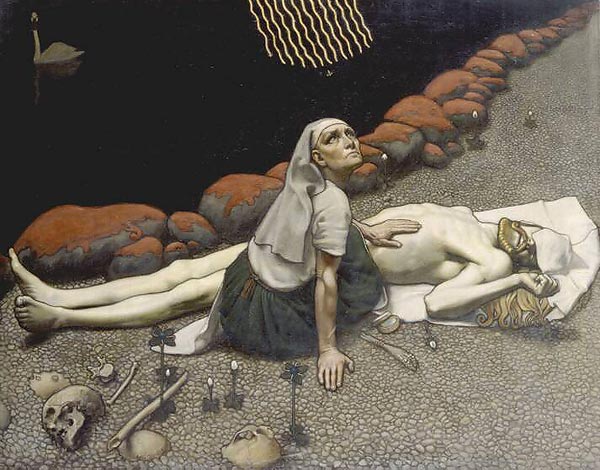
Survival shows the percentage chance the character has of
being successfully raised from the dead
or resurrected by a cleric. The
score of the percentile dice must be equal
to or less than the number
shown on the table, or the character fails
to be revivified and is completely
and totally dead forever. Remember that
a character can never be raised
from the dead/resurrected a total number
of times in excess of the
character’s initial constitution score.
* Rangers & Monks get double C bonus at L1 - prespos
UNOFFICIAL
When muscles are exerted, they begin to
build up fatigue poisons, mostly lactic acid,
in their tissues. Probably everyone is familiar
with having stiff, sore muscles after a
workout; this is because the fatigue poisons
require time to be metabolized. This pain
and stiffness is also a sign that the muscles
have been stressed, that they are healing,
and that the exercise is having its intended
effect. Exercises to build up stamina and
endurance are different from exercises to
build up strength, however. lb build up
strength, exercise periods should be short
and periodic: twenty push-ups followed by a
short break, then repeat. To build up constitution,
exercise should be continuous, but
at a lower level of activity. Long walks, or
jogging, are ideal for building up constitution.
The important thing is to have the
heart beating at a steady, high rate, and the
blood flowing through the major veins and
arteries.
Here; too, there is a sex difference.
Women tend to have better constitution
than men, if all other factors are equal. This
is not something that can be observed in the
general population, for it is still true that
young girls do not learn to exercise to the
degree that young boys do. In America,
women and men are approximately equal in
constitution, but the natural advantage is
on the side of the women.
Dragon #107b, Improving: Jeff
says that ?someone with a high constitution
. . . will probably live to an older
age.? Interesting, but most player characters
die of something other than old age, or
else are retired from adventuring by the
time their age itself becomes a threat
to
their survival. Nevertheless, it doesn?t
disrupt anything else if you want to reward
someone with high constitution by giving
him more longevity. You can apply a bonus
or penalty to the dice roll on the Maximum
Character Age Table (DMG, p. 15), or you
can add or subtract a certain number from
the randomly generated maximum age.
If females have .a "natural advantage"
in
constitution, why isn?t this reflected
in the
rules for maximum ability scores? The
advantage seems to be a small one, too
small to quantify in a system that uses
increments of a full point. It would be
a
misrepresentation of the difference to
either
limit males to 17 or allow females to
attain
19, yet these are the only two ways we
have
of dealing with the issue by tinkering
with
the ability score itself. One more equitable
way to compensate females might be to
alter
the table of Adjustments
to Occurrence and Severity Die Rolls (DMG, p. 14).
If the hardiest women are hardier than
the hardiest
men in your campaign, then you might
rule that a female with 18 constitution
gets a
-5 modifier instead of -4. You can say
that if a female magic-user casts a permanency
spell, she will not suffer the loss of
a
point of constitution, regardless of whether
the spell was cast on a living thing or
not.
In these and other ways, a female?s natural
advantage in constitution can be worked
into the game without undermining the
foundation of the rules or getting in
the way
of playability.