| Getting started | One thing leads to... | An age of discovery | Someone else's baby | Writing the campaign |
| 1st Edition AD&D | - | Dragon magazine | - | Dragon #143 |
In tales that really
mattered . . . folk
seem to have just
landed in them --
their paths were
laid that way.
The Two Towers,
J. R. R. Tolkien.
In AD&D® games, the DM must be sure
that the PCs? paths are ?laid that way.?
Campaigns need a theme, a saga that
demands continuing heroics. You can
begin the game with such a plot or else
bring one into an existing campaign. There
are many times of daring and excitement
in history from which a DM might borrow
while creating a campaign.
Getting started
All campaigns need a conflict to keep the
PCs struggling. The conflict should affect
vast portions of society so that the PCs
cannot simply get what they want and end
the game. Each adventure needs a specific
goal, but the greater struggle must go on.
AD&D campaigns should occur amid
inexorable social changes, situations which
force the PCs to resist historical trends or
exploit them. One period in history which
might make a fertile campaign is the fall of
the Middle Ages? feudal system.
Feudalism depended on two social
groups: the nobility and the peasants.
There were a few merchants, shopkeepers,
and yeoman farmers, but they
were insignificant. Almost all people in a
feudal society were peasants who owned
no land and worked on a noble?s farm.
The landlords were usually legal rulers,
but even when some other government
administered justice, lords had absolute
power over their serfs because lords
owned the land. Most of what a peasant
grew went to the landowner, and the
lords word was law.
Nobles were not like modern dictators.
A baron lived by the code of chivalry,
obeying a duty to support his peasants.
People believed that everybody had a
station in life, and all places were equally
worthy. Nobles were not always rich, and
they did not usually feel superior to their
peasants. Landlords considered themselves
above crass greed. A prosperous
noble might cast a throne of gold, but he
would not invest his money for profit. The
role of a lord was to govern his subjects,
and the role of a peasant was to feed his
lord. Neither could exist without the other.
The fact that serfs lived in poverty, completely
controlled by the nobles they fed,
was ignored.
In 1349, the Black Death devastated
Europe [see "The End of the World," in
DRAGON® issue #138]. This ruin made
living people valuable. Nobles lost their
serfs; artisans could no longer hire workers;
generals found their armies gone; and
the church needed new priests. Workers
could now demand high wages. Serfs on a
fiefdom toiled constantly, and their crops
were taxed away, but elsewhere they were
free and could earn amazing sums of
money as laborers. Peasants could not
legally abandon their lord, yet many fled
despite dreadful punishments.
Nobles could no longer farm their land
except with hired workers who had fled
from some other lord. To pay these laborers,
the nobles needed money and so had
to rent their property for cash. Businessmen,
many of whom had recently been
serfs, were glad to lease farmland, but
they did not grow food crops which
required many expensive workers and
sold for low prices. They wanted something
they could sell for a profit ? wool.
One shepherd could tend hundreds of
sheep; therefore, merchants converted the
manors to pastures.
?These are the days when sheep eat
men,? lamented a writer in that time.
Sheep merchants evicted the peasants who
had remained with their barons. The few
workers who had invested in wool became
rich; the rest starved. As the years after
the plague went by, wool became more
valuable and labor less so. The masses of
workers, who owned no land and served
no noble, wandered the roads looking for
work. They were not wanted in cities, and
the Church could not support them.
The wandering poor lost contact with
society. On a noble?s estate, people had a
lasting culture; what someone did one day
was remembered the next. There was also
the lords baliff, and in cities, there were
guards and watchmen. But on the highways
there was no law, and there was no
way to survive except by stealing.
If this had happened in a role-playing
game, the PCs could not simply kill some
evil perpetrator and restore things to
normal. To rescue the old manors or find
occupations for the hordes of dispossessed,
PCs would have to conduct a long
series of projects ? a campaign. Of course,
some parties might like these changes.
They might raise sheep or recruit homeless
serfs for some project of their own.
An economic crisis can create businesses
like thieves? guilds and adventuring services.
If the DM wants a mercenary atmosphere
of dungeon-looting and hired killers,
social upheavals make a believable background
and could be introduced into a
campaign that has already been started.
Perhaps the PCs themselves caused the
problem. In an isolated area, evicting even
a few peasants might upset the social
order.
The DM can make adventures more
spontaneous by picking PCs that have an
interest in the campaign?s conflict. If the
fall of feudalism is the setting, the PCs
could be serfs who begin adventuring
when they are thrust from their land. Or
their first quest might be to escape the
manor and become high-paid laborers. Or
the PCs might be the children of nobles
and must find money to keep their ancestral
lands. In none of these cases does the
DM need to have NPCs hire the PCs as
adventurers, but he still knows what
quests they will undertake. This allows the
DM to carefully plan each adventure while
letting the PCs think that they make all the
decisions.
The PCs should come from a group that
suffers or benefits strongly from whatever
is happening in the DM?s world. What
historical or fictional figures would have
been fun to play as PCs? What made them
do what they did? In the era of decaying
feudalism, Henry VIII and Cardinal Wolsey
would both have been interesting PCs.
Wolsey?s parents came from the lower
classes, but by taking advantage of social
confusion, he became a priest, then a
Cardinal, and finally a powerful advisor to
the King of England. By taking Wolsey?s
advice) Henry also rose in society, increasing
the power of his crown over weakened
barons. However, the King could not
produce a male heir to carry on these
projects. The rest is history. By giving PCs
backgrounds and desires, the DM has
them write the history of their world.
The DM should work with the players to
invent motivations for PCs and decide why
they are working together. This might
simply be because the characters need
each other?s help to achieve their goals.
They also might be appointed to their jobs;
perhaps they are all the children of the
same noble family or have been hired as
scouts for an army. Most players prefer to
?roll up? their own characters. The DM
should let them do that, but he can color
the characters with suggestions about
their preadventuring lives and goals.
Almost all players enjoy getting backgrounds
that place their characters in the
DM?s world, especially if the histories
include useful information, friendships, or
heirlooms.
There are two mistakes to avoid when
trying to give PCs natural reasons to
adventure. One: Never make decisions for
a player?s character. People play roleplaying
games so they can have adventures,
not so the DM can. Start adventures
by warning the PCs about impending
events which should inspire an adventure,
but let the party decide what to do. NPCs
might give PCs advice, but do not give the
advice to players as the DM. If the PCs fail
to take action, they must endure the consequences,
which should also make an
exciting adventure. Two: Avoid basing a
whole campaign on one particular character.
If that person dies, it could ruin the
game. The victim will have to return somehow
? and that makes everyone fear
death less. It also ruins a chance for dramatic
role-playing, where survivors grieve
over a lost companion. Instead, give all the
PCs a reason to lead adventures. If one
character dies, someone will take his
place. The player of the dead character
can roll up a new PC.
One thing leads to . . .
Each time the characters complete an
adventure, they change The Campaign,
and
every change should inspire future adventures.
When a DM picks a campaign setting,
he should make general plans for the
milieu’s future so that it is always in turmoil.
As the campaign becomes more
complex, each character will mature, too,
gaining regrets, memories, hopes, and
dreams.
Wars make stirring campaigns. They let
PCs lead hosts into battle, make daring
strikes deep in enemy territory, or even
yearn for peace. Best of all, wars can
spawn complications which last for centuries.
Many fantasy battles are fought to
destroy some vast, evil menace, but the
real adventuring might come after a Dark
Lord has fallen. If several forces have
united to defeat this enemy, how will they
divide the foe’s lands? What will they do to
prevent future wars? Will their alliances
break down or strengthen? The victors
may not trust their old allies. Examine the
peace settlements after the Napoleonic
Wars or either World War to see how this
process can spark future conflicts. An
axiom of diplomacy says, “It is better to be
strong after a war than before it.”
The Thirty Years War would have made
an excellent fantasy campaign. It lasted for
roughly the duration of an adventurer’s
career, and its repercussions still affect us
almost 400 years later. In the Middle Ages,
wars were limited. Nobles believed that
they ruled by the gift of God and that
every fiefdom was holy. Lords “never overthrew
other nobles, as this would question
their own right to rule. Rulers might quarrel
over territory; children might fight
over inheritance; but no lord would
destroy his enemy.
Patriotism did not exist in the Middle
Ages. Peasants were as happy to have one
ruler as another, and nobles needed every
serf to farm. It would be foolish to draft
peasants into armies — such an army
would starve. Only nobles and warriors
fought, and except for those within the
war zone, common people were unaffected
by combat. They barely knew who won
and who lost. A spirit of honor and chivalry
ruled the military.
In 1618, a new form of war emerged.
Common people would fight for religion,
and in the 1600s, Protestantism grew
constantly though the Catholic Church
viewed it as heresy. Homeless serfs were
still numerous from the ravages of the
sheep merchants. They sought a cause,
and their numbers could form vast armies.
At this time, nearly 1,000 fiefdoms made
up the area of modern-day Germany, and
they allied themselves with larger empires
in their struggles against one another.
Catholic lords joined with the Austrian
Hapsburgs, the Italians, the Dutch, and the
Spanish. Protestant nobles allied with
England, Denmark, France (which was not
Protestant), and Sweden. Europe split
itself into two great factions, each containing
hundreds of tiny members and several
great ones. Religious quarrels inspired the
soldiers; every citizen took arms. The fuse
was lit when Ferdinand, Prince of the
Austrian Hapsburgs, sent emissaries to a
nobleman in Prague with an unwelcome
message. The noble hurled Ferdinand’s
ambassador into a heap of manure.
This incited the Thirty Years War. One
out of every four Europeans was killed.
Foes were impaled on poles and carried as
battle standards. People were burned alive
en masse. Alliances shifted and broke.
Countries were invaded by one force after
another. Peasants were forcibly converted
to one doctrine, then back again. No stable
arrangement could be found. When one
side began to win, some of its allies would
defect to the loser. The minuscule German
States did not dare let an alliance seize
Europe, because such a power could crush
them all. While the petty dukedoms existed,
war could not end.
In 1649, alliance leaders forged the Peace
of Westphalia. The Peace eliminated 600
German manors, which meant that there
were fewer allies to switch sides. This
treaty went further and ended the entire
system of sovereign lords. The generals of
the Thirty Years War divided Europe into
gigantic nation-states: Brandenburg-Prussia,
France, Belgium, England, the Netherlands,
Russia, and so on. Before then, a landed
noble was completely independent, owing
feudal obligations to a king, but controlling
his own army and justice. Now lords were
but citizens, subject to the law like any
peasant.
In a fantasy game, a campaign could
begin with the PCs in a purely feudal
world. They might serve a lord or migrate
from estate to estate, participating in
minor squabbles. As the characters grow
more powerful, their world becomes
dangerous. With nine alignments, racial
struggles between elves and orcs, and
several hundred deities in DEITIES &
DEMIGODS,
many causes could galvanize an
AD&D game world. The PCs must choose
a side or retreat to less civilized areas (but
even the most remote lands may join the
war). For years the PCs will fight or try to
escape fighting. Then, later in the game,
the world changes. The characters have
reached a level where many PCs build
their own castles and become rulers, but
the familiar manors have vanished. PCs
who own land have not become allpowerful
— rather, they face new responsibilities
as servants of a great nation-state.
A fantasy equivalent of the Peace of
Westphalia can preserve game balance.
An age of discovery
Exploring the unknown moves many
campaigns. Most fantasy worlds contain
magnificent tracts of unclaimed land, and
other planes offer yet more territory to
explore. An Underdark, as described
in
the Dungeoneer’s Survival Guide, might
serve as the New World for PCs. On the
other hand, fell creatures could emerge
from the Underdark to explore surface
lands, perhaps conquering the surface
only to emerge and rule at night, but
fleeing before daybreak.
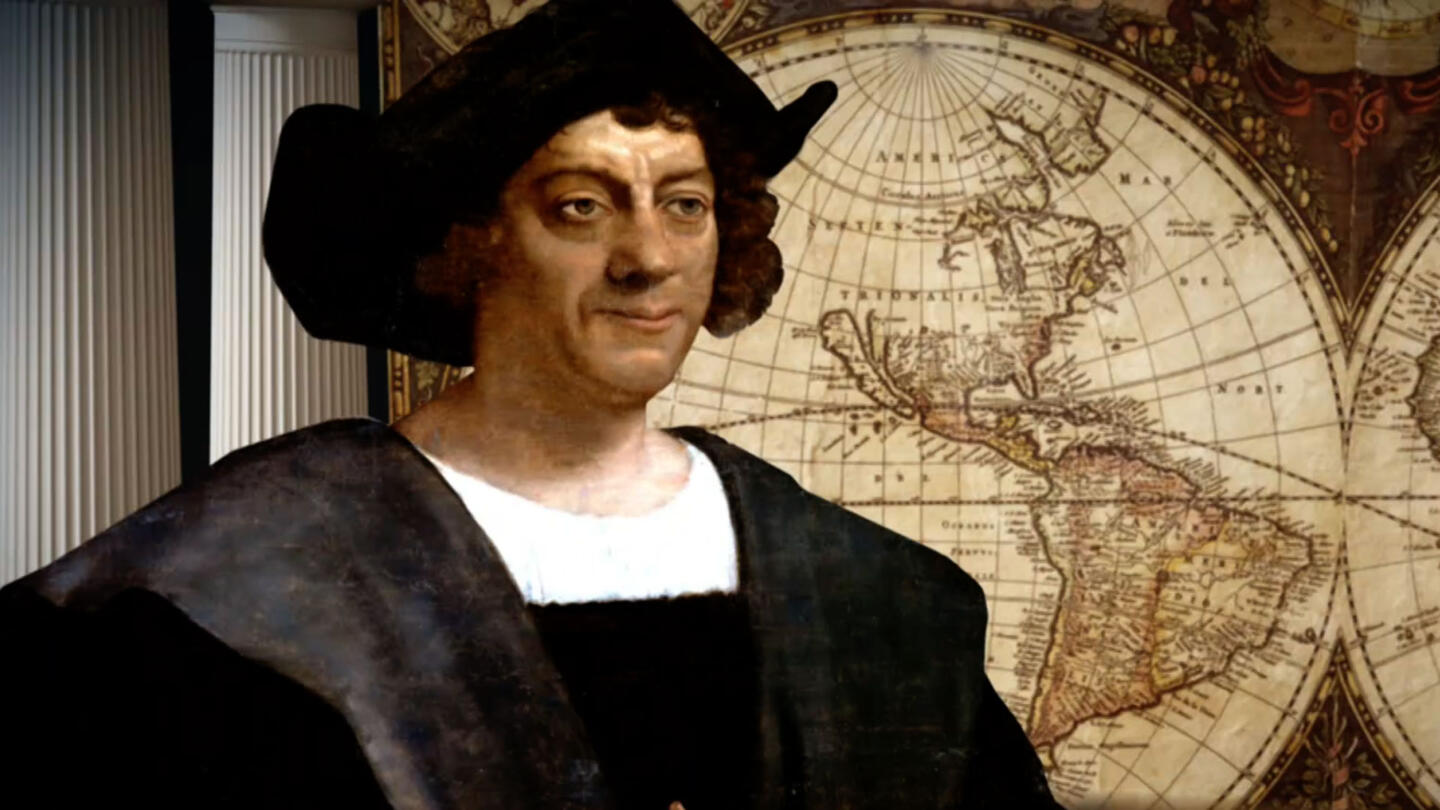
Columbus’s well-known voyages can
inspire a milieu. When people realized
that Columbus had found a new continent
instead of reaching Asia, Spain claimed the
entire hemisphere. This terrified other
nations. Many of the intrigues surrounding
Henry VIII began as attempts to neutralize
Spain’s new influence. At this time,
the last Moors fled Spain, and an Inquisition
raged across Iberia. Then a new disease
came to Europe — syphilis. Herbs
which were reputed to cure it became
priceless; but they were imported from
the East. Merchants were forced to pass
first through Spain’s Catholic Inquisition,
then through Moslem nations that furiously
opposed all Christianity, and finally
across great deserts, all in search of the
precious herbs.
In a fantasy world based on Columbus’s
Spain, the PCs might begin as exploreradventurers,
driving enemies from their
homelands. When the PCs have some
experience and all the enemies are defeated,
their conquests lead them to a New
World. This thrusts the party into politics.
Now the characters must pacify other
nations that are jealous of their new conquests,
and they have to deal with the
inquisitions at home. Perhaps PCs zealously
hunt for victims, or maybe the party?s
foes accuse them of heresy. Finally, a new
disease strikes. Now the PCs return to
their old roles as wandering swashbucklers
and smuggle precious herbs and medicines
from Oriental lands.
Many AD&D game worlds are based on
Viking mythology. The Norsemen also
discovered the new world of America,
which they called Vinland. Archeologists
speculate that a religious ritual brought
the Norsemen to the New World. Viking
sailors threw wooden statues of deities
into the water and followed wherever the
statues washed. Some statues may have
gone to the Americas by floating along the
West Greenland Drift. Most Viking colonists
were convicts. Under Norse justice, a
criminal could be declared an outlaw and
cast out of his homeland. An outlaw had
no legal protection, so if he was robbed or
killed, the assailant would not be punished.
These outlaws often fled to the New
World, and a few exiles or would-be kings
came with them. Then the climate
changed, and the Little Ice Age settled on
the northern sea. No Viking settlements
survived as the frigid summers starved the
settlers. In AD&D games, PCs might be
driven to the New World or else pursue
old enemies there. Or they might be the
equivalent of American Indians, meeting
strangers from an unknown continent.
Perhaps the PCs are the only survivors of
an ice age, trapped by ice on a vast, unsettled
hemisphere.
Often, a ?New World? is somebody else?s
?Old World.? European colonists seized
Africa, both Americas, and the Pacific
Islands, but Western civilization was not
always the aggressor. Barbarian tribes
conquered Europe after the fall of Rome.
It is worth noting that some of these same
barbarians -- the Mongols -- were a grievous
threat to China, then Asia?s most
advanced power. PCs might explore a new
dominion or face enslavement by ruthless
colonists. Imaginative DMs will think of
many responses of the locals to the
invaders. For example, when Westerners
began to meddle with China, the Imperial
Son of Heaven invited more to come. He
felt that Chinese society was so superior to
anything the barbarians knew that their
colonists would leave, ashamed. ?Many
have conquered the Middle Kingdom,? he
said, ?and none have left unchanged.?
A milieu might be inspired by some new
technological or magical invention. Military
innovations might change everything
in a fantasy world. In our actual Middle
Ages, Charlemagne invented the entire
feudal system to support his armored
cavalry. Later, the use of pike formations
and long bows helped destroy knights ?
and their society. A rapidly firing magical
weapon could pin armies into trenches,
prolonging a war for years, the way the
machine-gun did in World War I. Inventions
like the printing press or some sort
of magical traveling device might have
dramatic effects on philosophy and mores
in a fantasy world. Another impetus for
adventures might be a natural disaster.
What if the PCs? homelands slowly flood,
become volcanic, or dry into a desert?
Useful land becomes scarce, people fight
over what remains, and eventually the
entire culture changes.
Politics might keep PCs adventuring. The
Greek city-states and Caesar?s overthrow
of the Senate can inspire some DMs. If a
king dies without an heir, his land will be
thrown into chaos. Actions by deities also
can start campaigns, causing prophecies,
holy wars, or long quests for purity. What
if the official priesthood has become corrupt,
and PC clerics or paladins receive a
quest to restore the church? The idea of
an inquisition was mentioned earlier, and
it fits into many campaigns. Such purges
need not involve religion, since racial
pogroms and searches for political radicals
work in a similar way. The number of
possible themes for campaigns, like the
number of possible AD&D adventures, is
infinite.
Someone else's baby
Almost every DM uses some prewritten
adventures. Few of us have time to write a
new module every time we play a Game,
and an occasional change keeps adventures
from becoming predictable. As you
have certainly heard before, prewritten
modules need to be adapted for each
specific world. When using a module, you
should look through it for encounters to
connect, exorbitant treasures to eliminate,
and so on. Then you can decide where to
set it in your campaign world and why
your PCs should care. Usually, introductions
to adventures need the most revision.
You should find a reason for your
PCs to undertake the adventure. Examine
previous events in the campaign and find
a
way to make the PCs want to adventure.
Change the endangered kingdom to the
one where your characters live. Make the
NPCs into people that your PCs love or
hate.
Writing the campaign
Inventing a campaign world is quite
similar to writing an individual adventure.
First, you should pick a conflict and a
group of potential PCs that would be
forced to adventure in that struggle.
Almost any important event can start a
campaign. Many campaigns involve at least
some of the following factors: social
changes, politics, economics, natural disasters,
discoveries, religious events, and
wars. After you have picked a theme,
draw a map of the area where the campaign
will occur and develop any special
ideas you have; such as new artifacts or
special monster alliances. The Wilderness
Survival Guide explains how to design
a
continent. Finally, you should make
a
rough outline of major events that will
occur during the PCs? lives. Feel free to
revise this future history at any time if
something becomes inappropriate or if
you have better ideas. Nothing needs to be
true until you tell the players. Your best
ideas will probably come long after the
campaign has begun.
When you are planning your world?s
future, consider how the PCs will develop.
First, the players need to decide what
their characters are like and need to learn
about their world. Their early adventures
should introduce them to important NPCs
and give each character some ties to the
campaign world. Some PCs might find
special magical items; one could fall in love
with the baron's daughter. The early
adventures are a way to explain your
campaign to PCs without boring lectures.
They should also show the players what
sort of campaign you plan to run. If you
want a campaign of heroic battles, give
them someone to fight. If you want PCs to
make clever plots and intrigues, start the
campaign with a mystery. These early
quests are like teaching people to swim:
You want them to get wet but not drown.
After the PCs understand their plight,
focus on one part of your theme. Your
campaign will probably develop several
mega-adventures, each one composed of
many quests. Each one should climax with
a mighty adventure that resolves some
important dispute. The PCs will try to
solve various problems, only to learn that
those issues are merely part of a greater
struggle.
These mega-adventures should gradually
come closer and closer to the campaign?s
real conflicts. Finally, just as each megaadventure
had a climax, you can have one
magnificent scenario which involves everything
in the whole campaign. This will
probably resolve the main conflict of your
world. Then you must start a new milieu
with a new crisis. If you wish, you can
keep the same world and PCs. Simply
invent a new theme, preferably based on
the old conflict.
Great solutions often lay seeds for newer
conflicts. If there had been no French
Revolution, Napoleon could never have
conquered Europe; without the Napoleonic
Wars, none of the revolution and reaction
of Victorian Europe would have
occurred. Sometimes, a period without
major conflicts cannot be avoided ? or
may actually be desirable as a reward to
PCs for quelling their world?s flux. You
should rush through these periods, ignoring
rolls for random events and other
distractions.
DMs who base fantasy campaigns on
history can find an almost endless supply
of background material. For example, the
details in this article on the end of feudalism
came from volume one of Naked to
Mine Enemies, by Charles W. Ferguson.
Anton DePorte?s Europe Between the
Superpowers describes the politics
between the Soviet Union and United
States after World War II. You can find a
perfect model for PCs in Columbus' time
by reading James Street?s novel, The Velvet
Doublet. If you are interested in a broad
view of world history, you might try The
World, An Illustrated History, edited by
Geoffrey Parker.
The DM does not have to make up everything
in a campaign, as the PCs will help
too. The five D&D® game sets show how
most campaigns develop. As Basic characters,
PCs are buffeted by every force, but
once they reach Expert level, they can
defend themselves. Companion-level characters
are strong, masters of their own
fates, and when PCs reach the Master?s
set, they can influence the world. Immortals
make history with their every move,
but even they must go adventuring. A
Chinese curse says, ?May you live in interesting
times.? All PCs should be so
cursed.
MARCH 1989