| The origin of paladins | Paladins of justice | Paladins of war | Paladins of glory | Paladins of defense |
| Paladins and religion | Paladins and cavaliers | - | - | - |
| AD&D | Dragon magazine | - | - | Dragon #148 |
Of all the character classes in the AD&D®
1st Edition game, the
paladin is one of the most misunderstood.
When comparing
campaigns, you will find people role-playing
paladins in radically
different ways. Some paladins treat anyone
who isn?t of their
social class and heroic standing as vermin.
There are also those
paladins who drink nothing but milk and
spend most of their
time helping little old ladies across the
street. Will the real
paladin please stand up?
Complicating matters is the Unearthed
Arcana tome, which
unearthed paladins but reburied them
as part of the cavalier
class. The cavalier class, however, is based on certain medieval
knighthood orders that did a lot of foolish and unpaladinlike
things (such as at the Battle of Agincourt, where the cavaliers
mowed down their own troops in pursuit of the glory of battle,
only to be used as pincushions by sturdy peasant bowmen). How
can paladins be categorized as part of this class?
To understand paladins, you have to look at the reasons
paladins exist and view their attitudes
and actions from a variety
of perspectives.
The origin
of paladins
Paladins exist to combat evil. Their primary
abilities are most effective against
evil; thus, whatever powers created paladins
and gave them their abilities had the
destruction of evil as the main objective.
Paladins also exist to protect and heal.
They have been given powers to aid the
sick (e.g., by curing
disease) and heal minor
wounds (e.g., laying on hands). Thus,
paladins, who are destroyers, are also
healers. Their healing abilities are obviously
not meant for evil beings; it would
be most natural to heal those who are true
and virtuous, especially if such people
could not help themselves. Therefore, the
powers that created paladins want them
to
protect the innocent.
Another characteristic of paladins is
their ability to turn undead and to cast
clerical spells. Obviously, in addition
to
their formidable fighting skills, a paladin
needs the wisdom and piety of a cleric.
Therefore, paladins were created to serve
the gods. They form religious orders of
knighthood; in fact, they are the fighting
champions of their religions.
Because paladins have different abilities
and purposes, each one probably differs
in
his individual emphasis on which goal is
most important. The pursuit of these
ideals leads to four different types of
paladinhood which, while lawful good to
the core, provide players and DMs alike
with different ways of playing this class.
Paladins of justice
To some paladins, justice is the ultimate
ideal. These paladins believe that they
exist to serve an unswerving and unyielding
law, and that this law is in the best
interests of Good.
A paladin of justice will spend his life
pursuing injustice, seeking to punish the
guilty. Such a paladin travels in search
of
wrongs to be righted, of crimes to be
prosecuted, and dead to be avenged. A
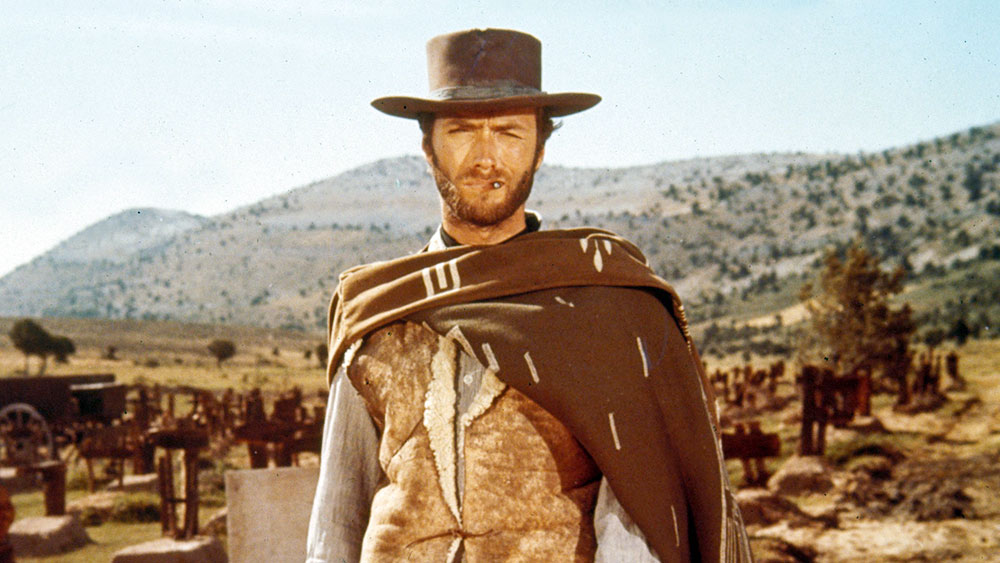
paladin of justice seems to be grim and
obsessed (consider him to be a Clint
Eastwood, Judge Dredd, or Batman sort of
paladin).
Paladins of justice are found among all
sorts of religions but are especially prominent
among those religions devoted to law
and justice. The highest priority, of
course, would be righting the wrongs of
the enemies of the religion (a paladin
of
Tyr, if
such paladins exist in a campaign,
would be devoted to fighting injustice
caused by giantkind or Loki's
agents, the
enemy of the Norse
gods).
Paladins of war
Because so many of the paladin?s abilities
are directed at fighting evil, it is logical
that many paladins will devote their energies
to the Holiest of Wars: seeking out
and exterminating evil. These paladins
seek out sources of evil and attempt to
eliminate them in the most effective manner.
Paladins of war are the sort who can?t
decide whether to take their annual vaca
tions in the Abyss or in the Nine Hells,
so
they do both. Paladins of war are extremely
aggressive?sometimes too aggressive.
Stories abound about paladins who
wander city streets, using their detect
evil
ability on everyone passing by; when such
a paladin finds someone of evil bent, he
takes out his gleaming sword and slays
the
miscreant. Well, paladins are supposed
to
slay evil?but what is wrong with this
picture of paladinhood?
The answer is simple: It is missing the
quality of justice. Even though a paladin
may sense that an entity is evil, no proof
exists that the entity has committed an
evil
deed unless it is caught in the act. Paladins
should slay evil beings while the evil
actions are taking place (e.g., attacking
someone who is torturing peasants), not
just because the beings are noted to be
evil. The paladin?s detect evil ability
is
meant to give an advantage in dealing with
evil and to prevent him from being
tricked, not to give him a license to kill.
Compounding the problem of fighting
evil is the fact that evil is often lawful.
A
lawful-evil culture may have a rigid system
of slavery, and if a paladin slays a person
for committing this evil act, the paladin
is
breaking the law. If the paladin breaks
the
local law while fighting evil, does he
violate
his code?
In my view, a paladin is bound not to the
law of a nation or individual (unless he
has
sworn fealty to that nation), but to a
more
personal law, the principles by which his
life is governed (the conflict between
the
principles and rigid laws of the Solamnic
Knights
in the DRAGONLANCE® volume
Dragons of Winter
Night is an excellent
example of this conflict in action). This
does not allow the paladin to assassinate
an evil king, but it does allow him to
organize
rebellion and encourage overthrow of
the evil ruler if the ruler will not agree
to
change his ways.
This law governs a paladin?s relations
with evil humans and demihumans. Paladins
are considered to be at war with evil
humanoids, undead, and monsters such as
evil dragons, demons, daemons, and devils,
and can usually slay them with impunity,
preferably by a clean kill in combat.
Paladins never use torture, nor will they
permit themselves to be led out of the
room just when the rest of the group is
about to stick bamboo splinters under the
drow's
fingernails.
Paladins of glory
One of the primary goals of a paladin is
to be an effective leader and a symbol
of
goodness, to serve as an inspiration for
all
people to follow the ways of lawful good.
These paladins seek glory.
Of all types of paladins, a paladin of
glory is closest to? a Knight
in attitude. A
paladin of glory goes on quests for the
destruction of the most prominent evil
beings available and gives himself long
flowery epithets, such as Sir Edwyn Darius
Dracobane Demonslayer, Knight
Champion of the Order of Golden Gryphons,
Darkcrusher, Paragon of Chivalry,
etc. But paladins of glory, unlike cavaliers,
do not have a ?haughtier than thou? attitude
toward people of lesser repute or
social status. Yes, they often enjoy their
fame and fortune, but everyone has the
potential to serve good; only evil is not
worthy of respect. A paladin of glory may
get annoyed when someone fails to treat
him with respect, and he may view this
as
a sign that that person is evil (since
anyone
who was really good would certainly be
smart enough to give the paladin the
honor he deserves). But such a paladin
doesn?t go out of his way to make enemies
by insulting people, and he generally
treats common folk with courtesy.
Paladins of defense
The fourth variety of paladin
is sometimes
referred to in gaming as the "boy
scout." The goals of these paladins are
to
protect the innocent, defend the weak,
and liberate the oppressed.
Paladin defenders, like Heroes on some
television series, travel about in search
of
people to save. They heal the sick and
try
to comfort fears, encouraging persecuted
people who are too timid to fight back.
Most important to a defender is the safety
of the innocent; if a paladin would endanger
innocents by picking a fight with evil,
he'll back down but will try to mete out
justice as soon as it is safe to do so.
Paladin defenders should (in my view)
form the majority of paladins. They are
gentle and courteous people but can be
fierce in battle. Paladin defenders usually
acquire good reputations and are the
variety of paladin most hated by evil.
Paladins and religion
Paladins are granted their abilities by
the gods. They are NOT simply fighters |or|
Knights;
they are priests as well, knowledgeable
in the ways of their religions,
and are also instruments of their religions.
The attitudes of paladins are shaped by
their doctrines. A paladin of a war god
would usually be a paladin of war; a paladin
of a justice god would be a paladin of
justice; etc. More than one goal may be
followed if the lawful-good deity of a
paladin
controls more than one area (such as
Tyr, as
noted in DEITIES & DEMIGODS).
Paladins are responsible to the priesthood
for their actions. Bestowing paladinhood
may be the duty of a priest, the
paladin?s status being granted only after
the candidate had proved his skill and
his
worth; the appointment must be confirmed
by the deity himself. Likewise,
priests may have the ability to strip paladinhood,
although only under the direction
of the deity concerned. Paladins are
for the most part rare.
A paladin
must swear an oath to follow
his doctrine with absolute faithfulness.
Minor violations may be grounds for loss
of paladinhood. If a religion forbids a
paladin to travel on a certain day of the
week, the paladin would have to petition
the deity or his servants to lift the ban
in
life-or-death circumstances.
Paladins are considered lesser priests in
the hierarchy of a lawful-good church;
they will never be found within higher
levels of religious leadership. Paladins
are
considered to be more effective in the
field than at the pulpit.
Paladin limitations are subject to alteration
by the church. For example, whereas
a paladin may be limited in the number
of
his possessions, this limitation may also
apply to priests of the paladin?s religion.
Some religions might permit paladins to
save up wealth to build major strongholds,
to further the territory of their religion.
Some religions may permit paladins to
associate with neutral beings, preferably
to convert them to the side of good. In
principle, however, paladins should be
self-reliant, should not covet wealth or
possessions, and should not associate with
corrupting influences.
Another issue is that of paladins and
marriage. Some DMs insist that paladins
take vows of chastity. Others are more
liberal and permit paladins to marry without
relinquishing their paladinhood. In my
view, marriage laws vary according to the
governing religion and the rules of the
Order. In the WORLD OF GREYHAWK®
setting, the King of Furyondy
is described
as a paladin, and his son is also a paladin,
which would appear to indicate that some
orders of paladinhood are permitted to
marry. Historically, knights who strove
for
paladinlike virtues often took a vow of
chastity. This is yet another case of both
sides being right. It should be left to
the
DM to determine whether certain orders
are allowed to marry.
Because paladins serve different religions,
it is unlikely that paladins of differing
religions will always get along.
Regional rivalry is also a cause for interpaladin
conflict. Because of these differences,
some orders of paladins will label
other paladin groups as false and will
fight
them when they meet. Many paladins have
lost their lives and honor during such
conflicts. When there is a great evil to
fight (a rampaging dragon or a lich with
hoards of undead), however, regional and
religious rivalries take a back seat to
more
important needs.
Paladins and cavaliers
Like Knights,
paladins often come from
the upper classes of society. Paladins
often
seem concerned with glory, which is the
chief pursuit of all cavaliers. At least
on
the surface, the two classes appear very
similar, so much so that paladins are considered
to be a subclass of cavaliers, not
fighters.
The principal difference between paladins
and Knights is attitude. Knights
tend to be arrogant and haughty toward
those who are of a lower social station.
Paladins are much more humble; humility
is considered a virtue.
Cavalier-Paladin Experience Table
| XP | Level | d10 HD |
| 0 -- 3500 | 1 | 1 |
| 3,501 -- 7,000 | 2 | 2 |
| 7,000 -- 15,000 | 3 | 3 |
| 15,001 -- 30,000 | 4 | 4 |
| 30,001 -- 60,000 | 5 | 5 |
| 60,001 -- 120,000 | 6 | 6 |
| 120,001 -- 250,000 | 7 | 7 |
| 250,001 -- 500,000 | 8 | 8 |
| 500,001 -- 1,000,000 | 9 | 9 |
Cavaliers have many powers that are
also included in the paladin class. These
powers include weapons of choice (another
form of weapon specialization),
near-total immunity to fear-based spells,
and parrying and riding skills. How should
a DM handle paladins? Are they cavaliers?
There are at least 3 available options
for the DM. First, he can use the paladin
with all the cavalier
abilities listed for it in
Unearthed Arcana. Second,
he can say
paladins
are fighters, as given in the 1st
Edition Players Handbook,
and ignore
Unearthed Arcana. Third,
he can combine
the 2 books, creating cavalier-paladins
and fighter-paladins.
Fighter-paladins
are simply those listed
in the Players Handbook. They may
be
given a couple of Unearthed Arcana
options,
such as riding, horse knowledge,
and parrying, but otherwise are as they
were originally described.
Cavalier-paladins have many of the
abilities of the true cavalier, such as:
1. The opportunity to improve characteristic
scores by rolling percentile dice
(unlike cavaliers, they may only choose
one of the following characteristics to
improve at each level: strength, constitution,
or dexterity);
2. Weapons
of choice, as described in
Unearthed Arcana, but making multiple
attacks with a weapon of choice as if they
were three, not five, levels higher;
3. The riding ability of a cavalier and
the
knowledge of horses of that class;
4. Immunity to fear but without the
ability to radiate that immunity in a 10'
radius) and a 30% immunity to the following
spells and effects: beguiling, charm,
domination, hold, hypnosis, magic jar,
possession, sleep, suggestion, and mind
blast; and
5. The ability to function at negative HP
totals, like cavaliers.
The cavalier-paladin does not have the
armor requirements of a cavalier. He owes
his loyalty not to a liege Lord but to a religion,
and his hospitality duties are colored
by his allegiance to a church or religious
group. All of the knightly virtues listed for
cavalier-paladins are applicable, except
pride. Under no circumstances will a
paladin mow down his own troops just to
get into battle more quickly. Instead,
a
paladin is concerned with the lives of
all
who serve under him or with him, and
fights to protect them as well as gain
personal
glory. In a world where fighterpaladins
exist alongside paladin-cavaliers,
the paladin-cavaliers should pay extra
experience points for rising in level.
A
suggested experience-point table is given
here for cavalier-paladins.
The paladins' code
Sometimes it is difficult to decide how
a
paladin
should be role-played. The following
is a suggested set of guidelines that I
have found useful:
Death before dishonor.
Dishonor before innocents are harmed.
All women are to be honored.
Be polite and courteous even if insulted.
All challenges are to be met honorably.
Obey your religion and honor its tenets.
Obey the laws of the land where they do
not conflict with your religion.
Respect all opponents.
Avoid all excesses.
Care for the sick and aid the distressed.
Do not permit evil to do harm.
Paladins are a very interesting class to
play in the AD&D®
game. In many ways,
paladins are the ultimate heroes in heroic
fantasy. Being ?goody two shoes? isn?t
for
everyone, but it can be a lot of fun.
AUGUST 1989