| What Kind Are You? | Past and future | Adding those details | Escaping stereotypes | - |
| 1st Edition AD&D | - | Dragon magazine | - | Dragon #156 |
Characterization Made Easy
A little personality goes a long way for all characters
by Scott Bennie
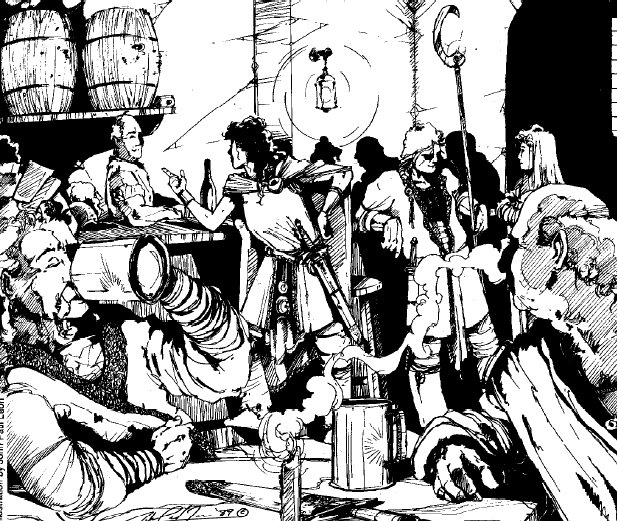
Illustration by John Paul Leon
?My character is 30th-level barbarian-cleric
demigod with a sword of the cataclysm,
plus sixteen other artifacts!?
?Yeah, well, what is he like??
?Well, he?s got a strength, constitution,
dexterity, and charisma of 26, and he has
more hit points than Odin!?
?I mean, what?s his personality??
?Personality? Oh, alignment! He?s chaotic
neutral. That way he can do anything he
wants. If anyone tells him what to do?oh,
man, can he ever cut him down! Heh, heh,
heh.?
?No, I meant personality.?
?Well, he has a pet dragon, Gogetem,
that has three heads, and it can eat Bahamut
and Tiamat for breakfast.
. . .?
The AD&D® and D&D®
games involve
the role-playing of character personalities
that exist in a Game world. However, there
are quite a few players who play these
games as exercises in combat without the
slightest idea of what a ?role? is. While
people are entitled to play these games in
any ways that they see fit, I?ve found that
these games (and all other role-playing
games, for that matter) are a lot more fun
when I role-play than when I am involved
in nothing but search-and-salvage or combat
sessions.
Some people say that role-playing is not
easy and that the use of role-playing
makes a game enjoyable only if you have
some background in drama. I do have a bit
of experience with drama (which might
prejudice my remarks), but I think that it
is possible to role-play effectively without
much acting experience. Besides, aren?t we
all natural actors inside? This article is
meant to give you ways to add depth to
your characters beyond the things normally
found on character record sheets.
The AD&D and D&D games assume that
characters come from a fantasy medieval
background and get involved in adventures
using that very setting. However, in
both actual medieval times and in fantasy
novels, not everyone became an adventurer.
To leave the mundane life behind is
to live a life of constant danger, to confront
terrors that only the truly heroic or
truly insane would think of facing. This
requires a special type of individual. Take
a look at your character and ask yourself:
Why is he an adventurer? Why did he
choose to risk his life seeking fortune and
adventure, instead of settling down and
being a farmer, a mason, or a blacksmith? <The
Smith>
What kind are you?
People become adventurers for any
number of different reasons. Here is a list
of possible adventurer types, along with
relevant motivations and examples:
Adventurer: The character cannot live
without excitement in his life. This character
craves the thrill that he can get only by
putting his life on the line. Rumors of
great danger and peril will urge him into
the unknown. Prince Valiant, from the
popular comic series, is a good example of
this sort of character (being under a curse
of lifelong restlessness and discontent with
complacency).
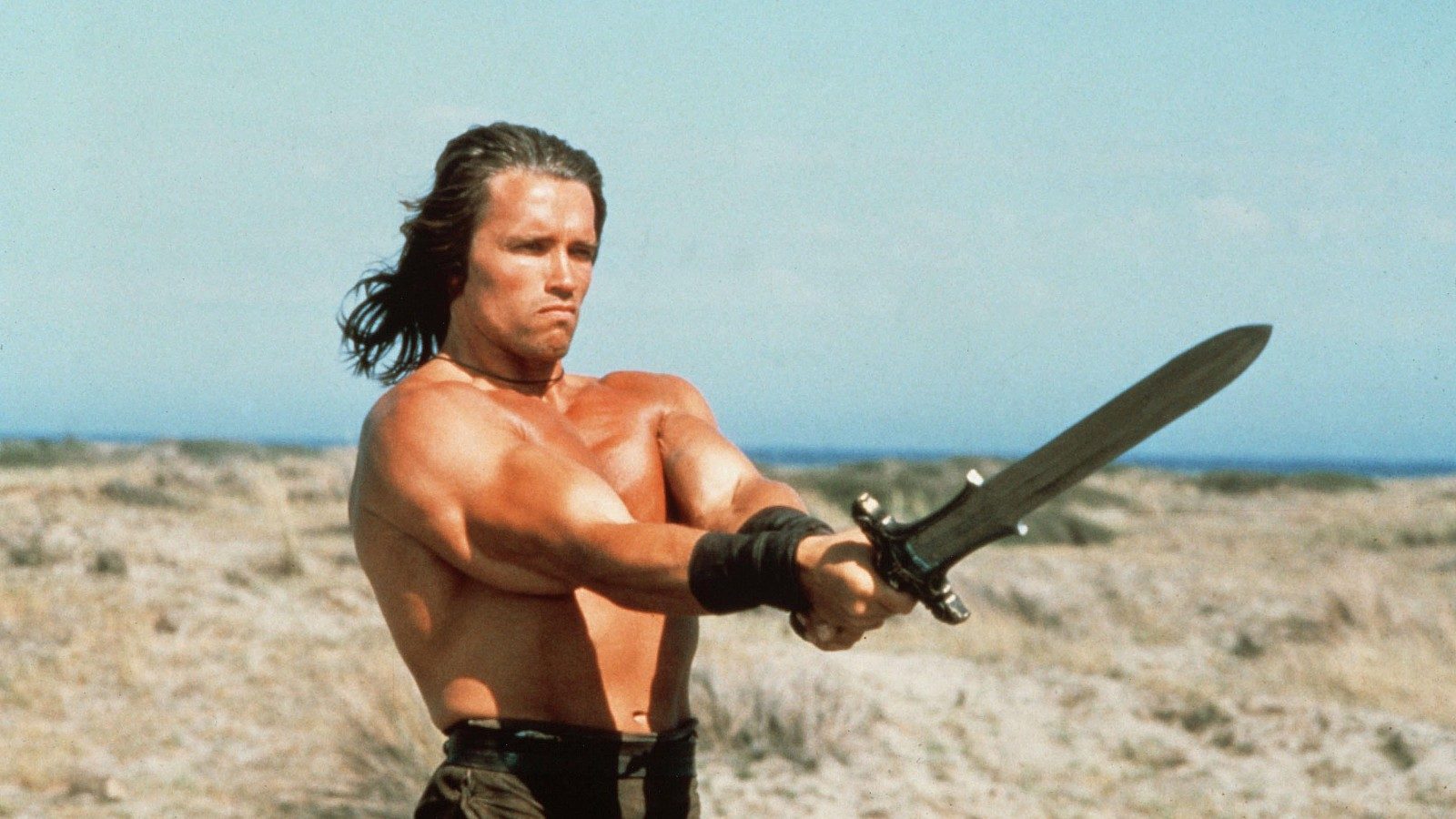
Avenger: This character has a single
goal: revenge. He wants to get back at
someone or something that has wronged
him, settling an old score. Rumors about
the hated subject motivate this character
into adventure. Batman is a prime example
of this sort of adventurer, as is Conan in
the movie Conan the Barbarian.
Crusader: This character is out to save
or reform the world. He has a mission in
life that may far exceed his reach, but he
will strive for it though it may not benefit
him directly. A crusader may have associated
goals, such as saving damsels in distress
or slaying dragons. Rumors about
the existence of evil in one form or another
will prod him into adventuring. Most
paladins are good examples of crusaders.
Hoarder: This character believes that the
love of money is the root of all fun. The
hoarder wants to become as wealthy as
possible. He may spend money extravagantly,
wanting to live a life of luxury, or
he may make Scrooge look like a spendthrift.
The hoarder is motivated by new
sources of wealth; rumors of vast treasure
caches send him off on new quests.
Dwarves are often played as hoarders,
contributing their gains to clan or personal
hoards.
Paragon: This character views adventuring
as a personal challenge, putting himself
in peril to test his abilities. A paragon
wishes to improve one or more of his skills
to absolute mastery (e.g., the best archer
in the city of Botheringdale might wish to
become the best archer in the kingdom).
When a paragon learns about a possible
challenge to his abilities, be it a challenger
at a tournament or a monster from which
no man has ever escaped, he will do his
best to meet and master that challenge. A
character who has specialized with a
certain type of weapon (like a kensai
from
the AD&D Oriental Adventures tome)
could be considered a paragon, as could a
character who develops a reputation as a
dragon-SLAYER.
Power-seeker: This character seeks
power, be it political, military, spiritual,
or
economic. A power-seeker won't necessarily
try to get as many magickal items as
possible to squash potential opponents,
but he will usually go after positions of
power within the campaign's social structure
(e.g., a cleric would strive to become
the high priest of his religion, while an
ambitious yeoman would work toward a
captaincy). A power-seeker might develop
a goal and work toward it, or else develop
his skills and look for a goal. Adventures
that offer possibilities of furthering one's
goal will interest power-seekers (e.g.,
rescuing a noble?s kidnapped daughter
might offer favors from the noble.)
Psychopath: This character adventures <psychopathy
is a spectrum of a lack of emotion and empathy>
for the sheer joy of killing and violence, <sociopath would be closer
to the right word for the joy of killing>
usually just to prove to himself how tough
he is. This is not an alignment-specific
role; a lawful-good character might adventure
for the joy of killing orcs, giants, and
demons, getting no satisfaction from an
adventure unless he has killed something.
It takes very little to motivate a psychopath;
any victim will do (the easier to
destroy, the better). A psychopath is usually
seriously disturbed and has probably
suffered some severe trauma that is connected
to the object of his hatred (e.g., a
ranger whose family was slaughtered by
orcs is now becoming feared for her fanaticism
in slaying all orcs and goblins she
can hunt down).
Servant: This character is in the service
of either a person or an agency. Samurai,
clerics, paladins, and guild-member thieves
are good examples of these adventurers.
He is either sworn to serve his master (as a
feudal knight is pledged to his king) or is
in his master?s direct service (e.g., a
prince?s bodyguard). He goes adventuring
because he has either received orders
from his master or he has heard information
that concerns his master (such as an
assassination plot against one of his master
?s allies).
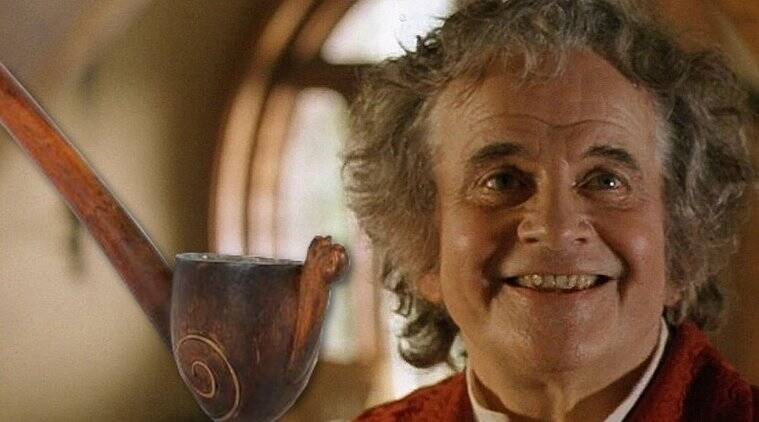
Subsister: This character is not normally
an adventurer, and he probably lived a
comfortable life until (often reluctantly) he
was forced into adventuring due to circumstances
beyond his control. Perhaps
his family was outlawed, his village was
destroyed in an orc invasion, or his sister
was lured into a chaotic-evil order. Subsisters
may either enjoy adventuring and
become full-time adventurers, or else try
to settle back into a normal life as soon as
possible (with frequent interruptions).
Think of Bilbo Baggins in J. R. R. Tolkien's
The Hobbit, or nearly any monster-investigating
character in Chaosium's
CALL OF CTHULHU® game.
<Cthulhu
Mythos>
Superstar: The superstar has but a single
goal in life?glory! He wants to become
as famous as possible and actively seeks a
good reputation. He might even have hired
bards to accompany him, although this
tactic can backfire (as witnessed by Sir
Robin in Monty Python and the Holy
Grail). A superstar goes on an adventure
when he hears about an opportunity to
earn glory. Many Knights are
prone to this role.
Note that these motivations are not
mutually exclusive. There is no reason
why a character can?t be both a crusader
and a paragon; he simply has more than
one goal. People are complex, and so are
characters.
Past & future
It has been said that to understand
someone's present state, you must understand
where he has come from and where
he is going to. Once you have established
your character's motivations, ask yourself
what caused your character to have these
attitudes. Why does your character act
like this?
One commonly neglected area that is
absolutely essential to character roleplaying
is a knowledge of that character?s
background. Why is your character lawful
good or chaotic evil? Why is he an
avenger, a crusader, or a power-seeker?
What forced him to go adventuring?
Finding these answers is often more
difficult than you would think. But understanding
your character?s background is
crucial in role-playing. Here is a checklist
of questions that, when answered, will
enhance your character.
1. Background
a. Where was your character born?
b. Who raised him?
c. What was happening in the region
when he was growing up?
d. Does he have any relatives? If so, how
did he get along with them? What are
they doing now?
2. Motivation
a. What are your character?s immediate
goals (i.e., what would he like to do in
the coming year)?
b. What are his long-term goals (i.e., what
would he like to be doing 20 years from
now)?
c. What type of person would be his ideal
mate?
d. Who is his patron deity? Is he a devout
worshiper?
e. Is he a devout member of any nonreligious
cause (i.e., is he a loyal servant of
a king or baron)?
f. Is there any race, creed, alignment,
religion, or the like against which he is
strongly prejudiced?
g. What is his greatest fear?
h. What is the one task he absolutely
refuses to do?
3. Idiosyncrasies
a. What is your character?s motto or favorite
saying?
b. What is his favorite color?
c. Describe what he would wear if money
were no object.
d. What is his favorite food? His favorite
drink?
e. What is his favorite animal?
f. What habits of his friends annoy him
most?
4. Traits
Rate these behaviors for your character
on a scale of 0 to 10 (0 means he has no
trace of this trait, behaving in a completely
opposite manner; 10 means he has great
amounts of this trait).
Courtesy
Self-sacrifice
Valor
Generosity
Sobriety
Optimism
Forgiveness
Patience
Helpfulness
Calm temper
Curiosity
Cheerfulness
Honesty
Loyalty
Name at least 1 other trait in which
your character possesses a rating of 8 or
better.
5. Miscellaneous
a. What well-known media figure from
sports, movies, or politics most closely
resembles your character?
b. What would be his theme song?
c. If his friends were to write his epitaph,
what would it be?
d. What would his job be in modern
society?
A lot of these questions are trivial; certainly,
not all of them are needed to understand
your character (although they can
be fun to think about). Furthermore, a
character?s background often relies on the
campaign background and can be heavily
influenced by the Dungeon Master. Sometimes,
too, it takes a long time to get the
feel of the character?s role. This list should
be something to think about when you
design your character, not something that
must be filled out. However, if you have
been playing the character for a few years
and you can?t really answer these questions,
maybe you need to work on developing
his personality.
Adding those details
Some character traits that are rarely
developed are weaknesses and phobias.
Most people have them. Considering the
horrors that are rampant in most fantasy
worlds, shouldn?t each character have
something that gnaws in his gut and
makes him break out in a cold sweat?
Perhaps a great fighter was tormented by
kobolds when he was a boy; although he
could now slay a hundred of them, he still
fears them. Such phobias are present in
fantasy and adventure literature and
movies. Conan, the greatest of all barbarians,
feared magic due to his superstitious
upbringing. Indiana Jones hated snakes.
Fears provide dramatic moments and
excellent chances to role-play. If a character
overcomes his fears, then he can claim
that he?s really accomplished something.
However, such weaknesses shouldn?t be
used by the DM to terrorize the character
(or the player).
Likewise, a character should have some
clear virtues. A character with no good
points is utterly unsympathetic; would you
sympathize with a petulant, greedy, cowardly
fool? You might if the fool was in a
comedy, but that is not the stuff of heroic
fantasy.
Even evil PCs need not be totally reprehensible.
One of my characters, Morgor
the Maleficent (a lawful-evil fighter) was
born in a town that he despised. His major
goals in life are to become a rich and
powerful fighter, hire an army of mercenaries,
raze the town, sow its fields with
salt so that nothing will grow there, then
hire an evil cleric to place a curse on its
ground so no creature may dwell there.
He is arrogant, loves violence, and belittles
the people he is with, constantly insulting
them. Pretty rotten guy, huh?
Well, for all of his faults, Morgor has
earned the respect of those with whom he
travels. He is very brave, sometimes facing
monsters single-handedly while the rest of
the group hides. He is honest, courteous
toward women, and despises torture and
other acts of gratuitous brutality. He does
not steal, nor does he try to take too great
a share of treasure. He might even be
redeemable, if people weren?t too busy
checking his alignment and writing him
off as a lost cause.
While most evil characters I?ve seen (and
a lot of chaotic-neutral characters, too)
tend to be an indistinguishable line of
greedy, back-stabbing, disruptive morons,
Morgor has personality and strength.
Morgor starts a lot of personality clashes
when he enters a group, but such conflicts
aren?t necessarily settled by swordplay or
assassination.
Escaping stereotypes
Another concern in role-playing involves
the use of stereotyped roles. How many
can you think of in 60 seconds? I thought
of these:
1. All wizards are old men with long
beards and robes.
2. All evil characters wear black.
3. All good characters wear white.
4. All half-orcs are ugly and nasty.
5. All giants are stupid.
6. All thieves are small and cowardly.
7. Evil characters are unredeemably
awful.
8. Elves are flighty and carefree.
9. Major bridges are guarded by trolls,
who ask for a toll.
10. Every dungeon has a chessboard
trap.
I?m certain you thought of others. Some
of these represent traditional views of
archetypes in the fantasy genre, but they
are so overused that they have become
cliches. Why can?t one tribe of elves and a
clan of dwarves be friends? Why can?t the
supposedly bright evil wizard be convinced
that his plan to conquer the world
is unfeasable? Why can?t a half-orc be
lawful good? (I once played lawful-good
half-orc, and it was a lot of fun, although
he never understood why those dwarves
were so hostile to him.)
Some people find that most fantasy
games become boring and predictable in
time. Perhaps this is because the players
cannot break free of their stereotypes, so
that everything in the game is old hat.
Another sort of stereotype is created
when a player runs the same type of character
over and over again-the same class,
the same alignment, or the same race (or
simply the same in all respects). Variety is
the spice of life; if things get dull, try
something new. It could be fun even if it
seems uncomfortable at first. (Ignore the
other players, who will look up and say,
?But you only play neutral-good human
clerics!?)
One last note: Some players, particularly
male adolescent players, are unwilling to
play female characters. Some people have
even walked out of tournaments when
they were handed female characters to
play. I?ve been in groups that have given
me a hard time because of some of the
weird characters I?ve played, but it is
peculiar that they would let people play
nonhuman creatures such as dwarves and
elves, but not human females.
Adding an accent
One great thing about playing roles is
that you get to be an offbeat actor. I enjoy
using funny voices and accents when I
play, and I am delighted when I get a
chance to do something that adds to my
character. It isn?t easy, however; it is helpful
to use models for your characterizations.
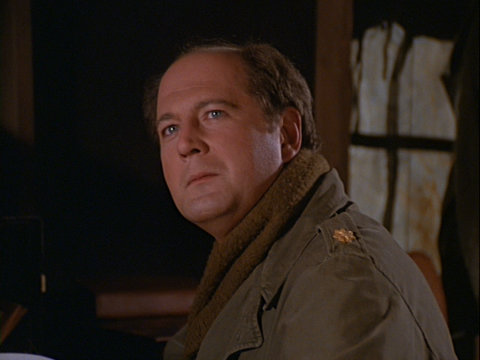
My Boston professor from our CALL
OF CTHULHU game had a voice based on
Charles Winchester from the TV show
M*A *S*H.
One of my superheroes, the
Pacifier, has a very slow drawl out of a
Clint Eastwood spaghetti western, while
the villainous Skeletos has a voice based
on J. R. Ewing of Dallas (one of my female
supervillains has the voice and personality
of Joan Collins?s Character on Dynasty).
The mage Gilmathrix has an eloquent yet
sinister voice based on British actor Clive
Revell, who did Vector on the old TV fantasy
series Wizards and Warriors. These
accents can be brought over to AD&D and
D&D games (and any others) quite easily.
It is even possible to have a character
based on Inspector Clouseau of the Pink
Panther movies (I seem to recall a prominent
DRAGON® Magazine editor who had
a gnome thief with ?an outrageous French
accent?): You don?t have to study dialects
for 10 years to, have this sort of fun. All
you need is the courage to try something
different.
Dialects, accents, and so on are not the
only mannerisms that you can give your
character. Body language (e.g., flailing
arms, constant blinking), behavior patterns
(e.g., flirting, drinking, insulting),
and favorite sayings (e.g., ?It?s clobbering
time!?) also add to the character?but don
let these define your character so rigidly
that they become stereotypes, too.
The ultimate aim in role-playing, in
creating a character and playing it out, is
to have fun, of course. Sometimes, by
examining your character and finding new
ways of making him interesting, you can
increase the amount of fun you have.
Besides, I?d like to walk into a game store
and hear people talking about their characters,
not their characters? statistics.
(Special thanks go to Jim Deak and
Chuck Huber for their suggestions on
motivations, to Aaron Allston for his inspirational
article on Cinema and Justice, Inc.
in Adventurer's Club #7, and to Scott
Ruggels for his advice on dialects.)
APRIL 1990
THE FORUM
I have to say I heartily
agree with Scott Bennie
's assessments in his article
"Characterization
Made Easy" [in DRAGON
issue #156]. . . Personally,
my view is that if you can't
create a character
that's memorable for more
than just his
deeds, what's the point in
calling it role-playing?
I will be the first to admit
that I haven't played
as long as many others, but
I have played long
enough to try playing a few
characters by
stereotypes. Not only did
I find them flat and
boring, but so did the other
players. They much
preferred the halfling cleric
who retched at the
sight of rotting corpses;
the sweet, conniving
"J.R. of halflings"; or the
hyperactive, pyromaniac
Ophelia Hellsgnome. Some
characters had
nice, normal upbringings,
some had a skeleton
or two in their closets,
and a few (the abovementioned
"J.R." being my most notable)
had
truly traumatic yet twistedly
interesting childhoods.
These upbringings affected
all the characters
? alignments (the above characters
were
classified as lawful good,
neutral evil, and chaotic
neutral, respectively) and
made my characters
so much more individualized
than the
typical hack-and-slash fighter
or haughty elf.
I also have some additions
to Scott's lists of
types and stereotypes of
adventurers. The types
follow:
Explorer: This is the
character who just wants
to see what the big, wide
world looks like outside
the confines of the town
or farm. Most
often this character is young
and doesn't yet
know what he wants from life.
His adventures
will be learning and growing
experiences for
him, and he may eventually
become one of the
other adventurer types.
Swindler: This character
is going along for
what he can get out of the
group, and it usually
isn?t just money. Often,
the other characters
may not be aware of his true
motives, such as
using them for protection
or as a convenient
reason to get out of town
and keep one step
ahead of pursuers bent on
his ill health. The
swindler hopes to get in
good with the group, so
if things go bad, he?s got
someone to cover his
behind!
And here are additional stereotypes
(or: ?This
Halfling Player?s Pet Peeves?):
11. All halflings are soft
and cute.
12. All halflings are mischievous
thieves.
13. (And the last one, which
brings me to my
next subject) All halflings
are sex maniacs.
Believe it or not, that last
stereotype was the
first thing a veteran player
said to me when he
learned I was going to play
a lawful-good halfling
cleric. I was angered by
the statement,
since I was determined that
Peregrin was going
to be a virtuous little guy,
but I believe sex does
have a place in the game,
if only to give the
players and characters a
little break from the
monotony of constant dragon
slaying. It also
provides interesting role-playing?but
don?t get
me wrong! What actually goes
on in the bedroom
should never be discussed
around the
table! I meant role-playing
the reactions of the
characters before and after,
if they had any
reactions at all. Perhaps
the paladin tries to talk
his friends out of doing
things he believes
should only be done with
one?s wife or husband.
Or maybe the prospective
wench is really an
assassin out to kill the
character with whom she
goes upstairs.
One last thing, and this has
to do with both
personalities and alignments,
since they are
dependent upon each other.
My last group came
up with a system to officially
recognize any
habits of a character that
tended to go against
that PC?s alignment. These
habits: 1) made sense
to the character; 2) were
caused by the influence
of something or someone else,
and; 3) were
never strong enough to warrant
changing the
character?s alignment. We
called them ?tendencies
? and stated them along with
alignment,
such as ?lawful neutral,
with chaotic tendencies,
? or ?neutral, with evil
tendencies.? The
former described a bard whose
normal inclination
to turn in a thief stopped
when she knew
that thief was her boyfriend.
The latter described
her boyfriend who, because
of her
influence, had changed from
neutral evil but
still retained his illicit
trade business, including
slavery, and his unpleasant
ways of dealing with
thieves who stole from him.
A classic example of the use
of tendencies
involves a dwarf who attacks
orcs just because
they?re orcs. If you are
playing a dwarf of
lawful or neutral alignment,
and the orcs don?t
look like they?re going to
attack, does it really
make sense for the character
to automatically
attack the orcs? For the
sake of making sense of
it, we would classify this
dwarf as being ?lawful
good (for example), with
chaotic tendencies.?
The dwarf: 1) was raised
among his own kind;
2) from an early age was
taught to hate certain
races, such as orcs, and;
3) reacts this way only
when orcs are around. It
would be different if
he reacted this way to every
possible
adversary?it certainly wouldn?t
be just a tendency
then! He?d be a candidate
for a radical
alignment change!
Tendencies aren?t automatic;
they develop as
you get to know your character.
My little cleric
tended to do very rash things
if he saw an
injustice or if a friend
was in major peril, and he
had to do some pretty good
penances, too.
Tendencies are a good way
to allow players a
little latitude in developing
their characters
realistically, but they can
also be a gentle reminder
to the player that the DM
is watching,
and if the character deviates
any more than is
allowed, he might get hit
with an alignment
change!
Tendencies aren?t automatic;
they develop as
you get to know your character.
My little cleric
tended to do very rash things
if he saw an
injustice or if a friend
was in major peril, and he
had to do some pretty good
penances, too.
Tendencies are a good way
to allow players a
little latitude in developing
their characters
realistically, but they can
also be a gentle reminder
to the player that the DM
is watching,
and if the character deviates
any more than is
allowed, he might get hit
with an alignment
change!
Christine Wellman
Ft. Myer VA
(Dragon
#166)