| Color Blindness (1) | Tunnel Vision (1) | Blandness (2) | Echoes (2) | Numbness (3) |
| Remove Smell (3) | Lapse (4) | Anesthesia (5) | Seizure (6) | - |
| Dragon magazine | - | Dragon #127 | - | 1st Edition AD&D |
?In the Name of His Gracious Majesty,
King Scopwine of Downing, His Majesty's
Clerk of Probate in and for the County
of
Aethelshire, to Hugh Fowler of the said
County, Greetings:
?Inasmuch as the Clerk of Probate has
been given the task of discovering the
heirs and assigns of the late Pharkos Deliquescens,
reputed Illusionist, who died
intestate on the 14th instant, and inasmuch
as you, Hugh Fowler, are issue of
the deceased?s sister, thrice removed,
you
are requested to present yourself at the
office of the Clerk of Probate in Thanbury
on the 7th immediate in order to assist
in
settling your uncle?s affairs.
?Virtually all that remains of your uncle?s
personal property following the mysterious
circumstances attendant upon his
demise is a portion of his library. Herewith
is appended a catalogue of said property,
which property?s value is to be set against
the legal fees required to settle his affairs
and just debts, the surplus (if any) to
come
to you and any other proper and lawful
heirs which the Clerk of Probate may
discover. . . .?
When the great Pharkos Deliquescens
died (eaten up by demons,
it is said), he
left behind a double legacy of illusions.
The first legacy of illusions he left was
to
his young nephew, Hugh Fowler, who
inherited a fable of wealth that was as
real
as snowmen in JULY. His second legacy of
illusions he left to all who were of his
craft: his great Cyclopedia Phantastica,
a
compilation in 10 volumes covering some
80 years of arcane research. In this monumental
work, Pharkos Deliquescens
recorded some hundred or so spells, most
of his own discovery.
It is perhaps fitting that Pharkos died
as
he had lived. Dedicated to pursuing his
never-ending curiosity, his quest apparently
got the better of him in the matter of
researching the proper summonings of
demons through illusionary magic. Equally
dedicated to never giving a sucker an even
break, or paying a debt that he could
avoid, Pharkos managed to cheat both his
nephew and his colleagues, since the only
property to survive his rather messy
demise was his library, which Hugh Fowler
promptly sold to a secondhand bookstore
to get what little he could out of his
uncle?s estate. And so disappeared for
all
time the great Cyclopedia Phantastica,
as
anguished illusionists were to find out
too
late to do anything about it.
However, one volume did resurface
years later. Volume III came to light (as
such books so often do) at a church rummage
sale, where it was bought by a usedbook
dealer, who sold it to someone who
later donated it to the library of a home
for delinquent cats. There, it was finally
located by a sage of the University of
Darcurry, who purchased it and wrote a
monograph about it. From that source
comes this synopsis of the 10 surviving
spells of Pharkos Deliquescens: all that
remains of his life?s work ? a legacy of
illusions.
Color Blindness
(Illusion/Phantasm)
Level: 1
Range: 3"
Duration: 3 turns
Components: V
CT: 1 segment
ST: Neg.
AE: 1 creature
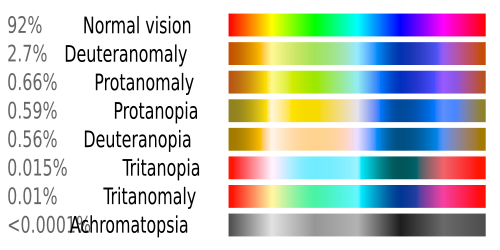
The color blindness
spell causes the recipient creature to
be unable to distinguish colors. All vision
is in black and white. Various cure spells
cannot remove this effect, and only a
successful dispel magic or dispel illusion
can remove the defect before the spell?s
expiration if the creature fails its initial
saving throw against this spell. The negative
effects of this spell can be difficult
to
moderate but can be important. Normally,
many gems, beasts, potions, banners,
plants, and so on are distinguished from
similar things by color; a being who is
color-blind is unable to use color to distinguish
between them. The positive effects
of color blindness include a + 2 (or +
10%)
bonus in locating concealed or camouflaged
objects, and a ? 2 (or ? 10%) penalty
assessed against persons hiding in
shadows from the color-blind person.
Thus, brownies
(invisible in natural surroundings)
can be seen on a 10% chance,
while shadows are only 80% undetectable.
Likewise, color-blind characters other
than elves and half-elves have a 1 in 6
chance of finding secret or concealed
doors, while color-blind elves and halfelves
get a + 1 to do this. The surprise
potential of opponents is affected if they
use camouflage to enhance their chance
of
surprise.
Tunnel Vision (Illusion/Phantasm)
Level: 1
Range: 1"
Duration: 3 turns
Components: V, S
CT: 2 segments
ST: Neg.
AE: 1 creature

This spell reduces
the recipient creature's field of vision
to
the area that is directly in front of it,
a
space 60° wide. All peripheral vision
is
replaced with a gray shading. Consequently,
the creature?s armor class is reduced by
?4 against all opponents but those the
creature directly faces, and at very close
quarters (e.g., in hand-to-hand combat),
its
armor class is reduced by ? 1 (even
against beings the recipient meets face-on).
Various cure spells cannot remove this
effect, and only a dispel
magick or dispel
illusion can remove the defect before the
spells expiration if the creature fails
its
initial saving throw vs. spells. This defect
allows for surprise and back-stabbing
attacks to be made from the side (thieves
and assassins, take note). Saving throws
against back or side attacks are made at
?2 (except for those vs. poison).
Level: 2
Range: 0
Duration: Perm.
Components: V, S, M
CT: 2 segment
ST: None
AE: 1 pint or pound of material
This spell can
only be cast on nonliving material. Its
effect is to render the material completely
tasteless and odorless. Color, texture,
and
so on are not affected. Thus, a poisonous
substance could be inserted in food, and
could only be detected by suspicious color,
texture, or consistency, by the use of
a
spell such as detect magic or detect poison.
Detect illusion is the only spell which
gives the caster a chance to detect the
use
of this spell on foodstuffs. The material
component of this spell is a dram of distilled
water, available from any alchemist.
Echoes (Illusion/Phantasm)
Level: 2
Duration: 2 rounds per level
Components: V, S, M
CT: 3 segments
ST: 1/2
Range: 3" + 1" per level of the caster
AE: 1 creature
This spell causes
every sound within the recipient creature
?s hearing to reverberate loudly in his
mind as if the victim were in an echo
chamber. It becomes very difficult for
the
recipient to understand speech, to pick
out
one sound from another, and the like. The
recipient often tries to tiptoe in an exaggerated
fashion to try to reduce the noise
level which only it hears. Sometimes the
recipient merely collapses in a moaning
heap. No coordinated action with other
creatures is possible for the recipient,
and
the victim lashes out an any person
attempting to contact it closely. Fighting
and making saving throws are at ? 2, and
there is a ?2 penalty to armor class. If
the
saving throw is made, the recipient fights
and saves at ? 1, with a ? 1 penalty to
armor class. Either way, its auditory
nerves receive a great hammering. Creatures
with keen hearing (such as cats,
bats, predators in general, rabbits, and
so
on) run and hide in order to find quiet,
or
simply crouch in a corner. A silence
spell
or a deafness spell laid on over the echoes
cancels its effects (as well as all sound)
for
the duration of those spells. The material
component is a little tin gong or cymbal.
Numbness (Illusion/Phantasm)
Level: 3
Range: Touch
Duration: 1 turn per level of the caster
Components: V, S
CT: 3 segments
ST: Neg.
AE: being's limb

This spell causes a
limb of the recipient?s body to go numb.
Only arms, legs, tails, tentacles, and
wings
can be so affected; heads and trunks of
bodies cannot (the trunk of an elephant
is
considered a tentacle). The spell-caster
must
make a successful ?to hit? roll to affect
the
part he desires, as per the following table:
| Body part | "To hit" penalty |
| Striking tentacle, clawed arm | +0 |
| Lowered wing, weapon-holding arm | -1 |
| Leg or foreleg | -2 |
| Raised wing, active tail | -3 |
Tentacles, arms, and active tails are
assumed to be in use for attacking the
spellcaster
or his allies. Some further modifications
may be required, and some common
sense must be shown in moderating these
hit probabilities. A dragon raising its
wings
high over the illusionist?s head may well
have those wings out of all reach, while
a
gnome illusionist fighting a giant would
not
have to stoop or lunge below his normal
height to touch the giant?s leg. In general,
the
term ?striking tentacle? can refer to any
limb
within easy reach; ?weapon-holding arm?
can mean any limb close but active; ?leg?
can
mean any limb for which the illusionist
might have to lunge or spring; ?raised
wing,
active tail? can mean any limb that moves
very fast or is positioned so as to be
very
awkward to reach. Helpless, sleeping, or
bound opponents can be automatically
touched. The spell causes the limb to lose
all
feeling for the duration of the numbness,
with consequent loss of dexterity and judgment.
The following specific penalties accrue
to a numbed limb (and its owner):
1. Overall DEX
loss in the limb
numbed is -4, with attendant penalties
on
attack or defense, thieving abilities and
so
on. The recipient is ? 1 to hit with that
limb
for the duration of the spell, and missilefiring
penalties may be assessed in addition
to dexterity loss.
2. Walking on a numbed limb gives a 20%
chance each round of tripping. A numbed
wing reduces flying movement rate by onethird,
maneuverability
class by one step, and
causes the flyer to require 2 rounds to
become airborne. Also, the movement rate
for a creature with a numbed leg is reduced
by 1/3.
3. Objects grasped by a numbed limb have
a 60% chance each round of slipping from
its grasp. Creatures attempting to break
free
from the grasp of a numbed limb get a
+ 30% (or + 6) to their attempts to do
so.
Damage inflicted by a numbed limbs clutch
(e.g., a bear's
hug) is at ? 1 per die of damage
(but never zero, if damage is to be
assessed).
4. Wounds to the numbed limb are not
felt. As a result, each numbed limb causes
the victim to believe he has suffered 25%
less damage than he has actually taken.
The
DM should count up the total damage
taken
by the character in each round, then tell
the
player of the numbed PC that the PC has
taken only three-fourths of that amount
of
damage. The DM should keep a separate
tally of the PC?s HP with the true
(unmodified) damage score. Thus, the PC
may run out of hit points and fall unconscious
at an unexpected moment when it
seemed the PC had a few hit points left.
5. The AC
of the recipient is also
adversely affected. A general penalty of
?1
is assessed, unless that limb's use is
more
vital (e.g., a shield arm).
6. All penalties for numbness are cumulative
so if more than 1 limb is numbed, the
recipient suffers more ill effects.
Remove Smell
(Alteration, Illusion/Phantasm)
Level: 3
Range: 0 or 6"
Duration: 1 turn per level of caster
Components: V, S, M
CT: 3 segments
ST: None or neg.
AE: 1 creature or object
This spell has two
forms. In its first manifestation, it renders
the spell-caster or any one other creature
or
object undetectable by smell for the duration
of the spell. No saving throw is required
for
this form of the spell. In its second form,
the
spell is cast upon a living creature, depriving
it of its sense of smell for the duration
of the
spell. The recipient of this form of the
spell
gets a saving throw. Note that attacks
such
as stinking
cloud are ineffective against a
being who cannot smell. Caustic fluids
will
still burn, however.
Remove smell works by affecting the
olfactory nerves. In its first form, all
particles
normally emitted by the recipient creature
or object are masked by carrying the
spell?s dweomer to all available olfactory
nerves that might detect them. In the second
form, the dweomer is applied directly to
one
creature?s olfactory apparatus, rendering
it
incapable of sensing any particles from
any
source. The material component is a sliver
of
soap.
Lapse (Enchantment/Charm)
Level: 4
Range: 0
Duration: Special
Components: V, S, M
CT: 4 segments
ST: Special
AE: 1 creature

This insidious spell
is not cast directly upon its victim. Rather,
any small object or substance can receive
the dweomer, which then delivers its magical
charge to the first creature that touches
it. Typical ?triggers? would be a comb,
a
wine cup, a ring, a paving stone ? any
solid
object of relatively small size. The first
creature
that touches the ?trigger? is affected,
with no saving throw allowed at that time.
Nor does the recipient know it has been
affected, though subsequent spells such
as
detect
charm will discover something is
amiss.
Once triggered, the spell causes a lapse
in
the victims memorization of spells, to
occur
at some future time (an inconvenient time,
the caster hopes, but there are no guarantees).
Whenever the recipient attempts to
cast a memorized spell (as opposed to a
spell
read from a scroll or cast from a magical
item), the lapse comes into effect. Any
spellcaster,
including magic-users, illusionists,
clerics, druids, rangers, paladins, etc.,
can be
so affected, and even monsters that cast
spells as part of their normal set of abilities
(certain dragons, liches, titans, etc.)
are
subject to this spell. Note that natural
abilities
concerning flight, breath weapons, and
so forth are not affected.
When the victim prepares to cast a spell,
he must make a saving throw vs. spells;
failure indicates a malfunction of memory
during which time the spell-caster cannot
think of any spells at all. Spells so ?forgotten?
are not lost, however; the lapse passes
within
2-5 rounds, and the spell-casting victim
may then cast spells normally. Of course,
this spell is wasted if a fighter, barbarian,
or
other class using no spells becomes the
spells victim. Lapse has proved insidiously
popular with assassins capable of spellcasting,
when going after a spell-casting
victim.
Making one's initial saving throw against
this spell does not indicate the spell
has
failed, however. Once affected, the recipient
keeps on making saving throws until a lapse
occurs by failing one, whereupon the spells
duration expires. This spell is, of course,
usually banned in areas frequented by spellcasters.
A successful dispel magic eliminates
this dweomer.
Anesthesia (Enchantment/Charm)

Level: 5
Range: Touch
Duration: Special
Components: V, S, M
CT: 1 round
AE: 1 creature
By means of this
spell, the illusionist renders the recipient
unconscious and insensate for a period
of
time. Duration is two rounds per level
of the
caster minus the hit dice or level of the
recipient. Thus, a 10th-level illusionist
casting
this spell on a 15th-level fighter would
be
able to anaesthetize the fighter for five
rounds ((2 X 10) ? 15 = 5). An affected
creature must roll a saving throw, which
decreases duration by one half if successful
(2½ rounds in the example above).
While anesthesia has obvious benefits for
medieval surgery, it has other properties
which make it more interesting in game
terms. Its greatest asset is that it adds
a
+ 10% to system-shock survival rolls while
the recipient is anesthetized, and it reduces
saving throws in general by ?4. This makes
it easier to perform certain magical operations
upon the recipient, with less worry
over killing it in the process. The spells
greatest liability is that the ?4 saving-throw
penalty endures beyond the expiration of
the anesthesia for 20 rounds minus the
hit
dice or level of the recipient. In terms
of
combat, an anesthetized creature may be
killed automatically by any opponent without
even rolling to hit. Only living creatures
susceptible to charm spells are subject
to the
spells effects (undead, golems, etc., are
unaffected). The recipient?s magical attack
adjustment or resistance to charm spells
may affect the saving throw. The material
component is a poppy flower.
Seizure (Enchantment/Charm,
Illusion/Phantasm)
Level: 6
Range: 0 or touch
Duration: Special
Components: V, S, M or V, S
CT: 4 segments
ST: Special or neg.
AE: 1 creature
Like the lapse spell,
above, this spell can be cast upon a trigger
object, which then delivers the spells
potential
to the first creature that touches it.
Saving throws for the seizure follow the
same pattern as for a lapse: repeated saving
throws until a failure occurs. In case
of a
seizure, a saving throw is rolled at the
start
of every round of melee combat in which
the victim is involved. Note that the mental
attack adjustment for superior or inferior
wisdom affects this saving throw.
The recipient of this spell does not know
that it has a seizure lying in wait, although
a
detect charm would notice the spells aura
on the recipient. However, the illusionist
can
also cast this spell in an immediate form
by
touching the recipient, in which case there
is
no material component. The recipient then
gets one saving throw vs. the spell, and
either has an immediate seizure (failed
saving
throw) or the spell is wasted (successful
saving throw).
The effects of a seizure upon the recipient
cause him to collapse in fits, thrashing
wildly
about while making choking noises and
strangled cries. The body quivers and contorts.
This lasts for 2-5 rounds, ending in one
round of the victim being stiff in a state
of
rigor, followed by 2-5 rounds of unconsciousness.
The victim is virtually helpless
for 3-18 rounds after regaining consciousness,
and is unable to fight or engage in
spell-casting or strenuous activity. Thereafter,
the victim is able to react normally,
though with a ?2 on saving throws, attacks,
and defense for 5-20 rounds more (with
a
10% chance of spell failure when casting
any
spell during that time).
While thrashing about, the victim takes
1-4
hp of damage per round unless restrained.
The victim strikes aimlessly at his restrainers
with all limbs, inflicting no damage except
to
those with AC 9 or AC 10 (50% chance of
1
hp damage per round). In the one round
of
rigor, the victim must save vs. death magic
at
+2 or choke, dying 1-3 rounds later, unless
someone is nearby who can prevent the
choking with simple aid. The final result
of a
seizure is a temporary loss of 1-4 points
of
strength and constitution, which are recovered
at a rate of 1 point each per day (no
system shock roll is required).
NOVEMBER 1987