| - | - | - | - | - |
| Dragon #57 | - | - | - | Dragon magazine |
Of the many people I’ve known in four
years of playing the D&D®
and AD&D™
games, one guy I won’t forget created a
particularly savage universe for some
adventures. Many of the players in his
campaign
were struck by the extreme
levels of violence during the sessions;
the atrocities committed were much encouraged
by the DM himself.
One afternoon he was showing me
the long lists of NPCs
from each city on his mapboards. “If
you’ll look at all the women characters,”
he said, “you’ll see that I made their
charismas
really high and their
strengths
really low. That’s so they’re
easier to rape when their city gets
conquered.”
None of his players were female; although
some of the guys in THE
CAMPAIGN
wanted them, no willing women
were ever found — not surprising, since
women weren’t given any encouragement
to JOIN, and would have had difficulty
relating to a universe based on
rape, butchery and unbeatable monsters.
Eventually, even the male players tired
of
THE CAMPAIGN, and it folded.
The best RPGs, to quote
Jean Wells and Kim Mohan in their article
Women Want Equality”
(DRAGON
#39), allow for “the possibility of intrigue,
mystery, and Romance involving both
sexes, to the BENEFIT of all characters
in a
campaign.” All-male D&D
and
AD&D
groups, for whatever FUN they are, lack
this and the loss can be felt by all. Some
players go to considerable lengths to
bring wives, girlfriends, and other female
acquaintances to Game
sessions, help
them roll up characters, and get them
involved in the group. Sometimes a male
DM can make the chances
of equalizing a group a lot more difficult
by NOT examining his own feelings about
women players in The Game.
Male DMs must be aware
ov several factors when running a Game
with both sexes acting as players. One
of
these things involves rape, which wise
DM’s will AVOID having occur regardless
of their players’ gender. Male players
with female characters don’t seem to
care much about this if it happens to
their characters; some even seem to get
a kick out of it somehow. If a female
character gets raped in the game, particularly
by one of the DM’s NPC’s, the
player in all likelihood will be very embarassed,
very upset, and very angry and
hostile. It’s probable that the player
may
quit playing D&D
games altogether, or at
least find someone else’s group. Sure,
a
DM can argue that rape is something
that happens in both real and fantasy
worlds (is your fantasy world also beset
by inflation,
high unemployment, and
racism to make it more real?),
or that the
female player brought it on herself by
acting seductively (blaming the victim
is
always fun), or that the female player
is
getting upset over nothing. I’d be interested
in hearing what male gamers would
think if their favorite male characters
became
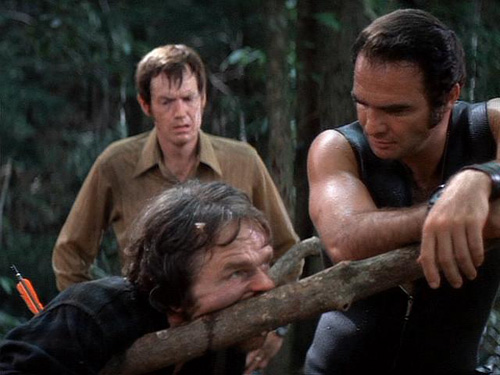
part of a scenario reminiscent of
the novel/movie Deliverance. Sound
exciting?
I didn’t think so. Keep it in mind.
Female players also resent being regulated
to a 2nd-class position in the
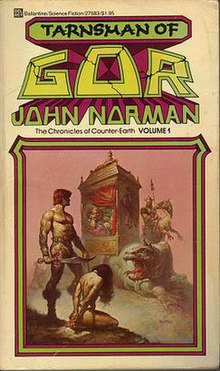
game. Many male DM’s are fond of game
universes set along the lines of John
Norman’s Gor/Counter-Earth
series,
where women exist as slaves
to serve
men.
The Arduin Grimoire Trilogy went
so far as to establish a whole character
class (for female characters) called the
Courtesan, BASSCIALLY a non-adventuring
prostitute. This will tickle the women
in
your group as much as it would tickle
them in real Life,
meaning they’ll probably
hate it with a passion. Women are as
capable of feats of heroism, genius,
and
cunning as men
are in D&D games. My
wife’s hobbit
_ thief character (female)
once earned a place in local D&D
lejend
by pulling off all the missiles from a
necklace
of
fireballs and throwing them all at
once into a cave full of Frost
Giants, killing
about 50 of them and saving the
group from being shot with ballistas.
The
same character was smart enough and
lucky enough to survive the entire trip
into Gary
Gygax’s The Tomb of Horrors
module, which is a remarkable feat in
itself. She was the only character NOT
killed or seriously injured, always using
her head to avoid the gravest dangers.
The character ov another female player
was in a party with me walking in [the
hills]
one nice Fantasy summer day when a
Beholder
caught us at close range. In a
couple of rounds most of us had been
death-rayed, stoned, or telekinesed
away.
All the survivors ran for the woods
except for her character, who was charmed
and made her nearly immune to
further magickal attacks. She could’ve
run; I certainly did. Instead she turned
around and made the Beholder
into Hamburger
Helper. Her reward was instant
Hero status in our
group for as long as
she gamed with us. Everyone in D&D
games wants to be great in some way,
men and women alike. To deny this to a
player on the basis of sex is to do all
your
players a disservice.
Some female players enjoy having their
characters flirt a lot with the other male
PCs, just as the guys like
their characters to flirt with female characters.
Some want their characters to do
more than just flirt. What happens if
one’s character gets pregnant (which in
Game terms
is a definite hold-back to
one’s career)? The DM can help circumvent
this problem in one of several ways:
— Don’t bother to “roll for pregnancy”,
assuming DIVINE
INTERVENTION is responsible
(Isis and
Athena
don’t want
their female followers laid up having babies
all the Time,
interrupting their careers,
etc.)
— Suggest in a ROUNDABOUT way that a
Wish could be
used to prevent the possibility
of unintentional future. pregnancies.
If Wishes can do anything they can
certainly do this.
— Have a <Wizard>
invent a magick
pill that permanently prevents conception
unless the female characters want to
get pregnant.
The most important thing a DM can do
for male and female players alike is to
be
fair and not make a habit out of singling
out one sex for more protection or more
damaging encounters than the other
sex. If you have a gang of louts on some
streetcorner insult all the women characters
in one encounter, have another
group insult all the men
in another.
Maybe better, have them insult everybody.
Fairness on the part of the DM will
be much appreciated by the group, because
it reduces friction between the
group members and The
DM, and contributes
to the success of THE
CAMPAIGN.
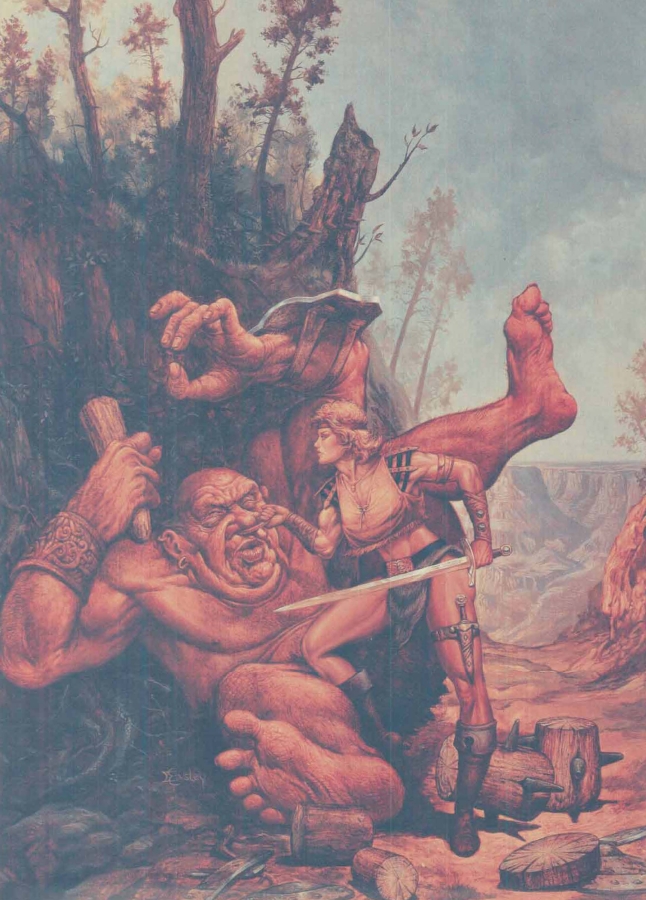
In short, giving an Amazon
the same
chances for doing great deeds as a Hercules
has can really make The
Game for
your players and for you.
[...]
And in “Dungeons Aren’t Supposed
to be For Men Only,” part of a sentence
was left out. The female character charmed
by the beholder was made to go around
and
pick up all our magical items we’d dropped in
our hurry to escape. One of the magical items
negated the effects of the charm and made
her highly magic resistant. That’s when she
greased it.
Thanks for making these corrections!
Roger E. Moore
Louisville, Ky.
(Dragon #60)
THE FORUM
I read Scott
Devine's letter in issue #111 and
agreed with him wholeheartedly.
At the time,
the issue didn't seem worth
reopening. However,
after seeing the
cover to #114, I really
think that something a little
stronger should be
said on the subject of the
depiction of women
on [DRAGON®
Magazine] covers.
Doesn't the cover to #114
go just a trifle too
far into the realm of soft-core
pornography,
fellahs? Halloween mood
notwithstanding, that
woman is for all practical
purposes naked. For
the first time, I was glad
that my DRAGON
Magazine comes in a brown
wrapper ? I would
hate for my postperson (a
woman, in fact) to
think that I subscribe to
pornographic magazines.
You have to remember that
not everyone
knows what DRAGON
Magazine is about, and
they will tend to judge
it by its cover. I'd be
embarrassed to have to buy
that issue off the
rack in a toy store or comic
book store
(DRAGON Magazine
is sold in both kinds of
places, and in some towns
that's the only place
you can buy it). Do you
want to see the magazine
stuck behind opaque plastic
covers like
Playboy and the Lampoon?
Do you want to see
crowds of bozos picketing
Toys-R-Us to have
DRAGON Magazine removed
from the shelves?
The D&D® and
AD&D®
games also have a bad
reputation for misogyny,
among feminists and
other self-respecting women,
and this includes
(especially) players. The
same people that sneer
at explanations of low strength
for female
gnomes and halflings on
the basis of realism
("You see, real gnomes .
. .") are going to be less
than thrilled by DRAGON
Magazine's one-sided
exploitation of female figures.
I read your explanation about
"fine art" in
#111, and consider
it a crock of beans. First, it is
possible to have art without
female skin, as the
cover of that issue (#111)
demonstrates. Second,
as Scott said, you don?t
picture male figures in
anything like the same degree
of undress. Now,
please don't take that as
a challenge -- the very
last thing I personally
want to see on the November
cover is a moonlit picture
of an Arnold
Schwarzeneggar lookalike,
see-through chemise
blowing in the wind, from
any angle. However,
if you insist on showing
skin from time to time,
you ought, in all fairness
to the ladies, to show a
little male skin too, even
if you have to commission
the art yourselves. Third,
you do in fact
make use of the "plate-mail
bikini" in "game art."
On the cover of issue
#108, for example, the
warrior maiden is showing
a lot of leg for
someone about to be attacked
by a hidden
gargoyle (or whatever that
thing is supposed to
be). If she isn?t fighting
a monster now, she will
be in a minute, and I don't
believe she?ll have
time to change. The fellow
on issue #109 proba-
bly wasn?t out looking for
taers to fight, either,
but he was prepared, as
you pointed out, and
she wasn?t.
I am well aware that DRAGON
Magazine
didn?t invent the D&D/AD&D
game predilection
for sexy artwork. There
are, for example,
the unnecessarily explicit
pictures of the succubus,
the erinyes
devil, and the Type V demon in
the Monster Manual.
But at least those are on
the inside pages where I
don?t necessarily have
to explain them to inquisitive
nongamers (although
I have had the misfortune
of having to
play with 14 and 15-year-old
guys who could
not get their hands on the
Monster
Manual
without pawing and sniggering
over those
pictures ? don?t forget
that kids play these
games, too!). And, of course,
it is no easy task to
find lead miniatures for
female NPCs that do not
look like porno or heavy-metal
Queens, especially
if I am looking for female
fighters.
Parenthetically, I would
like to know who
came up with the idea that
female fighters
armored only at the top
of the head, the
breasts, the midriff (maybe),
the groin, and the
feet are as well protected
as men in the complete
tin can. Never mind all
the hits they will
fail to turn -- how do they
avoid freezing to
death in cold weather? Perhaps
they wrap
transparent nighties around
themselves, which
is the way the
priestess on #114 is protecting
herself from the October
night wind. On the
other hand, maybe that's
why her skin has
turned blue.
Well, enough of that. I?m
just suggesting that
you try, in future artwork,
to stop short of total
nudity and to strike some
kind of balance in
your treatment of the male
and female form. As
matters stand, people are
likely to conclude that
the ?ancient god? on the
cover of #114 is really a
candid portrait of one of
your art editors, with
horns curling, eyes asquint,
and tongue hanging
out.
John M. Maxstadt
Baton Rouge, LA
(Dragon
#115)
I am writing in response to John Maxstadt's
letter in DRAGON Magazine, issue
#115. I have
never written in before, but I thought that my
opinion must be heard after I read this month's
Forum. There are 2 topics that I would like to
discuss. . . .
I am 14 years old, but I am not one of
the people who "could not get their hands on
the Monster Manual without
sniggering." As a
gamer and a person, I took great insult to that
comment, having been to many conventions and
having placed in many events. Some people may
act this way, but I do not think all gamers do,
regardless of their age.
On the subject of too much exposed female
flesh on the covers, I agree with John's opinion.
On the other hand, I do not think a cover with a
sexy female on it will make a gamer who hasn't
bought DRAGON Magazine for the last few
months suddenly buy it again. Also, having lived
through some of the picketing and protesting of
the stores, I noticed the main focus of their
protests was on the idea of the game, not the
artwork. We must consider that many fantasy
writers do not give females equality, but noticeable
exceptions have begun to crop up recently.
To state my overall opinion, I think there is a
little too much "skin" on the cover, but that is
the artists's choice and the artwork has been
superb, even on the covers without so much
flesh.
Mark W. McClennan
Holliston, MA
(Dragon #117)
The nude human figure, male and female, has
been the subject of artistic representation since
the earliest times. For the most part, the object
has not been to excite erotic interest, but rather
(1) to meet the challenge of realistically depicting
the subtleties of anatomy, involving an
understanding of bone and muscle, and the
human form in various postures and in various
states of action, or to capture an immediately
recognizable and characteristic posture or state
of action with a minimum of delineation, and (2)
to portray something that is beautiful, considered
as form, for aesthetic reasons. Classes in
"life drawing" are not orgies.
It seems a shame that most of us are so immature
and obsessed that we cannot look at an
unclothed or partially unclothed human being
of the opposite sex, in art or in reality, and say,
"How beautiful!" or, in the case of art "How well
rendered! See how the artist has captured thus
and so. . . ." Instead, we always, "How sexy!:
. . . . The flip of this coin is that such representations
cannot be seen by some as anything
other than prurient and depraved.
In other words, Botticelli's Birth of Venus has
never appeared as a centerfold in Playboy, and
no photograph from a skin magazine has appeared
in the Louvre. Pornography is not art
and art is not pornography. Their aims and
purposes are entirely different.
And the cover of DRAGON Magazine is
NOT the cover of Penthouse or Playboy.
David F. Godwin
Dallas, TX
(Dragon #117)
I just finished reading John Maxstadt's letter
in DRAGON Magazine, issue #115 . . . Granted,
the woman on the cover of issue #114 is scantily
clad; she is not exactly "for all practical purposes
naked." And, I honestly can't imagine
anyone being embarrassed to buy it in a bookstore
or hobby store.
Why worry about intolerant and ignorant
people objecting to the game merely by looking
at a magazine's cover? If we, the well-informed
people who play the game, know that the game
is neither harmful nor pornographic, then we
have nothing to fear. If we simply stick to telling
the truth, THEN the forces of ignorance are
harmless to us.
The "fine art" argument is really too subjective
to argue about, but I would imagine that
the reason than men aren't shown in similar
degrees of undress is probably because the TSR
art dept. is deluged with said art.
I will concede that the woman on th ecover of
issue #108 wasn't exactly dressed to kill, but
quite honestly that is the only cover that comes
to mind when trying to think of women under-dressed
for a particular occasion. Women involved
in combat on previous covers have been
dressed in attire suitable for the situation. . . .
Swords and sorcery and fantasy role-playing
games both, for whatever reason, appeal almost
exclusively to males. This isn't good or bad, it's
just a fact. Stories will be written by males, for
males, and usually about males. How would you
like to see women portrayed on the covers?
There are almost no traditional female swords
and sorcery characters. Thieves are weasel-like,
greasy-males). So, when an artist thinks swords and
sorcery, he usually thinks male. Theat's why
males are shown as so many different personalities
and in so many different situations, while
women aren't. If women START to get involved in
these genres more, the male-oriented VIEW will
shift more towards equal representation, depending
on what the demand is. But, for now,
why shouldn't it be male-oriented? The writers
know their audience. The focus should shift out
of a need, not out of a sense of obligation.
Dan Tejes
Aurora, OH
(Dragon #117)
I'd like to address John Maxstadt's letter
in
Forum, issue #115 of DRAGON
Magazine. I, too,
am glad that DRAGON Magazine comes in a
brown wrapper -- not that my postman would
care if it didn't. However, I am glad for 2
different reasons. 1st, they keep the magazines
in good condition when traveling through
the hands and machines of the U.S. mail service,
and secondly, I'm one of those 15-year-olds
Mr. Maxstadt mentioned, and I am glad that the
wrapper keeps my mother from seeing the
sometimes explicit cover paintings.
Don't get me wrong, I'm certainly NOT objecting
to the covers. I also certainly do NOT want to
see half-naked men on the covers. The only
think in the whole "nakedness" issue I od object
to is Mr. Maxstadt's stereotypical portrayal of
14- and 15-year olds as "guys who
cannot get their hands on the Monster
Manual
without sniggering over those pictures. . . . "
However, I am certainly not going to make an
issue over that -- I would start to sound like the
[readers] who have been pervading the pages of
DRAGON Magazine lately protesting STR
differences between the male and female versions
of mythical 3-foot-tall gnomes and
hobbits. After all, it's just a Game!
Marc Andreessen
New Lisbon, WI
(Dragon #117)
After reading John Maxstadt's letter in issue
#115 of DRAGON Magazine, I felt I
had to
respond. 1st of all, let me say that Scott
Devine's letter (issue #111) was a legitimate
complaint. It was a well-stated opinion, but it
should have been left at that.
The cover of issue #114 is far from pornography.
When I see covers like "Lady Valshea"
(issue #106), I truthfully see beauty. Beauty in
what is depicted, beauty (talent) in who depicted
it. In the case of the cover on issue #114, there's
also somewhat of a chilling effect, but it is still
an excellent painting. . . . The human body is
very beautiful; there is no need to be ashamed
of it (male or female). Of course, though, 2
people making LOVE should NOT be put on the
cover; nor should a naked girl about to <be> sacrificed.
That would be carrying it way too far.
But, when a scantily clad woman is used to
enhance the beauty of a painting, it is (at the
very least) acceptable.
I must admit that there are more women on
the covers of DRAGON Magazine than men. Mr.
Maxstadt is right in saying that there should be
more of a Balance. However, that doesn't mean
that future covers have to (though they might)
have men with less clothes and women with
more. Men look good in anything, from a loin-cloth
and boots to full-plate armor, at least
as far as paintings go. But when was the last
time you saw a magnificent painting of a
woman dressed up in a tin can? There are some,
but generally speaking, women look better in
outfits that enhance or emphasize their beauty.
I'm not saying they have to be scantily clad; I am
saying they should NOT look like men. . . .
And as far as the Monster Manual
pictures are
concerned, if that's how they typically look,
then that's how they should be shown. To AVOID
difficulties though, I have found it easier to give
them at least a little clothing. In fact, that's the
whole point of creating your own campaigns --
if you don't like it, change it!
The editor returns
The above is a sampling of the mail we
received on the issue of DRAGON Magazine
's cover art. It would be unfair for me
not to give my own opinions at this point,
since I?ve given so much space to this
topic, and I would also like to resolve the
situation as far as the magazine is concerned.
The idea of using nudity in cover paintings
for DRAGON Magazine does NOT
appeal to me, though some paintings may
show men and women in slightly revealing
dress. The cover of issue #114 crossed
the
line on how much should be shown in our
artwork; it wasn't that bad, but the line
will be watched more closely in the future.
Aside from that, the painting was quite
good, and a lot of readers liked it.
Having devoted as much space as we
have to this topic, I'm not greatly inclined
to continue running letters on cover art,
nudity, and points between. For the Time
being, THEN (unless you don't like the cover
art in the next few months), the issue is
closed. On to other things. . . .
I have a friend in one of
my classes at school
who is female. She
is also a DM and
she is very good at it.
There is only one problem.
I think every female DM
wants to know
how to get people to join
her campaign. My
friend asked people who
were already playing
the game and people who
were interested in
learning how to play.
Every male she asked just
laughed at her and said
that she wasn't any
good. She asked the
guys why they felt that
way, and they said they
had never seen a female
DM; if they did, there was
no doubt in their
minds that her campaign
would be boring.
Well, she kept tyring to
get people, and one
day she saw me bring the
Players
Handbook
into class. That afternoon,
she saw me at my
locker and asked if I would
JOIN her campaign
(this was before I became
a DM myself); I said I
would, and we set up some
times to play.
I really expected more than
1 person to
show up, but I was the only
1 there. I already
had a character that I had
had from a previous
campaign; it was a 3rd-level
elven fighter/magic-user
(I really didn't think she
would let me use it). I
played, expecting someone
else to arrive,
but no one did. Before
I left I asked her why I
was the only who was playing
and she
looked at me and simply
replied. "because I am a girl."
I don't know many female
DMs, but I'm sure,
they're out there, and I
think that everyone
ought to use a little more
consideration before
saying "no." They
don't know what she's like and
don't know how good she
is at DMing. I don''t
really think it's fair to
judge someone's abilities
by their sex, color, or
religion.
Craig Sessions
Hialeah, FL
(Dragon
#116)
I am writing in response
to the letter from
Craig Sessions which appeared
in issue #116
of DRAGON Magazine.
I am in total agreement
with him. Female DMs
(Mistresses?)
deserve all due consideration
for their part in
The Game. There is
absolutely no reason why
male players should LOOK
down on a female
player |or| referee.
I know of one young woman
who became a
DM. Let me tell all
you chauvinists out there:
she ran one of the best
worlds I've ever seen! I
took great pleasure in adventuring
with her as
referee. She had the
most developed political
structure (spread over 4
large continents),
the most realistic dungeons
(which sound engineering
and sensible monster placement),
and a
real reason for an adventuring
party to be in
her world. She
was also very patient with us,
never raising her voice
(except when in character).
As a result, the game flowed
very smoothly,
with no shouting matches
over rule interpretations
and foul language.
She was also very
willing to listen to different
ideas, and she had
to, for there were four
DMs playing characters
in her world.
Nelson E. Hemstreet
Brick, NJ
(Dragon
#118)
I have been playing RPGs
and wargames
(including the AD&D
and Empire of the Petal
Throne games and
many others) ever since I
was about 14 years old.
I bought my first ever
copy of a magazine called
“The DRAGON” (Vol 1,
No. 4)
and have been collecting erratically ever
since then. The Letters
and Forum sections have
always been worthwhile and
thought provoking.
I am usually an infrequent
letter writer;
however, Craig Sessions‘s
Forum letter in
the #116
issue of DRAGON Magazine really
stirred me up.
My initial reaction to this
short passage was
one of overwhelming sadness
(then, later,
anger). There is nothing
worse than this sort of
attitude toward an enthusiastic
new DM. RPGs,
by their nature, are designed
to bring together
people of all types, ages,
and sexes, and should
not be barricaded by those
people that still
think that it is only a
male pastime. How about
it then guys… Try giving
this young DM the
opportunity she deserves.
(Remember when you
were once a new player or
DM?)
We have a saying in Australia
called “fair go.”
It means exactly how it
sounds – give someone
a fair go before
you pass judgment on them.
Martin
Gibbs
Perth,
W. Australia
(Dragon
#122)
This letter is not about
cover art, although it is
in response to Dan Tejes's
letter on that subject
in DRAGON issue #117.
As a long-time woman <make link>
gamer, I was very surprised
to read that ?fantasy
role-playing games . . .
appeal almost exclusively
to males.? The first time
I played an
AD&D® game
(over ten years ago), the DM and
three out of the seven players
were women.
The balance remained about
the same throughout
my college years. Interplay
between characters
was enhanced by the sexual
mix, and
women brought a great deal
of imagination and
enthusiasm to the game.
As a thoroughly addicted
fantasy reader, I
know that such fiction is
not written only ?by
males, for males, and usually
about males,? as
Mr. Tejes says. Even the
oldest swords-andsorcery
traditions include women
in active
roles. Look at the Greek
goddesses, the Valkyries,
Circe, Calypso, Morgan
le Fay, and
Nimue. In our own century,
examples proliferate.
Even that towering patriarch,
J.R.R. Tolkien,
gave us the shield-maiden
Eowyn. At least half
of the active fantasy writers
whose works I
enjoy reading are women.
Most of them write
about major female characters;
often, the male
writers do, too.
The fantasy genre, both in
fiction and gaming,
is not merely a male area
of interest. It never
was -- and while I retain
my senses, it never
will be.
Kristin Marquardt
Harwood Heights IL
(Dragon
#120)
I write this letter due to
several comments
made by Dan Tejes in DRAGON
issue #117. Mr. <link>
Tejes lays stereotypes upon
3 of the most
abused subjects of role
playing: females, thieves,
and wizards.
First and foremost, Mr. Tejes
attacks the
female perspective, "There
are almost no traditional
female swords and sorcery
characters." I
would refer Mr. Tejes to
Red Sonja, Howard's
Belit and Valeria, Offut
and Lyon's Tiana of
Reme, Jordan's Red Hawk,
and Kitiara of
DRAGONLANCE®
saga fame. These are only a
few of the female heroes
depicted in swords
and sorcery literature.
Mr. Tejes goes further,
however, to imply that women
make neither
good thieves nor good wizards,
lacking greasy
hair and long beards. The
female in fact makes
a better thief than the
opposite sex, possessing
higher manual dexterity
and also more charm,
which appeals to the sometimes
blundering
male race, giving her a
great advantage. Since
females are often judged
as weak, why would
they not wish to indulge
in sorcery, a profession
which does not require great
strength? It would
seem, on a proportional
bases, more women
might be thieves and magic-users
than men.
Mr. Tejes also relates, "Thieves
are weasel-like,
greasy males." My favorite
character is a thief,
and he is far from this
insidious and downgrading
depiction. He is a charming,
scheming,
rogue, well kept and eagerly
accepted by his
compatriots for, unlike
the stereotypical thief,
he does not steal from everyone.
He is no weasel,
and his hair isn't greasy
(it doesn't appeal to
the ladies or add to one's
social grace and acceptability).
"Great wizards have equally
great white
beards." I have no idea
why all great mages are
assumed to be bearded, but
none of the ones I
play are. Beards tend to
get in one?s way when
working with chemicals and
that sort of thing.
The foremost bearded wizard
which comes to
my mind is Tolkien?s Gandalf.
Do all wizards
look like him? I think not,
but it seems that most
players think so.
By laying these accusations
on females,
thieves, and magic-users,
Mr. Tejes is being left
out of three of the most
stimulating roles to
play. I often hear skeptical
and lewd remarks
when I suggest other males
play female characters,
but my best fighter and
only assassin are
females, and they are a
force to be reckoned
with. Thieves and magic-users
require a different
mentality to be played.
These folk cannot
barge into a room in full
plate armor, armed
with their mighty blades,
and hack everything
to bits. That is the noble
fighter?s job; the thief
and magic-user must live
by stealth, luck, and
spell-casting. No sex, race,
or class should be
slighted, because the best
adventuring party has
a variety of each.
Randy A. Donahue
Hot Springs AR
(Dragon
#120)
I have one quick issue regarding
women in
D&D® games. It is
hard to be a woman DM. I?ve
given up. It?s hard enough
to find men who
don?t mind campaigning with
a woman (especially
when she runs a male character).
I?ve
heard every excuse from
?Well, then we have to
watch our language? to ?You
might take our
?rape and plunder? campaigns
too seriously and
be offended.? Come on, guys.
At 27, with a
library of well over 200
science-fiction and
fantasy books, don?t you
think I can handle it? If
I couldn?t, I?d get out
of the group. After all,
nobody forces me to play.
Sometimes I feel like I?m
beating a dead horse,
but there are women who
like all the hack and
slash as much as you guys
out there. I feel that
if a letter like this gets
printed, maybe it?ll start
some more guys thinking
about including
women players in their campaigns.
P.S. Can anyone suggest easy
ways to find
players? My husband is in
the Navy, and we
move a lot. It seems to
take forever to find other
players. I know they are
out there; I just don?t
have a good way to find
out who they are in a
short amount of time (within
a month or two).
Any suggestions would be
helpful!
Candace Miesen
Millington TN
(Dragon
#120)
Every so often, I read a
fresh crop of letters
or articles on the fundamental
topic ?we should
be nice to the poor girls/women
and help them
learn to play the D&D
game!? While I understand
the authors? good intentions,
I cannot
agree with their premises
or suggested courses
of action.
As a female player and DM
for over nine
years, I have seen a number
of reasons for the
dearth of females in gaming.
One, and I suspect
this is the primary one,
is a combination of lack
of interest and peer pressure.
The age at which
many players begin their
interest in FRP games
also happens to be a period
in a child?s life when
both boys and girls are
under extreme peer
influence. In both cases,
but particularly for the
girls, the urge is to ?go
with the crowd.? This is a
repressive cycle; not many
girls play in D&D
games because few of their
friends do. Worse
yet, the girls who are free
enough from peer
pressure to try out novel
ideas are outsiders,
seen as ?weird,? and are
the least likely ones to
incite a trend; the very
fact that these girls
engage in an activity, whether
chess club or
D&D games, can often
label the activity as
something only for nerds.
In addition, most
?mundane? girls are simply
not interested in
gaming and have no desire
to change.
A second major reason for
the shortage of
female players is the attitude
of the existing
male players and gamemasters.
Throughout the
years I have been playing
FRPGs, without excep
tion, I have been treated
as a novice in any
game I joined ? even by
new players entering
games in which I was already
a participant. As
far as I can tell, the prevailing
attitude among
the less-enlightened male
gamers (this includes
most of those in the adolescent
age range) is
that all females are novices
at best and incapable
of learning. It can get
very frustrating at
times to be treated as a
total and permanent
incompetent. If a person
is only tentatively
interested in gaming in
the first place, this kind
of subliminal insult will
turn them off very
quickly.
Isolating a broad group of
people as a special
case and giving them special
consideration in
the guise of helping them
often harms more
than it helps. Such a group
will
have a difficult
time, at best, being accepted
by the majority.
The unvoiced, often even
unrecognized, attitude
is ?if they were really
equal to us, they wouldn?t
need special privileges.?
This is the case,
whether it is hiring quotas
or seminars on
?Women in D&D Gaming.?
I do not want to be
treated as a ?female gamer;?
I am an ordinary,
normal gamer whose plumbing
just happens to
be different from most of
my companions.
I am involved in three weekly
AD&D games,
one of which I DM, all with
at least two female
participants. My advice
on how to obtain and
retain female players is
fairly simple. First,
remember one fundamental
thing: Females are
individuals, too! We are
no more all alike than
males are. So, you?ve seen
a few incompetent
female players or DMs? If
they had been male,
would you refuse to play
with males after that?
We are people, same
as you. We have good days
and bad days: we start as
beginners and learn. I
have run into many (usually
young) males who
said ?but I wouldn?t know
what to do with a
female player.? The answer
is simple: deal with
the player, ignore gender.
I?m not much different
from the guys I play with.
My characters, of
either sex, do not want
to be protected. They
are quite capable of committing
adequate may
hem on their own.
The one change to gaming
style that I would
suggest is one that will
make the game more
attractive, not just to
female players, but to
anyone besides adolescent
males. I have seen far
too many games run by young,
inexperienced
males which are endless
streams of mayhem,
often with crude pornography
injected. I have
even played in a few of
these (with male characters,
out of self-preservation).
I suppose if you
are a 14-year-old boy, this
sort of thing is fun,
but not many people of other
ages or either
gender enjoy it. Interestingly
enough, I (and all
of the female players I
know) run characters of
either gender; so do the
male members of our
regular gaming group.
Severe sex discrimination
is often institutionalized,
as it were, in game rules.
In the case of a
game mercifully forgotten
by history, the following
rule was stated: ?Players
wishing to play a
female character must .
. . make the following
adjustments to die-rolled
characteristics: physique
physique
and endurance - 3, charisma
- 2, social
class - 3, bravery - 2.
They will be excluded
from combat, from all parts
of the Church save
the nunnery, and expected
in most cases to
adopt a domestic position
as wife, housekeeper,
and servant. These factors
are invariable.? In a
game with magic, miracles,
and dragons, was
the idea of a female adventurer
so unthinkable?
Needless to say, I doubt
if the game in question
attracted many female players,
and certainly no
female characters. Judging
by its brief period of
existence, I suspect it
attracted very few players
at all! I have found that
games tend to either
ignore all differences between
male and female
characters, which is dull,
or severely restrict the
female characters, which
is worse. Vive la
difference! One option is
to apply a - 1 to the
strength of female characters
and a + 1 to
dexterity or constitution,
player?s choice. In
addition, in my campaign,
the character class of
ranger is restricted to
male characters only, as a
sort of fraternal society,
and witches are exclusively
female.
The easiest thing to do is
to leave your stereotypes
behind when you go to a
game and treat
female players as just what
they are: people.
One final thought. How many
girls have never
tried role-playing for the
simplest reason there
is: ?Nobody ever asked me??
Jeanne McGuire
State College PA
(Dragon
#120)
This letter is in response
to Jeanne McGuire?s
letter in issue #120. I
agree that female players
are often discriminated
against and that this is
wrong, but I disagree with
some other points
your letter makes.
In your letter, you say that
?isolating a broad
group of people . . . often
harms more than it
helps.? Then you go on to
do exactly that by
saying that campaigns run
by 14-year-old males,
like myself, are ?endless
streams of mayhem,
often with crude pornography
interjected. . . . I
suppose if you are a 14-year-old
boy, this sort of
thing is fun.? For your
information, my campaigns
are not endless streams
of mayhem. In
my campaign, there was a
gamer who often
turned ordinary situations
into pornography. He
no longer plays with my
group. I do not find
disgusting, hack-and-slash
campaigns fun.
In your letter, you do to
14-year-old boys what
you are telling others not
to do to female
gamers. You should apply
what you stated about
women to all players, whatever
their age, sex,
or previous experience with
AD&D® games is.
Jeremy Sacco
Needham, MA
(Dragon
#123)
In issue #119 of DRAGON®
Magazine, Mr. Jeff
Klein made some remarks
about the status of
women in Oriental culture
that were, at best,
misleading. It is the purpose
of this letter to
correct the erroneous statements
and hopefully
put the issue in a more
correct perspective.
Mr. Klein states: ?Women
were most definitely
not encouraged to
become great warriors in
feudal Japan.? This reflects
a poor knowledge of
Japanese history and culture.
It should be
pointed out that the supreme
deity in the Japanese
pantheon is Amaterasu, a
female. Further,
the gods Izanagi (she who
invites) and Izanami
(he who invites) were the
warriors responsible
for creating the islands
of Japan and were
accorded equal status. The
earliest chronicles of
Japanese history speak of
warrior queens leading
armies into battle, not
the least of whom
was the Empress Jingo, who
personally led an
army in a campaign against
Korea (c. 360 A.D.).
In the late Heian period
(12th century), we see
the example of women such
as Tomoe, wife of
the famous Minamoto Yoshinaka.
She occasionally
joined her husband on the
battlefield, killed
many enemy warriors single-handedly,
and on
at least one occasion presented
the head of an
enemy general to her lord.
Many samurai
deferred to her superior
skills in horsemanship
and weapons.
Off the battlefield, but
still in positions of
power, were many women of
the court. The
influence of empresses or
court women such as
Lady Murasaki cannot be
overemphasized. And
let us not forget that women
as well as men
were ninjas; in fact, a
woman?s skills and position
in society might well make
her a better spy
or assassin. Japanese history
is full of the sudden
and timely deaths of great
generals or
leaders ? too sudden and
timely to all be coincidental.
It was also not unknown
for women to
be members or leaders in
Japanese organized
crime: the Yakuza.
Mr. Klein states: ?Female
Oriental characters
should not really be samurai
or the like.? Again,
history proves this statement
to be false. Any
woman of the buke (samurai
caste) was still
regarded as samurai. A samurai
woman was
just as loyal to her clan
and lord as were her
husband, brothers, sons,
etc. She would commit
ritual suicide to avoid
capture by enemies or to
protest an injustice to
her superiors. She was
trained in the use of many
weapons and was
expected to use them if
necessary.
Mr. Klein asks the question:
?Who would have
trained them?? They were
trained by masters of
the art, of course. While
samurai women might
be trained in swordsmanship,
they were especially
adept at the yari (straight
spear), naginata
(curved spear), and tanto
(dagger). In Japan, to
this day, there are schools
where women are
trained in these weapons,
just as there are
schools which teach men
kendo. There are local
and national rankings to
reflect the skill of those
who practice the art. Few
men learn naginata ?
those who do are consistently
outranked by
women. One would typically
expect to find
more women who practice
martial arts in Japan
or China than in America.
Therefore, the
remark:?. . . female warriors
just don?t fit into
an Oriental culture? is
patently untrue.
While it may be reasonably
argued that the
role of women in Oriental,
especially Japanese,
society is unequal to that
of men, women in
these cultures were not
by any means without
influence. History teaches
us that many Japanese
women possessed not inconsiderable
power; some even ruled the
nation, either
directly or indirectly.
But doesn?t one have to
dig almost as much through
the crowd of faceless
men to find a hero? And
isn?t that what
fantasy gaming is all about
? namely, the exception
rather than the rule?
Finally, to Mr. Klein?s comment:
?Any fullblooded
medieval Oriental male would
feel a
great loss of honor [sic]
serving a woman,? I can
only cite the example of
the Osaka campaigns of
1614-1615. I cannot believe
that the tens of
thousands of warriors who
died in the service
of Yodo-gimi, mother of
the Hideyoshi heir
Hideyori, died in dishonor.
The word samurai
means ?those who serve?
? not ?those who
serve men,? but simply,
?those who serve.?
T. Fujiwara
Leominster,
MA
(Dragon
#123)
This letter is in response
to Jeff Klein?s letter
about Chinese women in issue
#119. I disagree
with Jeff?s statement that
a woman cannot
become a samurai. I am Chinese
myself, and I
visited China last summer.
After I returned, I
studied about medieval China.
A very famous
woman named Fa Mook Lan
was in one of the
interdynasty wars. She led
her father?s dynasty
to victory. It is true that
in medieval China, men
were considered more important
than women,
and women usually stayed
home to sew and
cook. To disguise herself,
Fa Mook Lan dressed
as a man. I think DRAGON®
Magazine should
print an article on women
in medieval China. It
will interest the public
and add more spice to
t h e A D & D ®
g a m e .
Derek
Ho
Sherborn,
MA
(Dragon
#123)
I am really tired of hearing
sexist males sound
off about females characters.
One recent letter
completely discounted the
possibility of female
Oriental characters. This
would be well and fine
if all Oriental characters
were played strictly
according to what is known
about ancient
cultures, but do any of
you actually believe that
any Oriental warriors had
abilities and powers
such as evinced by the typical
high-level samurai?
And just how much magic
do you all really
believe existed in old Oriental
cultures? If you?re
going to stretch your imagination
in regard to
these facts, why not in
regard to female characters?
Why couldn?t an Empress
of China, for
example, have commissioned
an elite troop of
female warriors? Remember,
this is a game
bound only by the limits
of your creativity, not
by the limits of reality.
Another point ? if you realists
insist on limiting
female character strength,
then you must
penalize male characters?
constitution and
dexterity, since every scientific
survey done on
the subject documents the
fact that, pound for
pound, women have more endurance,
stability,
and stamina than men, and
are more nimble
and agile as well. But I
have yet to see any
minuses on any abilities
for male characters.
So, make both sexes equal
in play, or penalize
both equally, and let?s
have no more partiality
toward males!
Pat Pitcavage
No address
(Dragon
#123)
I am writing in response
to Jeff Klein?s letter
which appeared in the ?Forum?
in issue #119.
Mr. Klein argued that female
warriors do not fit
into a realistic Oriental
Adventures campaign. I
have found that historical
evidence does not
support Mr. Klein?s argument.
Medieval Oriental
cultures were, in fact,
more egalitarian than
their European counterparts.
Take, for example, the stories
of Ng Mui and
Yim Wing Chun. Ng Mui was
a student at a
Shaolin monastery during
the Ch?ing Dynasty in
China. She studied several
styles of kung fu but
found that, because she
was smaller than most
of her opponents, these
styles were not effective
for her. So, she invented
her own form of kung
fu. She traveled around
the country challenging
many of the best fighters
of her time. Her
success in these fights
made her style quite
popular. Ng Mui?s best student
was also a woman,
Yim Wing Chun. After Ng
Mui?s death, Yim
Wing Chun continued to teach
the form, and it
eventually became known
as Wing Chun kung
fu. This is the style in
which Bruce Lee was
trained, and it is still
regarded as one of the
deadliest forms of martial
arts.
But Yim Wing Chun and Ng
Mui are not
unique examples. In feudal
Japan, the art of
naginata-jutsu, the
use of the naginata, became
known primarily as a woman?s
art. A woman
named Itagaki was one of
the greatest masters
of this weapon. She became
a general and
commanded an army of 3,000
samurai. Certainly,
these men suffered no loss
of honor for
serving under such a great
warrior.
Women were also readily accepted
into the
ranks of the ninjas. In
fact, female ninjas were
so common that special training
methods were
developed for them.
Finally, a look at Oriental
mythology and fairy
tales shows women playing
a much more active
role than in European folklore.
A Dungeon Master who has
examined the
facts should find no legitimate
reason for
excluding female characters
from even the most
realistic Oriental campaign.
Richard
Silva
West
Roxbury, MA
(Dragon
#123)
The issue of female players
and DMs has
stirred up a hornet's nest
of controversy. As a
woman who has been playing
in D&D® and
AD&D® game
campaigns for almost nine years, I
can?t understand why anyone
would make a
fuss about a player?s sex.
I play in a group of
four men and two women,
with another woman
who sometimes joins us.
We are all in our early
to mid-thirties. I have
played both male and
female characters, and so
has one of the men.
The woman who plays regularly
and I are DMs
of separate campaigns; only
two of the men are
DMs. Each campaign has a
different emphasis.
One of the men plays a straight
neutral DM and
is devilishly cunning; the
other is a chaotic-good
DM whose crazy sense of
humor is always
creating enjoyable and amusing
predicaments
for us. The other female
DM tends to be lawful
and sticks to the rule book;
I?m usually neutral
good and use the rules as
suggested guidelines,
although I remain consistent
in my choices. The
other woman plays very strong
and strongwilled
characters such as fighters
and rangers; I
prefer magic-users, druids,
and thieves. The mix
of male and female players,
characters, and
DMs adds much diversity
and excitement to
each campaign. I feel sorry
for those who
exclude women from games.
They miss a great
deal of interesting fun
in D&D® games and in
life.
I introduced my daughter
and two sons to the
D&D game about five
years ago. My daughter
and oldest son play regularly
at their schools
strategy club. All my children
and four of the
neighborhood kids ?dungeon?
together once a
month with me as DM. I think
role-playing
games are wonderful for
them. They have to
think and reason their way
through the campaigns
I create, and they learn
cooperation. Of
course, I get exasperated
occasionally when
they fight among themselves,
but every game
gets better. They are learning
how to make
reasonable choices and consider
all sides of an
issue before plunging into
danger. I hope more
girls will discover how
exciting and enjoyable
the D&D® game is.
D. Laslie
Millitello
Brighton,
IL
(Dragon
#123)
There were two letters written
in issue #120
in response to my previous
letter in issue #117,
and there are issues in
each letter that I would
like to address.
Kristin Marquardt contends
my assertion that
fantasy role-playing games
appeal almost exclusively
to males. I would like to
point out that the
last time DRAGON Magazine
released the results
of a readers? survey (issue
#62), a full 95% of the
people responding were male.
I wrote my letter
on the two assumptions that
those numbers had
not changed drastically
in the subsequent years
and that these percentages
were fairly close to
the percentages of people
reading fantasy
books.
Both Kristin and Randy Donahue
cited examples
to ?prove? to me that there
are female
sword-and-sorcery characters.
However, I never
implied that there weren?t!
My letter said
?almost no traditional female
sword and sorcery
characters,? not ?none at
all.? Look at the fantasy
books in any bookstore.
Are there nearly as
many books about women as
there are about
men? There aren?t in any
bookstores I?ve ever
been to. What I was saying
was that people?s
ideas of fantasy characters
are based on the
literature they read. I?ve
had a character that
was a clone of Moorcock?s
Elric and a magicuser
that could have passed as
the cousin of
Tolkien?s Gandalf. Why?
Because the characters
these authors created so
impressed me that I
wanted one just like them.
Until there are as
many diverse and vivid heroines
as there are
heroes, there will not be
equally diverse representations
of women. I never implied
that
women wouldn?t make good
players or PCs.
Mr. Donahue unknowingly agrees
with me
when he says that most players
think that all
magic-users look like Gandalf.
The reason they
think this is because J.R.R.
Tolkien created
possibly the greatest fantasy
character of the
20th century with Gandalf.
Here is a character
that not only possesses
great and admirable
qualities, but also has
the power to change
many things for the cause
of good, and is so
vividly described that he
nearly jumps out at
you. Gandalf seems to have
a tremendous
appeal to everyone who reads
about him. Even
if Gandalf doesn?t appeal
to someone, there is
another famous mage that
might appeal to
readers. His name is Merlin.
What player rolling
up a magic-user could not
dream of someone
resembling one of these
two?
Contrary to what Mr. Donahue
said, I laid no
accusations on women. The
purpose of my
letter was to say that the
number and types of
women represented in the
fantasy genre would
be less than that of men
by virtue of nothing
more than the numbers involved
in each case.
To read anything else into
my letter is to misrepresent
it.
Dan Fejes
Aurora OH
(Dragon
#124)